Categories
Quality control

Carbon Soot detection using Custom Object Detection model

Defect Detection Solution for Manufacturing Plants - Carbon Soot Detection

Carbon soot can detrimentally impact the nail-producing industry by compromising product quality with blemishes, increasing equipment maintenance needs, posing health risks to workers through inhalation, and triggering environmental regulations due to emissions. Controlling soot contamination is crucial to uphold quality, worker safety, and regulatory compliance in nail production. So. this carbon soot should be removed if detected.

Scanflow is an advanced AI scanning tool designed for smart devices, enabling seamless data capture and workflow automation. With the Scanflow application, users can perform tasks such as Quality Checks, ID card identification, Label Scanning, and more. We offer an automated solution to industrial challenges using state-of-the-art technologies.

Here, we’ve developed a real-time solution utilizing a bespoke object detection model to identify carbon soot. This component is an integral part of the automated solution we’ve constructed within Scanflow for our industrial client.

To train an AI model for carbon soot particle recognition, we meticulously separated a video containing the particles into individual image frames, creating a diverse dataset that exposes the model to a wide range of representations for robust learning. The following steps are used to train and test the detection with Jetson Orin Nano.

Carbon soot-containing video data is utilized for training models, with annotation performed via a custom labeling tool. Frames are extracted from the video, then preprocessed and augmented within the tool. This version of the dataset is employed for training and testing the custom object detection model.

We utilized the labeled dataset within the custom labeling tool to train an advanced AI model using a custom object detection algorithm, known for its exceptional speed and accuracy in detecting specific objects within images or videos. This approach streamlined the training process, notably decreasing both time and resource requirements.

After successful training, we deployed the AI model onto the NVIDIA Jetson Orin Nano, a compact and energy-efficient edge computing platform. Initial tests on the Jetson Orin Nano showed promising results, achieving an inference speed of approximately 22–25 frames per second (FPS) in the custom object detection model (the largest variant in custom object detection).

Throughout the training process, we faced numerous challenges pertaining to accuracy, detection performance, model size, and layer optimization. Despite our efforts to fine-tune hyperparameters for improved accuracy, and to develop lightweight models suitable for deployment on edge devices, we encountered unexpected environmental factors during real-time testing that adversely affected carbon soot detection. However, we effectively addressed these issues through augmentation techniques and further refinement of the model, ultimately ensuring robust detection capabilities even in challenging environmental conditions.

This demo video, featured on the Scanflow YouTube channel, showcases our custom object detection model in action, detecting carbon soot in real-time setups. The model is implemented on the Jetson Orin Nanodevices, offering impressive performance.

Defect Detection Solution for Manufacturing

In summary, by utilizing a custom labeling tool for data collection and annotation, training a custom object detection model with GPU acceleration, and deploying it onto the Jetson Orin Nano for inference, we’ve established an end-to-end pipeline for efficient and accurate object detection in carbon soot-containing video data. This approach not only demonstrates the adaptability of AI models to specific tasks but also showcases the integration of cutting-edge hardware platforms for real-time inference in edge computing environments.
Categories
Quality control

How VIN Scanners Can Improve Efficiency in the Automotive Industry

Imagine a world where cracked VINs get scanned in a flash, paperwork melts away, and your dealership runs on autopilot. That’s the magic of Scanflow, the AI-powered sidekick that transforms your messy Vehicle Identification Number handling into a streamlined symphony. Ditch the typos, the delays, and the headaches. Scanflow’s smart scanners read even the most stubborn VINs, zap the data straight into your systems, and let you focus on what you do best: keeping customers happy and wheels turning. It’s like giving your dealership a superpower – the power of effortless VIN accuracy and efficiency. So, are you ready to say goodbye to manual error and hello to a smoother, smarter future with Scanflow.

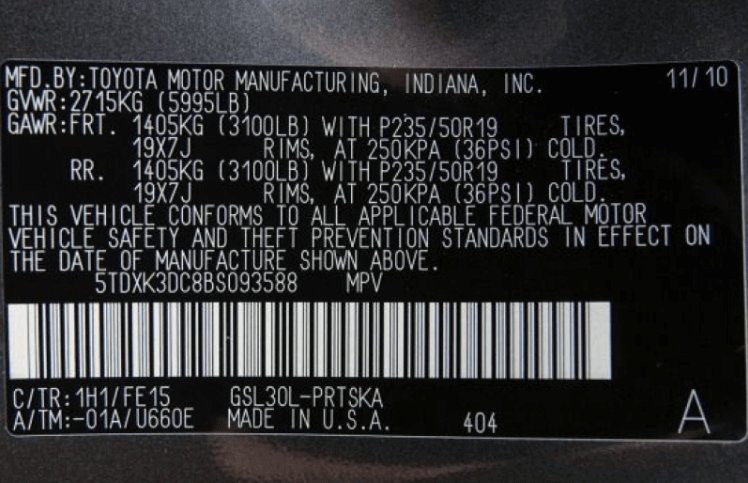
The vehicle VIN, a unique 17-character code, is like a secret key. It tells the whole story of the car, from where it came to who owns it now. But handling this code the old way, with pen and paper, can be a real mess.

Imagine a busy vehicle dealership, where workers scribble VINs on forms, their fingers hovering over keyboards, eyes squinting at faded numbers on sun-baked dashboards. It’s a recipe for mistakes! One tiny typo can mix up the whole car’s identity, leading to lost vehicles and angry customers.

These errors aren’t just annoying, they can be costly. A wrong number can mess up car counts, delay repairs, and even avoid warranties. And the worst part? It opens the door for fraud!

So, what’s the fix? Ditch the pen and paper and let machines do the work! Automated VIN scanners powered by AI can capture the code instantly and accurately, without any typos or squinting. This is the future of VIN handling, where mistakes are a thing of the past. The days of VIN-caused chaos are over, thanks to the magic of automation!

Say goodbye to the days of squinting at blurry VINs and battling typos! Scanflow unveils a revolutionary approach to VIN handling, powered by cutting-edge technology and AI smarts. Here’s how it redefines the game:

1. Seamless Capture: No more struggling with damaged or obscured VINs. Scanflow’s advanced scanners boast lightning-fast reading, even on scratched, faded, or partially covered codes. Whether it’s baked under the hood or hiding in a dark corner, Scanflow captures it all, instantly and accurately.

2. Data Integration: Forget the manual data entry dance. Scanflow seamlessly integrates with your existing dealership workflows. The captured VIN data is instantly zapped into your systems, automatically updating records, creating service orders, and streamlining every step of the process. No more double-entry purgatory, just smooth, real-time data flow.

3. Automated Tasks: Ditch the paper forms and repetitive keystrokes. Scanflow automates tedious tasks like VIN verification and data entry. This frees up your staff to focus on what truly matters: delivering exceptional customer service, attending to repairs, and ensuring smooth operations. Every minute saved is a minute earned for your dealership’s success.

Scanflow isn’t just about speed and accuracy; it’s about empowering your dealership to operate at peak efficiency. By eliminating manual errors, streamlining workflows, and freeing up valuable time, Scanflow unlocks a world of possibilities. Imagine a dealership where VINs are a breeze, paperwork melts away, and your staff can focus on what they do best – making your customers happy and keeping your business thriving. That’s the power of Scanflow, the AI-powered solution that transforms VIN handling from a chore to a seamless superpower.

Categories
Quality control

Container Scanning for Seamless Shipments: How Scanflow enhances efficiency of operations?

Freight containers are generally used to transport raw materials and products across different locations or countries. These containers need to be verified before the shipment and after reaching the destined locations.

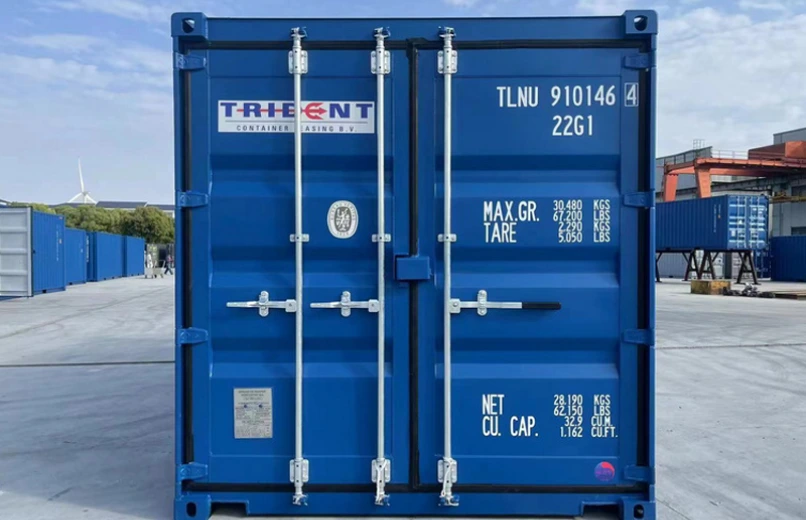
During the shipment process, large containers are identified by their container numbers, which are the most crucial information needed to manage the process. These container numbers are usually alphanumeric texts that are displayed on the container. Predominantly, shipping workers rely on manual entry of container numbers and maintaining records of them. However, manual data entry is time-consuming and prone to errors. These manual errors may result in containers being delivered to the incorrect location, causing the shipping process to be delayed.

Scanflow Intelligent text capture helps cargo workers to scan container identification numbers accurately from their smart devices.

Scanflow is an AI scanner on smart devices for data capture and workflow automation. It captures any form of data from Texts, IDs, Numbers, Barcodes, and QR codes. Scanflow Intelligent text capture efficiently scans long serial numbers from containers at any external condition. It can capture any form of alphanumeric text from containers where workers can choose to scan specific frames of serial numbers or scan the whole container to get the data.

By implementing AI-based technologies in workflows, logistics companies can improve their container tracking process more efficiently helping workers to quickly scan and identify containers. Scanflow accurately captures container numbers from any orientation at any external environment be it- low light damaged texts & numbers, or light glares without any errors.

Scanflow technology works with smart devices such as smartphones, wearables, and drones that can be used even offline. The SDK can be integrated into any existing application and is compatible with Android, iOS, and development frameworks like Xamarin, React Native, etc. The data captured from the container is encrypted and securely stored offline. As a result, safety concerns and container fraud can be avoided thereby enhancing the efficiency of the shipping process.

Categories
Quality control

How do Smart Devices help Manufacturing industries in Data capture & Workflow automation?

Manufacturing industries are transforming their way of operations, which has resulted in industrial automation. A transition from manual dependence to automation of processes is gaining an advantage in industries. The implementation of technology helps in the digitization of manufacturing sectors at all levels such as supply chain operations, product design, mass production, and distribution.

Intelligent machines are being used in factories and warehouses to perform tasks with endurance, speed, and precision that require little to no human interaction.

This is due to the rising innovations in machine learning, artificial intelligence, and robotics that can be used to analyze data from every stage of the workflow process, helping manufacturers stay flexible and quickly adjust their business models. This technological shift is due to conventional manufacturing techniques being unable to satisfy the demands of the present industrial needs. Bringing analog data into a digital database is where the move to smart manufacturing begins.

Data capture is an essential and inevitable process in every industrial operation. Traditional data capture tools make it difficult in capturing mass data and cause manual errors. Workers require multiple devices to carry out the data capture process which is tedious to handle and leads to undesirable chaos.

Software-based smart data capture tools help industries not only to intelligently capture data but also support real-time decision-making, workers’ engagement, and workflow automation is made possible at scale from your everyday smart devices.

  • Smartphones
  • Tablets, Ipads
  • Augmented Reality Wearables
  • Drones
  • Robots

Smart devices like smartphones & wearables are predominantly used by industries and it becomes easier if it has scanning capabilities in them. It reduces the use of external devices for scanning. This enables workers to be connected and more productive. Integrating data capture software into smart devices will support field workers’ processes bringing efficiency and work safety.

Scanflow is an enterprise-grade, software scanner that can be integrated into any smart device such as smartphones, wearables, or drones, and capture any form of data from barcodes, IDs, texts, and objects in any external environment. Scanflow intelligently captures data and provides real-time insights from it. Reducing cost and human intervention, streamlines the workflow process in industries, ensuring a high level of effectiveness.

  1. Automates and simplifies end-to-end workflow process.
  2. Performs a variety of operations from a single smart device.
  3. Reduce manual auditing, which saves time, money & resources.
  4. Supports integration in any type of smart device & cross-platforms.
  5. Creates new business opportunities through digital transformation.

Industries accessing smart data capture technologies would give any decision-maker the ability to access information quickly with high reliability, making the operational process easier. Businesses that adopt smart data capture into workflows will improve efficiency, stay competitive, and be future-ready.

Categories
Quality control

N-Shot learning for computer vision and OCR

Quick and accurate data capture is essential in fast-moving and dynamic industrial workflows. One important requirement in data capture applications is capturing text from surfaces and products, even in extreme circumstances like uneven color. While it is possible to train deep learning models for capturing text (OCR), due to the nature of deep learning models, it requires a lot of contextual data to train them from scratch.

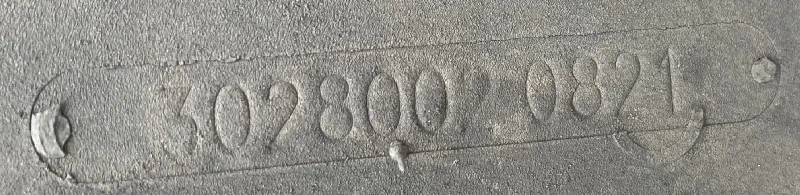
Let’s take the example of Black on Black text which we can find in vehicle tires, like the one below.

Traditional OCR solutions fail miserably in capturing this kind of data. Training models from scratch to extract this kind of data requires a huge amount of data. Then, there are practical concerns about the data distribution of characters in the data we collect. It will be hard to collect data in a manner where each alphabet is equally distributed across the dataset. Every deep-learning engineer hates the imbalanced class problem.

And, as a deep learning engineer, if you are presented with a new complicated OCR problem, you’ll want to take advantage of unrelated larger datasets for OCR and then use them for your use case.

You would have already encountered the term transfer learning. We believe transfer learning is one of the most underrated and most important techniques in deep learning.

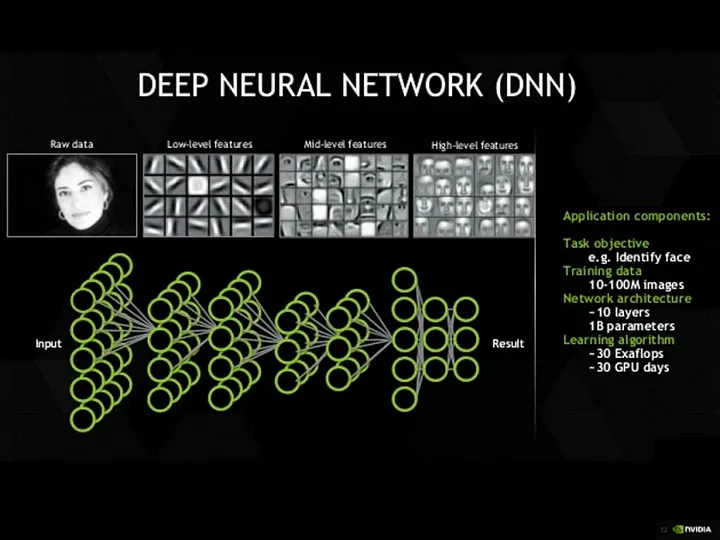
The core idea about transfer learning is that models have multiple layers, each layer is responsible for identifying features. The latter layers in the model build on top of the features learnt in the earlier layers. In the case of Convolutional Neural Networks, the earlier layers learning primitive features like dashes, lines and as we move to consecutive layers, the learned primitive features are then combined to detect much more complicated features.

Let’s look at an example for the above example:
The low-level features and sometimes even the mid-level level features needn’t be specific to a single task at hand but could be used across different tasks. For example, the features that define a human’s face could also be generalized across other animal species. The features of a cricket bat could be quite similar to a baseball bat. It is only in the high-level features that are learned in the latter part of the neural network would we see highly specialized task specific features.

Use of transfer learning in computer vision took off back in 2016, but its use in NLP is fairly recent with the explosion of Large Language Models (LLMs).

The idea behind transfer learning is that you train a model on a large dataset, and then use the same model which has learned the features from the large dataset, to train on smaller task-specific data. The core reason behind this is that most of the features learned for the large dataset are common across many other image recognition tasks.

This removes the need to collect huge amounts of task-specific data and reduces training time.

This has given rise to an entire research field that is known as few-shot learning.

One-shot learning is a very popular strategy used in facial recognition and signature-matching technologies.

The way one-shot learning works is by training a model that learns to predict the difference aka similarity score between two given inputs, be it text or images. These kinds of models don’t learn to classify images, but rather learn the features alone and then predict how different the two images are.

This way, for example in the case of facial recognition, you don’t have to train a classifier for the model to recognize each person in your organization. All you have to do is train a model on a set of paired images of people and then have the model learn their similarities or dissimilarity.

Then, all you need is a couple of images from every employee or member in your organization and that’ll be enough to identify to make predictions, irrespective of whether the model has seen images of the person.

This is why it is called one-shot learning. It is because the model doesn’t need any idea about the new people or faces that it has to classify. All you need is one sample image of the person’s face and one new real-time image from a security camera to classify that the face from the image of the camera is the same as the one from the sample image.

Few-shot learning is about using transfer learning, but only training the model for a few epochs using less amount of data, maybe around 5 or so.

Personally, we believe that few-shot learning is among the most under-explored and underappreciated techniques in Deep Learning.

Now, how can this be used in OCR?

You can take large-scale synthetic text datasets like the Synth90K dataset and then train your recognition models on the same, which could be a CRNN model or a character recognition pipeline. This allows the pipeline to learn features specific to words and characters from the target language.

Once you train them on these synthetic datasets, you can then take the same pipeline and train them on smaller datasets that are task-specific, like the picture at the top of this post, black-on-black embedded text, which might not be properly recognized by generalized OCR solutions.

Categories
Quality control

Top 5 Automation Technologies for Manufacturing Industries

Most industries today are predominantly automated, and a significant portion of the industrial elite had already started in many sectors like smart manufacturing, self-retailing, or digital healthcare. The adoption of emerging Intelligent technologies for the manufacturing sector has a greater emphasis on pushing toward industrial automation. The evolution of Industry 4.0 in manufacturing connects new technology and established trends in automation and data exchange. This is possible because of the assistance provided by intelligent machines that have access to more data, where industries will be more productive, efficient, and reduced costs.

Now, let’s take a deep dive into the top 5 technologies that help in industrial automation:

1. Artificial Intelligence (AI) & Machine learning (ML)
2. Computer Vision (CV)
3. Augmented Reality (AR)
4. Natural Language Processing (NLP)
5. Optical Character Recognition (OCR)

Artificial intelligence and machine learning are perhaps the two most significant technologies that come to mind when thinking about intelligent automation AI & ML mimics how people learn by using digital data together with other components like remote inputs and algorithms. Most often, predictions are made using AI and machine learning based on analysis of historical data and past behaviors. Industrial supply chains can be optimized using AI algorithms to assist organizations in anticipating market changes. The major advantages of artificial intelligence are those related to learning and decision-making.

The ability of computers and entire systems to glean valuable and pertinent information from digital sources is thought to be the focus of the field of computer vision. These digital sources can include different visual inputs including photographs, videos, and other visual media. On the basis of the information that has been retrieved, recommendations can be made for both more activities and broad assumptions or conclusions. Computer vision is crucial for comprehending and interpreting the visual environment as well as enabling machine interpretation in this sense. Software-based data capture tools work on computer vision algorithm that helps in accurate data capture with real-time insights.

Augmented reality (AR) technology overlays an image on a user’s perception of the real-time world. It combines a computer-generated virtual scene with the actual scene of the viewer. Augmented reality is a rapidly developing technology that has the potential to address significant operational issues in the industrial sectors. Workers who use AR solutions in production do action more quickly. Field service technicians and remote specialists can communicate with each other in two directions using AR solutions. This technology has the ability to disrupt the manufacturing sector and make it more adaptable, efficient, and customer-focused.

Natural language processing also called NLP, is a subfield of artificial intelligence. NLP focuses on how computers and humans interact and relate to one another. This technology recognizes the important components of human instructions, extracts pertinent information, and then processes the information to allow robots to understand it. The adoption of NLP in the manufacturing process reduces repetitive tasks, ensures smooth automation without any interruption, and frees up workers from activities that call for human skill sets.

Optical character recognition also known as text recognition is a process that converts handwritten or printed text images into machine-encoded text. In manufacturing industries, the batch ID, lot code, and expiration date are crucial data to be collected. Workers rely on manually entering each entry individually which requires a lot of time and work. The use of OCR technology could reduce the effort by extracting the data from the text, which can be stored in a smart database.

In order to gain a competitive advantage, industries require early adoption of new prospects and developing technologies into their workflows. Industries like manufacturing, healthcare, energy, and finance are gaining benefits from technological advancements like Artificial intelligence, virtual reality, process intelligence tools, and 3D visualization. This increases success rates through a more efficient and productive work environment.

Categories
Quality control

The Role of data capture in Supply Chain Management and Inventory Control

Scanflow data capture plays a crucial role in revolutionizing Supply Chain Management and Inventory Control processes. Scanflow data capture solutions leverage smart devices like smartphones, tablets, and wearable devices to enable fast and accurate data capture in various supply chain operations. Let’s explore how Scanflow data capture enhances SCM and inventory control:


Scanflow’s computer vision technology enables real-time and accurate data capture from barcodes, QR codes, and other data matrix formats. By using the built-in cameras of mobile devices, workers can quickly scan and capture data from products, packages, or assets. This speed and accuracy reduce human errors and enhances the efficiency of data capture processes.


In the supply chain, accurate and up-to-date inventory data is vital for efficient operations. Scanflow data capture allows for real-time inventory tracking, ensuring that inventory levels are continuously monitored and updated. This visibility enables businesses to optimize stock levels, prevent stockouts, and improve order fulfillment.

Workflow Automation Tool


Scanflow works seamlessly on a variety of smart devices, including smartphones and tablets. This mobility allows workers to access data capture capabilities wherever they are, eliminating the need for dedicated scanning devices and promoting a more flexible and agile supply chain.


Scanflow’s computer vision technology supports multiple barcode types, including 1D barcodes, 2D barcodes, and QR codes. It can also recognize and extract data from other data matrix formats, such as VIN numbers on vehicles or serial numbers on electronic devices. This versatility ensures that Scanflow can be applied across a wide range of supply chain applications.

Supply Chain Management Inventory Management Solutions for Logistics


Scanflow data capture solutions seamlessly integrate with existing enterprise systems, such as Warehouse Management Systems (WMS) and Enterprise Resource Planning (ERP) systems. This integration ensures that captured data flows seamlessly into the larger supply chain ecosystem, facilitating data-driven decision-making and enhancing overall supply chain visibility.


Scanflow enables the automation of complex data capture workflows. It allows businesses to customize data capture processes to match their specific needs and automate repetitive tasks. This streamlines supply chain operations, reduces manual intervention, and boosts productivity.


Scanflow data capture solutions contribute to improved traceability throughout the supply chain. From product origin to destination, each item can be accurately tracked and traced using data.
Scanflow data capture solutions have a significant impact on Supply Chain Management and Inventory Control. By leveraging the power of mobile computer vision technology, Scanflow enables faster and more accurate data capture, seamless inventory management, and enhanced traceability. Scanflow empowers businesses to optimize their supply chain operations, reduce costs, and deliver exceptional customer experiences. Whether in warehouses, distribution centers, or retail stores, Scanflow data capture is a game-changer for businesses striving to achieve efficiency and success in their supply chain operations.
Get in touch with us to know more on Data capture for inventory control: https://www.scanflow.ai/barcode-scanning/

Categories
Quality control

Enhancing Logistics Operations with Cost Reduction & workforce engagement with Scanflow!

In today’s evolving business landscape, optimizing logistics efficiency is paramount for organizations looking to stay competitive. By harnessing the power of Scanflow, businesses can empower workforce engagement, enhance logistics efficiency, and achieve significant cost reductions.

The logistics industry plays a vital role in the efficient movement of goods and materials across various supply chains. By integrating the Scanflow into their backend systems, logistics companies can automate workflows, enhance operational efficiency.

The integration of Scanflow in warehouse management system can greatly contribute to automating various processes within inventory management, stock control, and shipment & dispatch where scanning can be carried out from workers smart devices such as — smart phones, drones, wearables, tablets etc.

Improved Speed and Accuracy: Scanflow leverage cutting-edge technology, such as AI powered barcode scanning and Text scanning from smart devices, to provide fast and accurate data capture capabilities. Workers can use smartphones or any smart devices like drones, wearables with built-in cameras to scan barcodes, texts, labels, or documents, eliminating the need for separate scanning device. This streamlines processes, reduces manual errors, and accelerates data capture, improving the speed and accuracy of logistics operations.

Real-Time Visibility and Tracking: One of the key benefits of Scanflow data capture solutions is the ability to capture and process data in real time. By scanning barcodes or text, logistics workers gain immediate visibility into shipment details, inventory levels, and order statuses. This enables proactive decision-making, allowing logistics teams to respond quickly to changes, address potential issues, and optimize routes or delivery schedules.

Streamlined Inventory Management: Scanflow data capture solutions simplify and streamline inventory management processes. With the ability to scan barcodes or text to read product information, workers can efficiently track and manage stock levels and automate replenishment processes. Real-time visibility into inventory helps prevent stockouts or overstocking, optimize storage space, and reduce carrying costs. The seamless integration of Scanflow solutions with existing inventory management systems enables seamless data synchronization and eliminates manual data entry, minimizing errors and saving time.

Tracking Shipment & Dispatch operations: Scanflow enables real-time tracking of shipment containers and automates dispatch operations. It scans and captures package information during the loading process, ensuring accurate documentation and package identification. Scanflow updates the backend system with this information, allowing dispatchers to track the progress of shipments and make real-time decisions based on their status. It also helps streamline communication between drivers, dispatchers, and customers, leading to improved coordination.

Scanflow is a transformative platform for industries seeking cost reductions, improving inventory management, and minimizing errors, reducing operational costs associated with delays and inefficiencies. Moreover, the rapid deployment, user-friendly interfaces, and flexibility ensures a quick return on investment, making it a cost-effective choice for industries aiming to enhance efficiency and drive savings. Scanflow is a strategic step towards unlocking the full potential of logistics operations in the modern business landscape.

Categories
Quality control

5 Benefits of computer vision in Manufacturing Industries

In today’s fast-paced industrial world, the need for automated solutions has become crucial for businesses to stay ahead of the competition. Computer vision is one of the key technologies that have been gaining popularity in recent years. Computer vision is a field of study that deals with how machines can be taught to interpret and understand images or videos. This technology has many applications in various industries including manufacturing, retail, logistics, Healthcare, and automotive aftermarket.

  • Increased efficiency: By automating repetitive tasks such as inspection, sorting, and assembly, computer vision can help manufacturers increase production rates and reduce costs associated with manual labor.
  • Increased accuracy: Computer vision systems can identify and track items more accurately than humans, reducing tracking and inventory management errors. This can improve customer satisfaction and reduce costs associated with lost or misplaced items.
  • Real-time monitoring: Computer vision provides real-time monitoring of manufacturing processes, helping manufacturers to identify and address issues as they arise, rather than waiting for a final inspection.
  • Improved safety: Computer vision can be used to monitor warehouse and transportation environments for safety hazards such as spills, debris, and potential collisions. This can help prevent accidents and reduce the risk of injury to workers.
  • Enhanced customer experience: By using computer vision to track and manage inventory, logistics providers can offer faster and more accurate delivery times, which can improve the overall customer experience.