Categories
Tire Sidewall

Comparison Guide: Scanflow Tire Sidewall Scanner vs. Drive-Over Scanners vs. Gauges

The ultimate guide to tire sidewall scanning tools that boost speed, accuracy, and automation.

It’s 07:45 and the line is already backed up

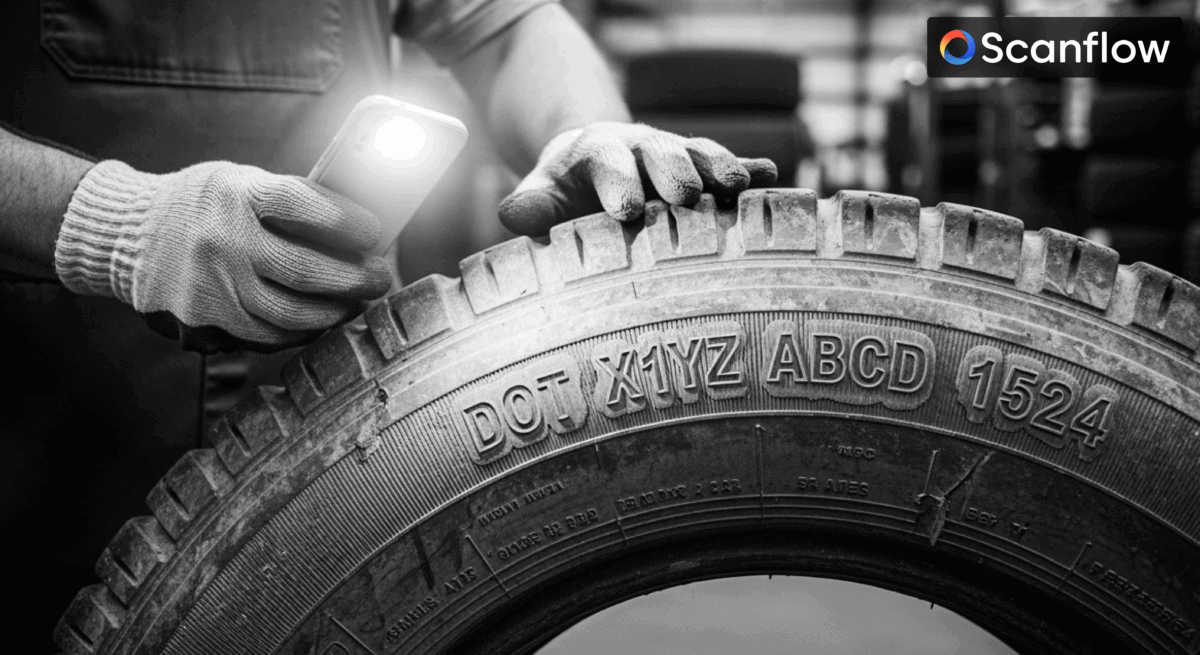
Stacks of tires wait to be identified. Workers tilt and rotate each one, trying to spot DOT or TIN codes buried under dust, while the next delivery is already waiting at the gate. In that moment, your inspection method determines whether your workflow moves efficiently or slows to a crawl.

Across tire recycling yards, distribution hubs, and service centers, teams rely on one or a combination of three tools: manual gauges, drive-over scanners, and AI-driven tire sidewall scanners like Scanflow.

This comparison guide outlines the strengths, trade-offs, and real-world fit of each solution, helping you choose the right technology based on speed, accuracy, mobility, automation, and total cost to operate.

What Makes Scanflow Different

Scanflow is an AI-powered tire sidewall scanner that automatically captures DOT/TIN, tire size, brand, QR codes, and barcodes in less than a second. It delivers fast, structured tire data without manual entry, improving traceability, compliance, and productivity.

Built for flexibility, Scanflow runs on mobile devices, CCTV, or IP cameras, connects to any backend system, and works without internet access using local edge intelligence. It can operate as a ready-to-use app or as a customizable SDK integrated into existing software.

From tire recyclers and distributors to assembly-line operations and workshops, Scanflow turns any camera into an automated tire identification scanner no dedicated lane or hardware build-out required.

Manual Gauges: Familiar, Fast but Limited on Proof

Why teams still use them: Manual gauges remain the cheapest and most portable option for quick spot checks or tread measurements. They’re lightweight, easy to use, and have minimal startup cost.

The trade-offs:
Gauges only measure specific points on the tread and don’t capture any sidewall data like DOT codes or tire brand. Without visual documentation or digital traceability, manual readings can’t support detailed reports or automation. Errors in transcription and subjective measurements make data inconsistent especially across large teams or multi-site operations.

Operational impact:

  • Slower reporting and manual input into databases
  • No proof for audits or recycling compliance
  • Limited scalability for automated sorting or tire tracking

Best fit:
Small workshops or low-volume operations where tires are checked manually and digital documentation isn’t a priority.

Drive-Over Scanners: Throughput with a Trade-Off

What they do well:
Drive-over scanners provide automated tread measurement in seconds. Vehicles roll over embedded plates equipped with sensors or cameras, delivering 3D tread scans, color-coded heatmaps, and wear analytics. These systems are highly effective for throughput optimization in fixed service lanes.

The limitations:
Despite their speed and accuracy for tread wear, drive-over scanners cannot capture tire sidewall information. They miss critical data like DOT/TIN, tire size, and brand essential for traceability, recycling, and inventory management.

Installation is costly and space-intensive, requiring dedicated lanes, controlled lighting, and periodic calibration. Mobility is zero; once installed, the system stays fixed.

Operational impact:

  • Excellent for tread analysis, poor for sidewall identification
  • High setup and maintenance costs
  • Not suitable for mobile inspections or outdoor recycling environments

Best fit:
Large dealer networks or service centers with permanent drive-over lanes focused primarily on tread wear and vehicle alignment.

Scanflow Tire Sidewall Scanner: Automated, Accurate, and Mobile

What it is:
The Scanflow Tire Sidewall Scanner is an AI-driven tire identification system that captures every key sidewall element DOT/TIN, brand, size, QR code, and barcode in less than a second. It transforms manual inspections into structured, digital data collection.

How it works:
Using edge AI, Scanflow processes images locally for near-instant recognition. The system runs on mobile devices, mounted cameras, or existing IP/CCTV setups, requiring no internet connection. It’s flexible enough to adapt to tire recyclers, assembly lines, or retail workshops scaling easily across multiple sites.

Capabilities You Can Put to Work

  • Instant Tire Data Capture: Identify full sidewall information in under one second.
  • Edge AI Processing: Operates securely offline no cloud latency or data dependency.
  • Flexible Deployment: Compatible with smartphones, CCTV, and IP cameras.
  • System Integration: Connects seamlessly with ERP, WMS, CRM, and recycling software.
  • Customizable Setup: Configure workflows for sorting, assembly, or service inspections.

Key Benefits of Scanflow

  • Speed & Accuracy: AI recognition eliminates manual entry and human error.
  • Safety: Reduces physical handling of tires and improves ergonomics for staff.
  • Automation: Tire data syncs automatically with your digital systems.
  • Mobility: Works anywhere warehouse floor, yard, or remote station.
  • Scalability: Expand from one device to hundreds without infrastructure overhaul.
  • Data Confidence: Every record includes timestamped, structured tire details for audits and compliance.

Why Tire Sidewall Scanning Matters

Accurate sidewall data capture is essential for:

  • Recycling traceability: Ensuring correct disposal or re-use tracking through DOT/TIN and brand data.
  • Distribution and inventory management: Reducing manual SKU errors and improving warehouse automation.
  • Assembly-line fitment: Matching correct tire size and brand to vehicle models with zero human input.
  • Retail and service transparency: Providing clear documentation of tire condition and manufacturing details to customers.

Feature Comparison: Gauges vs. Drive-Over Scanners vs. Scanflow

Method Speed Sidewall Data Mobility Integration Accuracy Best Fit
Manual Gauges Low None High None Operator-dependent Spot checks & verification
Drive-Over Scanners Medium-High Tread only None Limited High (controlled lane) High-volume fixed service lanes
Scanflow Tire Sidewall Scanner Instant (<1s) Full (DOT/TIN, brand, size, QR, barcode) High Seamless (ERP, CRM, WMS) AI-Driven Precision Recyclers, distributors, assembly lines, service centers

Unlike traditional tread-only systems, Scanflow’s tire sidewall scanner gives you the complete picture of each tire’s identity, lifecycle, and compliance status.

Feature Comparison: Gauges vs. Drive-Over Scanners vs. Scanflow

A Practical Combo That Works

Some organizations combine technologies for full-spectrum coverage: using drive-over scanners to analyze tread wear during service intake and Scanflow to record tire sidewall data for documentation, traceability, and inventory automation. Together, they create a unified tire inspection workflow visual, verifiable, and data-driven.

Which Approach Fits Your Operation?

  • Gauges: Lowest cost but minimal documentation or automation.
  • Drive-Over Scanners: Great for tread analysis; limited for identification or mobility.
  • Scanflow Tire Sidewall Scanner: AI-powered, fast, mobile, and integrable ideal for organizations prioritizing automation, data accuracy, and scalability.

See how the Scanflow Tire Sidewall Scanner transforms tire data capture bringing instant recognition, automation, and connectivity to your workflow.

Whether you manage a recycling yard, distribution center, or tire service operation, Scanflow delivers accurate results in real time without disrupting your existing setup.

Try Scanflow and Request a Demo Today.
Categories
Tire Sidewall

Why Tire Shops Need a Tire Sidewall Scanner

The Tire Industry Is Changing Fast

The tire industry is no longer just about rubber and rims. Today, it’s about data, precision, and trust. Tire shops are under growing pressure to work faster, maintain accuracy, and deliver transparency all while managing complex inventories and diverse tire models.

At Scanflow, we’ve seen this challenge up close. That’s why we developed the tire sidewall scanner an intelligent, automated solution that helps tire shops streamline their operations and enhance customer confidence.

Let’s explore why every modern tire shop needs to adopt this game-changing technology.

What Exactly Is a Tire Sidewall Scanner?

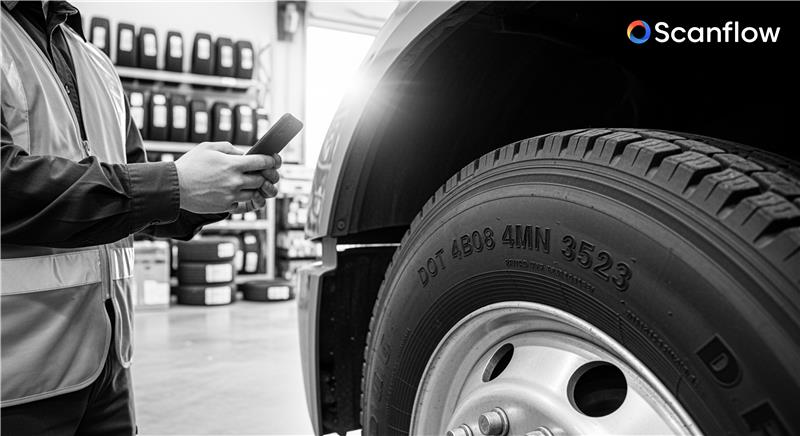
A tire sidewall scanner is a smart, vision-based solution designed to automatically capture and digitize information printed on a tire’s sidewall such as DOT codes, manufacturer details, model, and size.

Instead of technicians manually reading and typing each code (a process prone to human error), the scanner captures this data instantly with unmatched accuracy.

How the Technology Works

The scanner uses AI to read tire sidewalls in real time. It recognizes text and patterns regardless of lighting, dirt, or wear, then organizes that data into a structured digital record.

This means no manual data entry, no transcription mistakes and no time wasted flipping tires or guessing faded characters. It’s fast, accurate, and fully automated.

1. The Problem with Manual Tire Inspections

Manual processes have served the industry for decades, but as operations scale and customer expectations rise, they’re showing their limits.

2. Human Error and Time Waste

Technicians can misread or mistype information, especially in high-volume environments. A single incorrect DOT code can lead to inventory mismatches, compliance risks, or customer dissatisfaction.

3. Limited Transparency

Customers want confidence that their tires meet safety standards and that shops handle their vehicles professionally. Without accurate digital records, it’s difficult to build that level of trust consistently.

4. Inefficient Workflows

Manual tire identification slows down operations. When staff spend extra minutes per tire, productivity drops and those minutes add up fast.

5. Why Tire Shops Need a Tire Sidewall Scanner

A tire sidewall scanner is not just a convenience  it’s a competitive advantage. Here’s why more and more shops across the USA are making the switch.

1. Accurate Tire Identification

Every tire tells a story and accuracy matters. The scanner ensures every code is captured exactly as it appears, removing human variability and ensuring compliance with manufacturer and regulatory standards.

2. Faster Service Delivery

With instant tire identification, technicians can process vehicles faster. What once took several minutes per tire now takes seconds, allowing shops to serve more customers in less time.

3. Seamless Inventory and Record Management

The scanner automatically logs tire data into your system. That means perfect tracking for replacements, warranty claims, and stock management without the paperwork.

4. Enhanced Customer Experience

When customers see a shop using advanced technology like Scanflow tire sidewall scanner, they perceive professionalism and trustworthiness. It’s proof your shop invests in precision and quality service.

Tire Sidewall Scanner USA: Market Adoption and Momentum

Across the USA, more tire retailers and service centers are embracing automation. The reason is clear as vehicle technology advances, the supporting ecosystem must evolve too.

The tire sidewall scanner USA market has seen rapid growth, fueled by the need for compliance, accuracy, and digital transformation. Tire shops that adopt this technology today are positioning themselves as industry leaders tomorrow.

Integrating a Tire Sidewall Scanner into Your Workflow

Transitioning to automation doesn’t need to be complicated. With Scanflow, setup and integration are designed to be smooth, intuitive, and scalable.

1. Choosing the Right Solution

When evaluating scanners, focus on accuracy, speed, and compatibility. Scanflow solution integrates easily with existing POS and tire management systems, so your data flows seamlessly across operations.

2. Easy Training and Adoption

Our intuitive design ensures technicians can start scanning within hours not days. The system requires minimal training and blends naturally into daily workflows.

How a Tire Sidewall Scanner Delivers ROI

1. Reduced Human Error

Every error corrected is money saved. By eliminating manual entry mistakes, shops save on wasted labor, mismatched tires, and warranty disputes.

2. Higher Throughput

Faster service means more jobs per day. Shops using Scanflow tire sidewall scanner often see measurable gains in productivity within weeks of implementation.

3. Customer Loyalty and Trust

Transparency builds loyalty. When customers receive verified tire data, they trust your shop more and return more often.

How Scanflow Is Powering the Next Generation of Tire Shops

At Scanflow, we’re redefining how the tire industry handles data. Our AI-powered tire sidewall scanner helps shops work smarter, not harder combining automation with accuracy to deliver the highest level of service.

We’ve built our platform to meet the unique needs of tire shops across the USA, helping them modernize operations, maintain compliance, and elevate customer experience all in one seamless solution.

The Future: Smart, Data-Driven Tire Shops

Automation is no longer a luxury it’s the new standard. Tire shops that embrace tools like the tire sidewall scanner will set the benchmark for precision, performance, and trust.

The future is data-driven, efficient, and customer first and Scanflow is helping tire shops across the USA lead that transformation.

Conclusion

In today’s competitive tire industry, accuracy, efficiency, and customer trust define success. The tire sidewall scanner has become an essential tool for tire shops that want to stay ahead not just keep up.

By automating identification and data capture, Scanflow empowers shops across the USA to deliver faster service, eliminate errors, and provide the transparency customers demand.

With Scanflow, your tire shop isn’t just adapting to the future it’s leading it.

Categories
Tire Sidewall

Why Capturing Tire Sidewall Data is Critical in Tire Assembly Operations

Discover why capturing tire sidewall data through advanced tire scanning technology is essential for improving accuracy, traceability, and compliance in tire assembly operations. Learn how Scanflow’s automated solutions empower modern manufacturing plants to optimize quality control and production efficiency. 

Understanding Tire Scanning and Sidewall Data 

In the tire manufacturing world, every component must be precisely identified and verified to ensure safe, reliable performance on the road. Each tire’s sidewall holds critical information including the DOT code, batch number, dimensions, serial identifiers, and manufacturer details that defines its unique identity. This sidewall data links the tire to its production history, materials, and quality inspections, forming a key part of traceability within manufacturing systems.Tire scanning technology automates the capture of this data by reading and recording these codes quickly and accurately. Instead of relying on manual inspection or handwritten notes, manufacturers can now use vision-based scanning systems to capture this information in seconds. This data then becomes part of a connected digital record, ensuring that every tire’s journey from production to assembly to final delivery is traceable and verifiable at any moment. For QC and assembly managers, this accuracy transforms daily operations. It eliminates uncertainty, reduces bottlenecks, and strengthens confidence that every tire assembled meets both internal quality benchmarks and OEM compliance requirements. 

How Tire Scanning Works in Assembly Operations 

Modern tire assembly operations rely on speed, precision, and data-driven decisions. Tire scanning fits perfectly into this environment. By placing scanners at strategic points along the line, the system automatically reads and extracts relevant information from each tire’s sidewall as it passes. These details are instantly linked to the manufacturing database, enabling plant teams to view the tire’s identity, production stage, and status in real time.The process is designed to be completely hands-free. Operators no longer need to stop, read, or record tire details manually. Instead, the scanning system ensures consistent, reliable data capture under various lighting and environmental conditions. This seamless automation minimizes errors and allows production lines to maintain flow without interruption.With tire scanning, assembly heads gain improved visibility and traceability across operations. The result is a faster, more reliable, and audit-ready workflow that supports lean manufacturing goals and continuous improvement initiatives. 

Challenges in Manual Tire Identification and Tracking 

Errors in Manual Data Entry

Despite rigorous training, manual data entry remains vulnerable to human error. In large manufacturing plants producing thousands of tires each day, even a small misread or misplaced entry can lead to costly complications. Tire sidewalls often include embossed text that’s difficult to read under production lighting or when dust and residue build up over time. A single incorrect digit in a DOT code can create confusion in tracking, product mismatches, or errors during tire fitment.These manual errors can cascade through the system from assembly alignment issues to quality hold-ups and even delays in dispatch. Over time, such inefficiencies reduce productivity and increase rework costs, directly affecting profitability and delivery timelines. 

Loss of Traceability Across Production Stages 

Maintaining continuous traceability across tire production and assembly stages is one of the biggest challenges for managers. Without automated scanning, it’s difficult to link each tire’s identity to its production data once it leaves the initial inspection stage. As a result, identifying which tire came from which mold or batch becomes nearly impossible in the event of quality concerns.This lack of traceability doesn’t just slow down problem-solving it can also complicate regulatory audits, warranty validation, and root-cause investigations. For manufacturers focused on global export or OEM partnerships, these traceability gaps can be major compliance risks. 

Why Capturing Tire Sidewall Data Matters 

Ensuring Product Quality and Consistency 

Each tire must meet strict dimensional, material, and performance criteria before it reaches final assembly. Automated sidewall data capture ensures that only correctly identified tires move forward in the process. This maintains consistent quality standards and prevents mismatched or incorrectly labeled products from entering distribution. Tire scanning becomes a crucial quality checkpoint that reinforces brand reliability and customer trust. 

Enabling Faster Quality Control Decisions 

When tire data is available instantly, quality control becomes proactive rather than reactive. Managers can quickly identify production deviations, verify batch alignment, and confirm that each tire meets specification before reaching the next stage. This data transparency helps teams make faster, data-driven decisions that prevent potential defects from escalating. The result is fewer disruptions and a smoother overall workflow. 

Meeting Regulatory and OEM Compliance Requirements 

Today’s automotive OEMs and regulatory bodies require end-to-end traceability for every component. Capturing tire sidewall data is a vital part of demonstrating compliance with these expectations. Automated data capture ensures that each tire’s details are securely stored and retrievable at any point simplifying audits, warranty claims, and quality certifications. It’s a cornerstone of compliance-driven manufacturing excellence. 

Tire Scanning in Smart Manufacturing Environments 

Integration with MES and ERP Systems 

As tire manufacturing evolves toward Industry 4.0, tire scanning is emerging as a critical enabler of digital integration. The captured data can seamlessly connect with Manufacturing Execution Systems (MES) and Enterprise Resource Planning (ERP) tools, creating a closed-loop production ecosystem. This integration ensures that every tire’s journey from raw materials to finished goods is digitally documented, traceable, and actionable in real time. 

Data Analytics for Process Optimization 

Once tire sidewall data is captured and stored digitally, it opens the door for advanced analytics. By examining patterns across production lines, managers can identify inefficiencies, predict maintenance needs, and optimize equipment scheduling. This data-driven decision-making enhances process stability, reduces waste, and improves overall yield. Over time, these insights can drive significant gains in productivity and cost efficiency. 

Introducing Scanflow: Automating Tire Sidewall Data Capture

How Scanflow’s Tire Scanning Solutions Work 

Scanflow delivers next-generation tire scanning solutions designed to make sidewall data capture effortless and precise. Its imaging and vision-based technology identifies every tire uniquely, regardless of lighting, surface texture, or environmental conditions. The system can be deployed in new assembly lines or easily retrofitted into existing ones, enabling manufacturers to upgrade without disruption.Once installed, Scanflow captures sidewall data automatically, uploads it to the central quality database, and links it to the corresponding production record. This closed-loop process creates a permanent digital footprint for every tire produced ensuring full visibility and control across the assembly operation. 

Key Advantages of Using Scanflow in Tire Assembly Lines 

  • 100% traceability: Every tire’s journey is digitally documented, ensuring full visibility. 
  • Error elimination: Automated scanning removes human errors and mislabeling risks. 
  • Increased throughput: Real-time identification accelerates assembly flow and inspection cycles. 
  • Audit-ready data: Easy access to traceable records simplifies internal and regulatory audits. 
  • Fast ROI: Reduced downtime, enhanced accuracy, and improved operational efficiency yield measurable returns. 

Real-World Impact: Transforming Tire Assembly Operations 

Reducing Downtime and Improving Throughput 

One of the most tangible benefits of Scanflow’s tire scanning technology is the reduction in assembly downtime. By automating data capture, operators no longer need to pause production for verification or labeling. This constant line flow improves throughput and supports lean production principles. In high-volume facilities, these time savings translate directly into higher daily output and improved equipment utilization. 

Enhancing Data Accuracy and Traceability 

Digitizing tire data with Scanflow strengthens operational transparency and accountability. Every tire can be traced back to its specific production parameters from mold data to curing conditions providing a complete record for analysis. This traceability not only enhances internal quality control but also simplifies external audits and OEM compliance checks. The result is a smarter, more connected, and more responsive manufacturing environment. 

Choosing the Right Tire Scanning Solution for Your Facility 

When selecting a tire scanning solution, manufacturers should focus on accuracy, scalability, and ease of integration. A system should seamlessly fit into existing production lines, minimize operator intervention, and provide reliable data outputs under real-world factory conditions. Scanflow stands out by combining proven industrial performance with flexibility supporting both large-scale production environments and specialized assembly setups.With Scanflow, manufacturers gain a partner committed to driving digital transformation in tire manufacturing. Its end-to-end scanning and data management capabilities not only improve operational control but also align with long-term Industry 4.0 and smart factory goals. 

Conclusion: Driving Quality, Efficiency, and Compliance with Tire Scanning 

Capturing tire sidewall data is no longer just a quality assurance measure it’s a strategic necessity for competitive manufacturing. Automated tire scanning ensures unmatched precision, traceability, and speed while reducing manual effort and compliance risks. It bridges the gap between human expertise and digital intelligence on the factory floor. With Scanflow’s advanced tire scanning solutions, manufacturers can modernize their assembly lines, strengthen quality assurance, and gain a powerful edge in efficiency and data-driven decision-making. Scanflow’s technology transforms routine inspection into an intelligent, automated process that scales effortlessly with production growth.

👉 To Book a demo to see how Scanflow can transform your tire assembly operations. 

QR Floating