Categories
Tire Sidewall

How Tire Recycling Companies Can Avoid Costly Compliance Fines in 2025

Executive Summary


In 2025, U.S. tire recyclers face tightening state and federal compliance requirements for waste tire transportation, storage, and recycling documentation. Manual recordkeeping and paper manifests are no longer sufficient to meet evolving mandates from agencies such as CalRecycle (California), TCEQ (Texas), and the EPA.

To stay compliant and profitable, tire recyclers are turning to AI-powered scrap tire scanning that automates tire identification, helps with manifest preparation and reporting. These solutions deliver real-time data accuracy, audit-ready documentation, and end-to-end visibility reducing compliance costs and eliminating the risk of fines.

By leveraging AI, recycling facilities can digitize their compliance workflows, streamline manifests, and ensure consistent reporting accuracy, while maintaining data privacy and operational efficiency. Human oversight remains essential for interpreting context and validating data integrity, ensuring that automation supports not replaces regulatory accountability.

The 2025 Compliance Landscape for Tire Recyclers

State and Federal Oversight Intensifies

  • CalRecycle mandates hauler registration, manifests for loads of 10+ tires, and electronic trip logs for waste tracking.
  • TCEQ (Texas) enforces annual reporting and digital manifesting under its Scrap Tire Program.
  • Colorado’s 6 CCR 1007-2 regulation requires manifests and 3-year record retention for all generators and recyclers.
  • EPA sustainability frameworks are pushing for digital waste tracking systems across multiple industries by 2025.

Key Compliance Risks

  • Missing or incomplete tire manifests.
  • Incorrect or unreadable DOT codes on sidewalls.
  • Inconsistent reporting between transporters and processors.
  • Lost paper documentation during audits.

Fines can reach $25,000 per violation with additional penalties for repeat offenders.

AI-Powered Compliance: The New Standard

AI is transforming compliance from a reactive reporting task into a proactive, automated process.

Automated Tire Identification

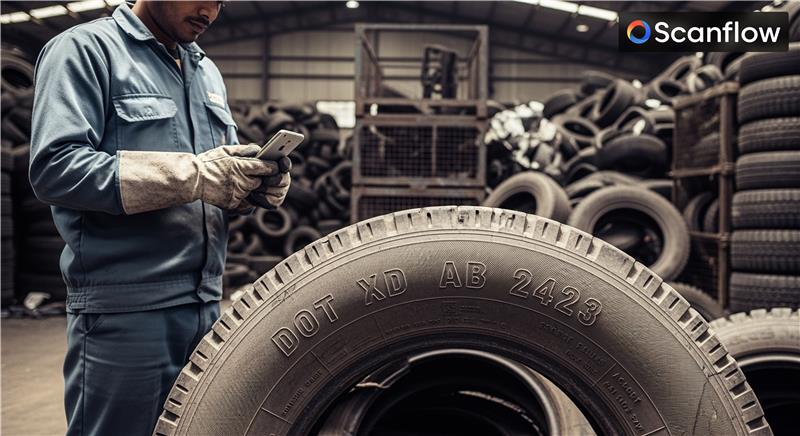
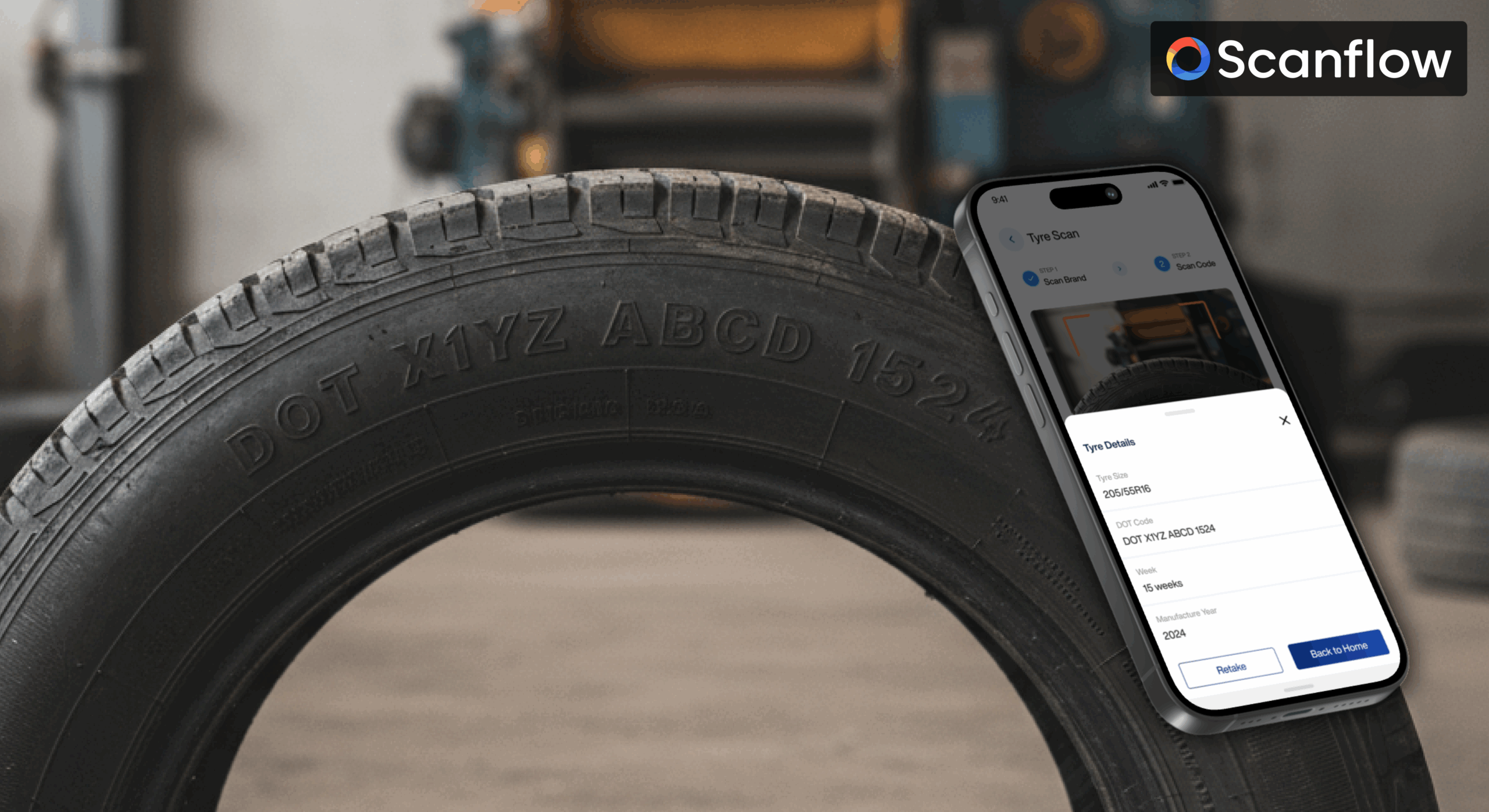
  • AI tire sidewall scanners capture DOT codes, brands, and serial details in real time.
  • Visual intelligence models identify sidewalls even under dirt, damage, or low light.
  • Each scan produces structured, tamper proof digital data ready for audit review.

Manifest Generation and Reporting

  • AI solutions like Scanflow compile captured data into complete digital manifests, automatically linking:
  • Source and destination facilities.
  • Transporter identification and load IDs.
  • Timestamped scan logs and batch summaries.
  • Helps create manifests that align with CalRecycle’s CTL and TCEQ reporting templates, minimizing administrative overhead.

Predictive Compliance Monitoring

  • AI flags missing tire counts, duplicate records, and data anomalies before audits.
  • Dashboards track real-time compliance performance, providing alerts for immediate correction.

Operational Transformation with AI Tire Scanning

Speed, Scale, and Precision

AI scanning enables tire processors to access huge volumes of tires, integrating seamlessly into existing systems.

  • Continuous scanning ensures uninterrupted workflow.
  • Batch-level reporting aggregates data for bulk shipments.
  • Local (on-device) processing ensures immediate feedback and no internet dependency.
  • All data is processed locally for full offline capability.
  • Meets EPA, GDPR, and state-level data privacy standards.

Business Impact: Turning Compliance into Competitive Advantage

AI tire scanning isn’t just about avoiding fines it’s a strategic investment in efficiency and growth.

Outcome AI-Driven Impact
Faster Operations 60–70% increase in throughput via automation.
Fewer Errors 80% reduction in data discrepancies and reporting mistakes.
Improved Audit Readiness Instant manifest retrieval and clean digital records.


By embedding AI into daily recycling operations, companies gain a long term edge in both compliance reliability and operational agility.

Optimizing Compliance Workflows with Scanflow

Scanflow’s Tire Sidewall Scanner helps recyclers implement digital compliance seamlessly through:

  • Hardware Integration: AI tire sidewall scanners retrofit easily into systems and inspection lines.
  • Data Dashboards: Real-time monitoring of tire inventory, shipment progress, and manifest status.
  • Reporting: Export-ready files compatible with CalRecycle, TCEQ, and EPA databases.
  • Predictive Insights: Early warnings for potential non-compliance issues.

This makes compliance visible, measurable, and verifiable turning regulatory obligations into process efficiency.

Practical Benefits for Tire Recyclers

  • Faster Audit Response: Generate digital manifests in seconds; auditors get clean, timestamped data instantly.
  • Lower Administrative Overhead: Reduce manual documentation and repetitive data entry, freeing staff for higher-value tasks.
  • Scalable and Flexible: Works across multi-site operations, from regional haulers to national recycling networks.
  • Real-Time Compliance Assurance: Get notified the moment a record goes missing or a data mismatch occurs.

Conclusion: The Future of Tire Recycling Compliance

AI is redefining how compliance is achieved, managed, and measured. By integrating tire sidewall scanning and automated manifest generation, recyclers can eliminate manual errors, reduce risk, and build transparency across their operations.

In 2025, compliance isn’t just about meeting regulations it’s about leading with precision, trust, and innovation. Scanflow enables recyclers to do exactly that.

Book a Demo with Scanflow

Regulatory compliance doesn’t have to slow your business down. With Scanflow, you can automate compliance tracking, manifest creation, and audit reporting all in real time.

👉 Book Your Demo at Scanflow

Categories
Tire Sidewall

Comparison Guide: Scanflow Tire Sidewall Scanner vs. Drive-Over Scanners vs. Gauges

The ultimate guide to tire sidewall scanning tools that boost speed, accuracy, and automation.

It’s 07:45 and the line is already backed up

Stacks of tires wait to be identified. Workers tilt and rotate each one, trying to spot DOT or TIN codes buried under dust, while the next delivery is already waiting at the gate. In that moment, your inspection method determines whether your workflow moves efficiently or slows to a crawl.

Across tire recycling yards, distribution hubs, and service centers, teams rely on one or a combination of three tools: manual gauges, drive-over scanners, and AI-driven tire sidewall scanners like Scanflow.

This comparison guide outlines the strengths, trade-offs, and real-world fit of each solution, helping you choose the right technology based on speed, accuracy, mobility, automation, and total cost to operate.

What Makes Scanflow Different

Scanflow is an AI-powered tire sidewall scanner that automatically captures DOT/TIN, tire size, brand, QR codes, and barcodes in less than a second. It delivers fast, structured tire data without manual entry, improving traceability, compliance, and productivity.

Built for flexibility, Scanflow runs on mobile devices, CCTV, or IP cameras, connects to any backend system, and works without internet access using local edge intelligence. It can operate as a ready-to-use app or as a customizable SDK integrated into existing software.

From tire recyclers and distributors to assembly-line operations and workshops, Scanflow turns any camera into an automated tire identification scanner no dedicated lane or hardware build-out required.

Manual Gauges: Familiar, Fast but Limited on Proof

Why teams still use them: Manual gauges remain the cheapest and most portable option for quick spot checks or tread measurements. They’re lightweight, easy to use, and have minimal startup cost.

The trade-offs:
Gauges only measure specific points on the tread and don’t capture any sidewall data like DOT codes or tire brand. Without visual documentation or digital traceability, manual readings can’t support detailed reports or automation. Errors in transcription and subjective measurements make data inconsistent especially across large teams or multi-site operations.

Operational impact:

  • Slower reporting and manual input into databases
  • No proof for audits or recycling compliance
  • Limited scalability for automated sorting or tire tracking

Best fit:
Small workshops or low-volume operations where tires are checked manually and digital documentation isn’t a priority.

Drive-Over Scanners: Throughput with a Trade-Off

What they do well:
Drive-over scanners provide automated tread measurement in seconds. Vehicles roll over embedded plates equipped with sensors or cameras, delivering 3D tread scans, color-coded heatmaps, and wear analytics. These systems are highly effective for throughput optimization in fixed service lanes.

The limitations:
Despite their speed and accuracy for tread wear, drive-over scanners cannot capture tire sidewall information. They miss critical data like DOT/TIN, tire size, and brand essential for traceability, recycling, and inventory management.

Installation is costly and space-intensive, requiring dedicated lanes, controlled lighting, and periodic calibration. Mobility is zero; once installed, the system stays fixed.

Operational impact:

  • Excellent for tread analysis, poor for sidewall identification
  • High setup and maintenance costs
  • Not suitable for mobile inspections or outdoor recycling environments

Best fit:
Large dealer networks or service centers with permanent drive-over lanes focused primarily on tread wear and vehicle alignment.

Scanflow Tire Sidewall Scanner: Automated, Accurate, and Mobile

What it is:
The Scanflow Tire Sidewall Scanner is an AI-driven tire identification system that captures every key sidewall element DOT/TIN, brand, size, QR code, and barcode in less than a second. It transforms manual inspections into structured, digital data collection.

How it works:
Using edge AI, Scanflow processes images locally for near-instant recognition. The system runs on mobile devices, mounted cameras, or existing IP/CCTV setups, requiring no internet connection. It’s flexible enough to adapt to tire recyclers, assembly lines, or retail workshops scaling easily across multiple sites.

Capabilities You Can Put to Work

  • Instant Tire Data Capture: Identify full sidewall information in under one second.
  • Edge AI Processing: Operates securely offline no cloud latency or data dependency.
  • Flexible Deployment: Compatible with smartphones, CCTV, and IP cameras.
  • System Integration: Connects seamlessly with ERP, WMS, CRM, and recycling software.
  • Customizable Setup: Configure workflows for sorting, assembly, or service inspections.

Key Benefits of Scanflow

  • Speed & Accuracy: AI recognition eliminates manual entry and human error.
  • Safety: Reduces physical handling of tires and improves ergonomics for staff.
  • Automation: Tire data syncs automatically with your digital systems.
  • Mobility: Works anywhere warehouse floor, yard, or remote station.
  • Scalability: Expand from one device to hundreds without infrastructure overhaul.
  • Data Confidence: Every record includes timestamped, structured tire details for audits and compliance.

Why Tire Sidewall Scanning Matters

Accurate sidewall data capture is essential for:

  • Recycling traceability: Ensuring correct disposal or re-use tracking through DOT/TIN and brand data.
  • Distribution and inventory management: Reducing manual SKU errors and improving warehouse automation.
  • Assembly-line fitment: Matching correct tire size and brand to vehicle models with zero human input.
  • Retail and service transparency: Providing clear documentation of tire condition and manufacturing details to customers.

Feature Comparison: Gauges vs. Drive-Over Scanners vs. Scanflow

Method Speed Sidewall Data Mobility Integration Accuracy Best Fit
Manual Gauges Low None High None Operator-dependent Spot checks & verification
Drive-Over Scanners Medium-High Tread only None Limited High (controlled lane) High-volume fixed service lanes
Scanflow Tire Sidewall Scanner Instant (<1s) Full (DOT/TIN, brand, size, QR, barcode) High Seamless (ERP, CRM, WMS) AI-Driven Precision Recyclers, distributors, assembly lines, service centers

Unlike traditional tread-only systems, Scanflow’s tire sidewall scanner gives you the complete picture of each tire’s identity, lifecycle, and compliance status.

Feature Comparison: Gauges vs. Drive-Over Scanners vs. Scanflow

A Practical Combo That Works

Some organizations combine technologies for full-spectrum coverage: using drive-over scanners to analyze tread wear during service intake and Scanflow to record tire sidewall data for documentation, traceability, and inventory automation. Together, they create a unified tire inspection workflow visual, verifiable, and data-driven.

Which Approach Fits Your Operation?

  • Gauges: Lowest cost but minimal documentation or automation.
  • Drive-Over Scanners: Great for tread analysis; limited for identification or mobility.
  • Scanflow Tire Sidewall Scanner: AI-powered, fast, mobile, and integrable ideal for organizations prioritizing automation, data accuracy, and scalability.

See how the Scanflow Tire Sidewall Scanner transforms tire data capture bringing instant recognition, automation, and connectivity to your workflow.

Whether you manage a recycling yard, distribution center, or tire service operation, Scanflow delivers accurate results in real time without disrupting your existing setup.

Try Scanflow and Request a Demo Today.

Categories
Tire Sidewall

What does DOT/TIN data really mean for scrap tire traceability and reporting? 

In the complex world of tire recycling and waste management, accurate data collection and traceability have become critical challenges for tire recyclers and scrap tire handlers. The Department of Transportation (DOT) and Tire Identification Number (TIN) codes printed on tire sidewalls contain a wealth of information that, when properly captured and processed, can enhance the industry’s approach to compliance, reporting, and operational efficiency. 

Understanding DOT/TIN data: The foundation of tire traceability 

Every tire manufactured for highway use carries a DOT code that serves as its unique fingerprint. This alphanumeric sequence contains crucial information, including the manufacturer’s plant code, tire size, brand code, and most importantly, the production date. For tire scrapers and recycling facilities, this data represents far more than simple identification; it’s the key to comprehensive scrap tire traceability and regulatory compliance. 

The TIN portion of the DOT code identifies explicitly the date and place of manufacture, enabling precise tracking throughout its lifecycle. This information becomes invaluable when preparing manifests, meeting state regulatory requirements, and maintaining accurate inventory records for tire disposal operations. 

The challenge of manual data collection 

Traditional methods of collecting tire data involve manual inspection and handwritten logs, a process that’s not only time consuming but prone to significant errors. Scarp Tire recyclers often struggle with: 

  • Data entry errors that compromise manifest accuracy 
  • Inconsistent documentation across different operators 
  • Time-intensive processes that slow down operations 
  • Difficulty in maintaining structured tire data for reporting purposes 
  • Challenges in meeting state compliance requirements efficiently 

These manual processes create bottlenecks in tire recycling operations, increasing the risk of regulatory non-compliance and potentially resulting in costly penalties and operational disruptions. The relief from these challenges is a significant benefit of AI tire scanning. 

How AI scrap tire scanning transforms operations? 

Modern AI scanners have emerged as a game-changer for the tire recycling industry. Tire sidewall scanning solutions leverage artificial intelligence to automatically capture, interpret, and process DOT/TIN data with unprecedented accuracy and speed, empowering industry professionals with more control and confidence. 

Scanflow’s Tire Sidewall SDK represents a breakthrough in automated tire identification, offering tire recyclers and scrapers a comprehensive solution that addresses the industry’s most pressing data collection challenges. The solution utilizes advanced computer vision for tires to: 

Capture data with mobile flexibility 

The solution works seamlessly with mobile applications and IP cameras, allowing operators to scan tire sidewalls using existing devices. This mobile tire scanning capability means facilities can implement the technology without significant infrastructure investments, making it accessible and convenient for operations of all sizes. 

Integrate with existing systems 

One of the key advantages of Scanflow’s approach is its ability to integrate with any backend system customers already have in place. This tire data management integration ensures that scanned information flows directly into existing workflows, eliminating data silos and maintaining operational continuity. 

Deliver structured data and analytics 

The Tire Sidewall scanning SDK automatically structures collected data into actionable insights through comprehensive dashboards. This capability provides real-time visibility into tire volumes, types, and processing status, enabling better decision-making and resource allocation. 

Streamlining manifest preparation and compliance 

The most significant benefit of automated tire scanning is its impact on manifest preparation. State regulations require detailed documentation of tire disposal activities, and manually preparing these documents is both time-consuming and error-prone. 

With AI Tire Sidewall Scanning, manifest creation becomes automated mainly. The system captures all necessary tire specifications, including size, brand, and TIN/DOT codes, and formats this information in accordance with regulatory requirements. This digital tire tracking approach not only saves time but also significantly reduces the risk of compliance issues. 

The future of tire recycling/scarp operations 

As state regulations become increasingly stringent and the volume of scrap tires continues to rise, the need for efficient and accurate data collection becomes more critical. Tire scanning solutions not only improve operational efficiency and compliance but also represent a significant step towards more sustainable, environmentally friendly tire recycling operations. 

The implementation of AI tire sidewall scanning offers immediate benefits in terms of operational efficiency and compliance, while also providing the foundation for advanced analytics and process optimization. Facilities that adopt these technologies position themselves to meet growing regulatory demands while maintaining competitive advantages through improved efficiency. This can lead to significant cost savings in terms of reduced manual labor, fewer compliance issues, and optimized resource allocation. 

Conclusion: Embracing digital transformation in tire recycling 

The integration of DOT/TIN data capture through advanced scrap tire scanning technology represents more than just an operational upgrade; it’s a fundamental shift toward data-driven tire recycling operations. By leveraging Scanflow’s Tire Sidewall SDK, tire recyclers and scrapers can transform their approach to compliance, reporting, and operational management. 

 As the industry continues to evolve, those who embrace intelligent tire scanning solutions will find themselves better positioned to navigate regulatory complexities, reduce operational costs, and build more sustainable business models. The future of tire recycling lies in accurate, automated data collection, and that future is available today. 

Discover how Scanflow enables recyclers to capture DOT/TIN data with accuracy and speed.  

[Schedule a Demo]

Categories
Tire Sidewall

How Inconsistent Manifests in Texas Slow Down Tire Scrap Transport and Disposal

The Texas scrap tire industry faces a critical challenge that has persisted for years: inconsistent manifest reporting that creates bottlenecks throughout the entire tire disposal chain. From small-scale tire recyclers to large processing facilities, businesses across Texas struggle with manifest inaccuracies that lead to costly delays, regulatory fines, and operational inefficiencies. 

Understanding the Texas Manifest System Challenge 

In Texas, the Texas Commission on Environmental Quality (TCEQ) requires comprehensive manifest documentation for all scrap tire transport and disposal activities. These manifests serve as crucial tracking reports that document tire quantities, conditions, and movement throughout the disposal process. However, the traditional manual approach to manifest creation has created a web of inconsistencies that plague the industry. 

Tire transporters must maintain detailed records using manifest systems and file annual reports with TCEQ, while scrap tire collectors and processing facilities rely on accurate manifest data to ensure compliance with state regulations. When these documents contain errors or inconsistencies, the entire supply chain suffers. 

The Pain Points Plaguing Texas Tire Recycle/Scarp Industry 

Manual Entry Errors and Data Inconsistencies 

The most significant challenge facing tire recycling operations is the reliance on manual data entry for manifest creation. Workers manually count tires and record sidewall information a process prone to human error. These manual entry mistakes cascade through the system, creating discrepancies between pickup documentation and delivery records. 

Scrap tire collectors often discover that tire counts don’t match between collection sites and processing facilities, leading to rejected shipments and costly return trips. Large processing facilities report that up to 30% of incoming manifests contain some form of data inconsistency, requiring time-consuming verification processes. 

Incomplete Tire Counts and Quantity Discrepancies 

Accurate tire quantification remains a persistent challenge. Traditional counting methods struggle with: 

  • Mixed tire sizes and types in single loads 
  • Damaged or partial tires that are difficult to categorize 
  • Time pressures that encourage rushed counting 
  • Lack of standardized measurement protocols 

These quantity discrepancies create regulatory compliance issues and financial disputes between transporters and processing facilities. 

Tire Condition Classification Problems 

TCEQ regulations require specific classification of tire conditions, but manual assessment leads to inconsistent categorization. Workers may classify the same tire differently, creating manifest discrepancies that trigger regulatory scrutiny. Without standardized tire condition assessment tools, the industry struggles to maintain consistency across different operators and facilities. 

Documentation Errors Between Pickup and Delivery 

The journey from tire collection to final disposal involves multiple handoffs, each presenting opportunities for documentation errors. Manifests often show discrepancies between: 

  • Initial pickup documentation 
  • Transport records 
  • Final delivery confirmation 
  • Processing facility intake reports 

These errors create audit trails that don’t align, raising red flags during TCEQ inspections and creating compliance challenges for all parties involved. 

Regulatory Consequences and Business Impact 

TCEQ Compliance Challenges 

The Texas Commission on Environmental Quality takes manifest accuracy seriously. Inconsistent documentation can trigger: 

  • Regulatory investigations 
  • Compliance violations 
  • Operational restrictions 
  • Increased scrutiny on future submissions 

Tire recyclers and processors must maintain meticulous records to satisfy TCEQ requirements, but manual manifest systems make this increasingly difficult as operations scale. 

The Emerging Solution: Scanflow Tire Sidewall Scanning 

Tire Sidewall Scanner 

Scanflow tire sidewall scanner solution represents a breakthrough solution for manifest accuracy challenges. This advanced solution can capture and identify and catalog tire specifications, conditions, and quantities with unprecedented precision. By eliminating manual data entry, tire sidewall scanners significantly reduce the human error factor that plagues traditional manifest creation. 

Comprehensive Tire Scanner Solutions 

Scanflow tire scanner solution go beyond simple identification to provide comprehensive tire analysis. These solutions can: 

  • Automatically count tire quantities with high accuracy 
  • Provides Dashboard with the real time data. 
  • Generate consistent manifest data across all operations 
  • Create audit that satisfy TCEQ requirements 

Moving Forward: Embracing Technological Solutions 

The Texas scrap tire industry stands at a crossroads. Traditional manual manifest processes have reached their limitations, creating persistent bottlenecks that impact the entire disposal chain. However, Scanflow Tire sidewall scanner offers a path forward that addresses the root causes of manifest inconsistencies. 

Tire transporters, processors, and collectors who embrace these technological solutions position themselves for: 

  • Improved TCEQ compliance 
  • Reduced operational costs 
  • Faster processing times 
  • Enhanced data accuracy 
  • Competitive advantages in the marketplace 

The transition from manual to automated manifest creation represents more than just a technological upgrade it’s a fundamental shift toward operational excellence that benefits the entire Texas tire recycling ecosystem. 

As the industry evolves, businesses that invest in advanced tire scanning technology will find themselves better positioned to navigate Texas’s complex regulatory environment while achieving sustainable operational efficiency. 

Ready to eliminate manual tire data entry and simplify scrap tire compliance? Discover how Scanflow’s mobile tire scanning solution delivers fast, accurate, and actionable insights.
👉 Request a Free Demo

Categories
Tire Sidewall

Top 5 Benefits of Smart Scanning Solution for Tire Scrap and Recycling Businesses with Scanflow

Top 5 Benefits of Smart Scanning Solution for Tire Recycling Businesses 

The tire recycling industry faces constant challenges in handling large volumes of scrap tires, ensuring sustainability, and reducing operational costs. Traditional sorting and identification methods are often time-consuming and prone to errors. This is where smart scanning solutions like Scanflow come into play. 

By using advanced recognition systems and SDK integration, tire recycling businesses can streamline operations, cut costs, and support a greener planet. Let’s explore the top 5 benefits of smart scanning solutions for tire recycling companies. 

Introduction: Why Smart Scanning Matters in Tire Recycling 

Every year, billions of tires reach the end of their lifecycle. Recycling these tires effectively requires precise identification of types, materials, and potential reuse options. Smart scanning solutions automate this process, minimizing human error and increasing speed. 

1.The Role of Scanflow in Modern Recycling Processes 

Scanflow is a powerful smart scanning solution designed to help industries, including tire recycling, improve recognition and data management. With its SDK integration, Scanflow enables businesses to customize scanning processes according to their unique needs, making recycling more efficient and scalable. 

Benefit 1: Enhanced Efficiency in Tire Identification 

1.Real-Time Recognition of Tire Types 

Smart scanning can instantly recognize tire models, brands, and conditions. This ensures that recycling facilities can sort materials quickly without relying on manual inspection. 

2.Reduction in Manual & Sorting Errors 

By automating identification, smart scanning reduces and eliminates mistakes during sorting. This translates into faster turnaround times for recycling facilities. 

 Benefit 2: Improved Accuracy with Smart Scanning SDK 

1.How SDK Integration Streamlines Recycling Operations 

The SDK provided by Scanflow allows recycling businesses to integrate scanning functions into their existing workflows. This leads to smoother operations and consistent accuracy in tire recognition. 

2.Compatibility with Existing Recycling Systems 

Scanflow’s Tire SDK is designed for seamless compatibility, meaning businesses don’t need to overhaul their entire recycling infrastructure to adopt smart scanning. 

 Benefit 3: Cost Savings for Recycling Businesses 

1.Lower Operational Costs through Automation 

Automation powered by smart scanning drastically reduces labor costs while increasing overall productivity. 

2.Long-Term ROI for Tire Recycling Facilities 

Though initial setup may require investment, the long-term return on investment (ROI) is significant. Reduced errors, faster processing, and optimized operations all contribute to cost savings. 

 Benefit 4: Data-Driven Sustainability 

1.Tracking Material Flow for Eco-Friendly Processing 

Smart scanning provides real-time data on tire materials and conditions. This helps businesses track recycling efficiency and ensure eco-friendly practices. 

2.Supporting Circular Economy Practices 

By enabling precise sorting, smart scanning supports a circular economy, where materials are reused and waste is minimized. 

 Benefit 5: Scalability and Flexibility of Scanflow Solutions 

1.Adapting to Different Tire Recycling Needs 

Whether handling passenger car tires, truck tires, or specialty tires, smart scanning solutions adapt to different use cases. 

2.Future-Proofing Businesses with Smart Scanning 

As regulations and environmental demands evolve, Scanflow ensures businesses stay ahead by offering flexible and scalable scanning solutions. 

Conclusion: Driving the Future of Tire Recycling with Smart Scanning 

The tire recycling industry is undergoing a major transformation, and smart scanning solutions are at the forefront of this change. By adopting Scanflow and leveraging its SDK integration, recycling businesses can achieve faster tire identification, greater accuracy, reduced costs, and stronger sustainability outcomes.

Ready to transform your Tire scarp and recycling business? 
Book a Demo with Scanflow Today and see how smart scanning can make a difference in your scarp and recycling processes. 


QR Floating