Categories
Tire Sidewall

How Tire Sidewall Scanner for Commercial Vehicles is Optimizing Fleet Operations

Why Tire Data Matters More Than Ever for Fleets

Fleet management has entered a new era where data accuracy determines efficiency and safety. Tires are among the most critical and often overlooked components of a vehicle. Every tire carries a unique identity through sidewall information like the DOT and TIN numbers, which track manufacturing details, size, and compliance.

In commercial fleets with hundreds or thousands of tires, tracking this information manually is time consuming and error prone. That’s where Scanflow’s tire sidewall scanner for commercial vehicles transforms operations by digitizing and automating how tire information is captured, stored, and managed.

The Challenge: Manual Tire Inspections Don’t Scale

Fleet maintenance teams often rely on manual note-taking or barcode stickers to track tires. But these methods introduce several operational challenges:

  • Inaccurate records: Illegible handwriting and transcription errors can result in data inconsistencies.
  • Lost traceability: Tires are replaced or rotated frequently, making it difficult to match them to vehicles.
  • Compliance risk: Missing or wrong TIN data can complicate recalls or audits.
  • Time waste: Inspecting each tire manually can take 2–3 minutes, slowing down fleet checks.

With hundreds of tires to inspect, these inefficiencies add up quickly resulting in lost productivity and missed insights.

Automating Tire Identification for Commercial Vehicles

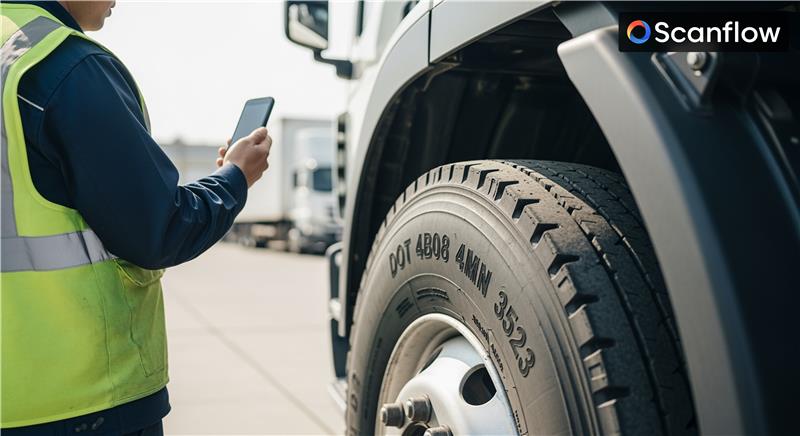
Scanflow’s tire sidewall scanner uses computer vision and AI to recognize embossed and printed codes directly from tire sidewalls. Using a smartphone, tablet, or handheld device, technicians can scan each tire in seconds even in dirty, low-light, or worn conditions.

The system captures key information including:

  • DOT and TIN codes
  • Manufacturer and model
  • Size and serial numbers
  • Optional QR or barcode data

Once captured, this information syncs automatically with fleet management or maintenance systems, giving managers a real-time view of every tire in their operation.

Key Benefits for Fleet Managers

1.Rapid Inspections and Real-Time Updates

Technicians can scan and record tire details in under 10 seconds. This enables more frequent checks and faster decision-making.

2.Improved Tire Traceability

Each tire is digitally linked to a vehicle and location, ensuring full traceability through its lifecycle from installation to replacement.

3.Lower Operational Costs

By automating inspections, fleets save hundreds of labor hours annually while preventing costly errors related to misidentified tires.

4.Enhanced Safety and Compliance

The system ensures accurate TIN and DOT data capture, simplifying recall compliance and safety audits.

5.Integration-Ready Technology

Scanflow connects seamlessly with existing fleet management platforms, enabling data synchronization without disrupting current workflows.

Built for the Real World: Why Fleets Trust Scanflow

Commercial fleets operate in challenging environments dusty depots, outdoor yards, and low-light garages.

Scanflow’s AI-driven system is designed specifically for these conditions, offering:

  • Low-contrast text detection for worn or dirty sidewalls.
  • Offline scanning capability for remote locations.
  • Multi-device compatibility across Android, iOS, and rugged scanners.
  • API and SDK support for custom fleet integrations.

These features make it a practical and scalable solution for logistics companies, trucking fleets, and transport providers across the U.S.

Real-World Impact: Smarter Fleet Maintenance

With Scanflow, fleets can monitor tire performance across every vehicle. Instead of manually checking each tire, managers receive live data on:

  • Tire age
  • Replacement history
  • Usage distribution across routes
  • Upcoming maintenance requirements

This visibility leads to better tire rotation strategies, optimized replacement schedules, and longer tire life translating into measurable cost savings.

Mobile Flexibility: Tire Scanning Anywhere, Anytime

One of Scanflow’s biggest strengths is mobility.

Technicians don’t need specialized hardware; they can use their smartphones to scan and upload tire data instantly. This makes it easy to:

  • Conduct roadside inspections.
  • Track tire changes during long-haul trips.
  • Validate tire data at delivery or return points.

Every scan is timestamped and geo-tagged, creating a verifiable record of tire maintenance across the fleet.

Implementation and ROI

Step 1: Deploy Scanflow’s SDK or app to your mobile devices.

Step 2: Train field staff  typically within a few minutes.

Step 3: Integrate tire scan data into your fleet management system.

Step 4: Track results in your dashboard error reduction, time saved, and compliance metrics.

Let’s take a comparison of measurable outcomes between manual inspection and Scanflow.

Metric Manual Process With Scanflow
Time per tire 2–3 minutes Under 10 seconds
Error rate 5–10% <1%
Average savings Up to 80% time reduction


The Future of Tire Management in Fleets

As tire distributors adopt digital identifiers like QR codes and embedded chips, the role of scanning will expand even further. Scanflow’s platform is built to evolve supporting QR and barcode recognition, and preparing for upcoming standards in smart tire identification.

This ensures your fleet remains ready for the next generation of digital vehicle maintenance.

Conclusion: Smarter Fleets Start with Smarter Scanning

Managing commercial vehicles efficiently depends on reliable, accurate data. With Scanflow tire sidewall scanner for commercial vehicles, fleets can replace manual, error-prone inspections with a seamless digital workflow.

From faster inspections to improved compliance and lower operational costs, Scanflow helps fleet managers take control of their tire data  turning every inspection into actionable intelligence.

If your fleet is ready to move faster, safer, and smarter, Scanflow is the technology partner to get you there.
Categories
Tire Sidewall

What does DOT/TIN data really mean for scrap tire traceability and reporting? 

In the complex world of tire recycling and waste management, accurate data collection and traceability have become critical challenges for tire recyclers and scrap tire handlers. The Department of Transportation (DOT) and Tire Identification Number (TIN) codes printed on tire sidewalls contain a wealth of information that, when properly captured and processed, can enhance the industry’s approach to compliance, reporting, and operational efficiency. 

Understanding DOT/TIN data: The foundation of tire traceability 

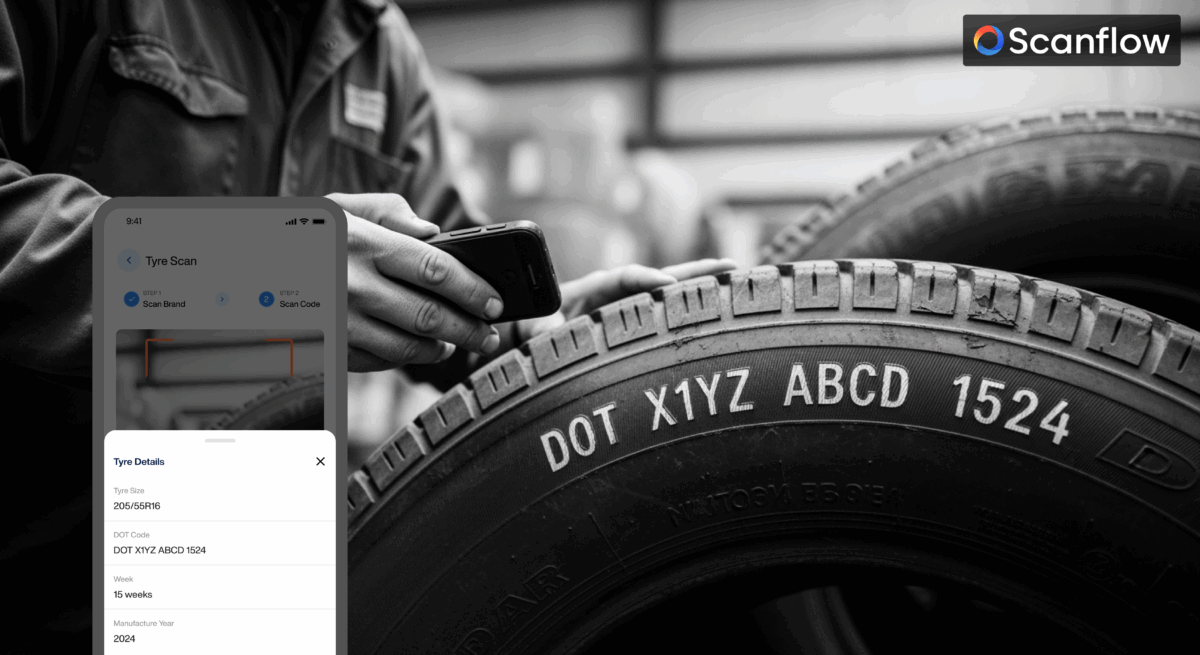
Every tire manufactured for highway use carries a DOT code that serves as its unique fingerprint. This alphanumeric sequence contains crucial information, including the manufacturer’s plant code, tire size, brand code, and most importantly, the production date. For tire scrapers and recycling facilities, this data represents far more than simple identification; it’s the key to comprehensive scrap tire traceability and regulatory compliance. 

The TIN portion of the DOT code identifies explicitly the date and place of manufacture, enabling precise tracking throughout its lifecycle. This information becomes invaluable when preparing manifests, meeting state regulatory requirements, and maintaining accurate inventory records for tire disposal operations. 

The challenge of manual data collection 

Traditional methods of collecting tire data involve manual inspection and handwritten logs, a process that’s not only time consuming but prone to significant errors. Scarp Tire recyclers often struggle with: 

  • Data entry errors that compromise manifest accuracy 
  • Inconsistent documentation across different operators 
  • Time-intensive processes that slow down operations 
  • Difficulty in maintaining structured tire data for reporting purposes 
  • Challenges in meeting state compliance requirements efficiently 

These manual processes create bottlenecks in tire recycling operations, increasing the risk of regulatory non-compliance and potentially resulting in costly penalties and operational disruptions. The relief from these challenges is a significant benefit of AI tire scanning. 

How AI scrap tire scanning transforms operations? 

Modern AI scanners have emerged as a game-changer for the tire recycling industry. Tire sidewall scanning solutions leverage artificial intelligence to automatically capture, interpret, and process DOT/TIN data with unprecedented accuracy and speed, empowering industry professionals with more control and confidence. 

Scanflow’s Tire Sidewall SDK represents a breakthrough in automated tire identification, offering tire recyclers and scrapers a comprehensive solution that addresses the industry’s most pressing data collection challenges. The solution utilizes advanced computer vision for tires to: 

Capture data with mobile flexibility 

The solution works seamlessly with mobile applications and IP cameras, allowing operators to scan tire sidewalls using existing devices. This mobile tire scanning capability means facilities can implement the technology without significant infrastructure investments, making it accessible and convenient for operations of all sizes. 

Integrate with existing systems 

One of the key advantages of Scanflow’s approach is its ability to integrate with any backend system customers already have in place. This tire data management integration ensures that scanned information flows directly into existing workflows, eliminating data silos and maintaining operational continuity. 

Deliver structured data and analytics 

The Tire Sidewall scanning SDK automatically structures collected data into actionable insights through comprehensive dashboards. This capability provides real-time visibility into tire volumes, types, and processing status, enabling better decision-making and resource allocation. 

Streamlining manifest preparation and compliance 

The most significant benefit of automated tire scanning is its impact on manifest preparation. State regulations require detailed documentation of tire disposal activities, and manually preparing these documents is both time-consuming and error-prone. 

With AI Tire Sidewall Scanning, manifest creation becomes automated mainly. The system captures all necessary tire specifications, including size, brand, and TIN/DOT codes, and formats this information in accordance with regulatory requirements. This digital tire tracking approach not only saves time but also significantly reduces the risk of compliance issues. 

The future of tire recycling/scarp operations 

As state regulations become increasingly stringent and the volume of scrap tires continues to rise, the need for efficient and accurate data collection becomes more critical. Tire scanning solutions not only improve operational efficiency and compliance but also represent a significant step towards more sustainable, environmentally friendly tire recycling operations. 

The implementation of AI tire sidewall scanning offers immediate benefits in terms of operational efficiency and compliance, while also providing the foundation for advanced analytics and process optimization. Facilities that adopt these technologies position themselves to meet growing regulatory demands while maintaining competitive advantages through improved efficiency. This can lead to significant cost savings in terms of reduced manual labor, fewer compliance issues, and optimized resource allocation. 

Conclusion: Embracing digital transformation in tire recycling 

The integration of DOT/TIN data capture through advanced scrap tire scanning technology represents more than just an operational upgrade; it’s a fundamental shift toward data-driven tire recycling operations. By leveraging Scanflow’s Tire Sidewall SDK, tire recyclers and scrapers can transform their approach to compliance, reporting, and operational management. 

 As the industry continues to evolve, those who embrace intelligent tire scanning solutions will find themselves better positioned to navigate regulatory complexities, reduce operational costs, and build more sustainable business models. The future of tire recycling lies in accurate, automated data collection, and that future is available today. 

Discover how Scanflow enables recyclers to capture DOT/TIN data with accuracy and speed.  

[Schedule a Demo]

QR Floating