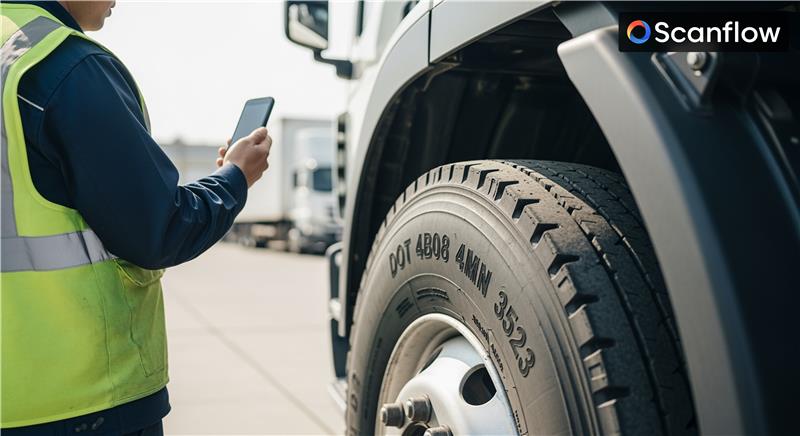
Tire Sidewall Scanning Prevents Mix-Ups in Ohio Tire Plants
Introduction
Ohio’s manufacturing sector has long been a backbone of North America’s automotive supply chain. With multiple tire plants, distribution hubs, and assembly-line operations powering the region, accuracy in tire identification has never been more important. As production volumes grow and SKU diversity increases, manufacturers face a familiar yet costly challenge: tire mix-ups. A single mismatched tire in a vehicle build sequence can trigger delays, rework, or full unit stoppage. Worse, recurring mix-ups compromise quality assurance, supply-chain visibility, and OEM confidence.
To solve this, Ohio manufacturers are turning to tire sidewall scanning. Instead of relying on printed labels that fall off, spreadsheets that drift out of sync, or manual reading of molded characters, they deploy AI-driven sidewall text recognition that instantly identifies each tire based on the information molded into its rubber. This creates a consistent, digital source of truth that follows every tire through receiving, storage, picking, and assembly-line fitment.
In this article, you’ll learn how sidewall scanning works in a real manufacturing environment, how it eliminates SKU mismatch events, and how Ohio facilities integrate it with warehouse workflows, MES systems, and quality gates. You’ll also see why sidewall scanning is evolving into a core capability for lean operations, automotive compliance, and production accuracy.
1. The Problem: Tire Mix-Ups and Manual Identification Risks
1.1 Why Manual Identification Fails in Modern Manufacturing
Many tire facilities still depend on processes developed decades ago: reading molded text by eye, matching tires to work orders manually, or trusting labels attached at receiving. These methods introduce several risks:
-
Labels detach, smudge, or become unreadable during handling.
-
Manually reading molded text leads to fatigue, misreads, and inconsistent accuracy.
-
Inventory data becomes outdated when tires are moved without proper scanning.
-
Assembly-line pickers select from visually similar tires, assuming they match.
As model diversity expands all-season, all-terrain, specialty lines, variances in size, load index, speed rating visual similarity becomes misleading. Human operators must interpret dozens of near-identical tires at high speed. Errors inevitably occur.
1.2 The True Cost of Tire Mix-Ups
A wrong tire reaching the assembly line can trigger:
-
Line disruptions and sequencing failures.
-
Unplanned rework or scrapping.
-
Delayed vehicle shipments.
-
Quality-control investigations.
-
Damaged supplier reputation with downstream OEMs.
Even when caught early, mix-ups consume time and create traceability gaps. Without a verifiable digital record of which tire went where, audits and root-cause investigations become slow and uncertain.
2. What Tire Sidewall Scanning Actually Is
2.1 AI Text Recognition for Molded Sidewall Characters
Tire sidewall scanning uses computer vision to read the molded text already present on every tire, including:
-
Tire size
-
Model
-
Load index
-
Speed rating
-
DOT-coded information
-
Manufacturing identifiers
-
Other alphanumeric markings
This method does not rely on printed labels, RFID tags, or externally applied markers. Instead, it captures the tire’s inherent information as the basis of identification.
2.2 Why This Approach Works Better Than Legacy Solutions
Because molded sidewall characters cannot fall off or degrade in the same way printed labels do, sidewall scanning ensures:
-
A permanent, tire-native identifier
-
Reliable recognition even after extended storage
-
Uniform accuracy regardless of storage conditions
-
Consistency across suppliers, plants, or batches
This makes sidewall scanning ideal for Ohio plants dealing with tight production timelines and diverse tire inventories.
3. How Sidewall Scanning Prevents Mix-Ups in Ohio Plants
3.1 Eliminating Human Interpretation Errors
Operators no longer read molded text manually. Instead, sidewall scanning instantly identifies the tire and checks whether it matches the expected SKU in the current workflow step. If not, the system blocks the move or triggers an alert.
3.2 Enhancing Warehouse Accuracy
In receiving, storage, and picking, scanning ensures:
-
Tires are placed in the correct bin or rack.
-
Inventory entries match the actual tire delivered.
-
Real-time visibility shows exactly where each SKU is located.
This prevents the root causes of mix-ups before tires even reach the assembly line.
3.3 Guaranteeing Fitment Accuracy on Assembly Lines
During assembly-line operations, scanning confirms:
-
The tire picked matches the vehicle’s build specification.
-
No alternative or wrong SKU can be fitted without detection.
-
A digital record links each tire to each vehicle build.
This creates a traceable, error-proof fitment process.
4. Integration in Ohio Manufacturing Environments
4.1 Retrofitting Existing Warehouses
Ohio facilities often operate mixed-age infrastructures. Fortunately, sidewall scanning:
-
Works with handheld devices, fixed gate stations, or mobile workstations.
-
Requires no dismantling of existing racks or conveyors.
-
Integrates into workflows without slowing throughput.
Plants can deploy scanning in phases: receiving first, then picking, then assembly.
4.2 Connecting with MES, ERP, and QMS Platforms
Scanflow’s sidewall scanning solution integrates with key production systems, allowing tire identification data to synchronize automatically. This enables:
-
Automated work-order validation
-
Real-time exception handling
-
End-to-end traceability
-
Error-proof production sequencing
For Ohio OEM-supplier plants, this ensures alignment with major automotive compliance requirements.
4.3 Reducing Reliance on Printed Labels
Printed labels create bottlenecks. They require printers, supplies, maintenance, and manual application. Sidewall scanning removes these dependencies entirely.
5. A Realistic Workflow: How Scanflow Operates in Practice
5.1 Step 1: Receiving Verification
When a shipment arrives:
- Operators scan each tire.
- The system reads the molded characters.
- The tire is automatically matched to the purchase order.
- Any mismatch size, model, or supplier discrepancy is flagged before storage.
This prevents incorrect inventory from entering circulation.
5.2 Step 2: Storage and Inventory Tracking
As tires move into racks:
-
Each scan updates the digital location.
-
Inventory accuracy becomes near-perfect.
-
FIFO or batch-based retrieval rules are applied automatically.
This ensures the right tire will be accessible when needed.
5.3 Step 3: Picking and Staging for Assembly
Pickers scan tires as they retrieve them. If a tire does not match the expected SKU on the work order, the system prevents progression. This protects the assembly line from upstream mistakes.
5.4 Step 4: Assembly-Line Fitment Verification
Before fitment:
-
Operators scan again to confirm the tire matches the build spec.
-
The system logs which tire went onto which vehicle.
-
Fitment errors are eliminated, not corrected afterward but prevented entirely.
This creates a clean digital audit trail without manual documentation.
6. Benefits for Quality Control and Assurance
6.1 Real-Time Validation of Every Tire Movement
Instead of periodic audits, every tire movement becomes a verification point. The system confirms identity at:
-
Receiving
-
Storage
-
Picking
-
Staging
-
Fitment
This protects both product quality and process consistency.
6.2 Traceability from Batch to Vehicle Build
Sidewall scanning ensures every tire carries a digital fingerprint. When recorded through MES integration, manufacturers can trace:
-
Which batch a tire came from
-
When it entered storage
-
Who picked it
-
Which vehicle it was fitted to
This level of lineage strengthens compliance, quality audits, and supplier transparency.
6.3 Eliminating Paper Logs and Manual Recording
Ohio plants often juggle a mix of paper sheets, spreadsheets, handwritten notes, and emails. Sidewall scanning centralizes everything into a consistent digital record, instantly accessible and editable.
7. Why Ohio Manufacturers Are Adopting This Now
7.1 Rising SKU Complexity
Tire manufacturers now produce:
-
More seasonal variants
-
More specialized applications
-
Wider fitment combinations
Human operators cannot differentiate dozens of similar SKUs reliably over long shifts. Automation fills this accuracy gap.
7.2 OEM Expectations for Traceability
Vehicle manufacturers increasingly demand:
-
Full part-level traceability
-
Digital audit records
-
Real-time reporting
Sidewall scanning helps Ohio suppliers meet these expectations without adding manual workload.
7.3 Lean Manufacturing Alignment
Lean principles require:
-
Predictable flow
-
Zero-defect processes
-
Minimal rework
Sidewall scanning fits naturally into lean systems by eliminating defects at the source.
8. Comparison: Sidewall Scanning vs Traditional Identification Methods
8.1 Printed Labels
Pros: Familiar and cheap to produce.
Cons: Fall off, smudge, or degrade; must be applied manually; generate waste.
8.2 Human Reading of Molded Text
Pros: No equipment required.
Cons: Slow, inconsistent, prone to error, fatiguing for operators.
8.3 RFID
Pros: Good for pallet tracking.
Cons: Costs increase when tagging individual tires; tags can fail or become detached.
8.4 Sidewall Scanning
Pros:
-
Reads the tire’s native identifiers
-
Requires no added labels or tags
-
Prevents mix-ups even in high-speed environments
-
Integrates directly with manufacturing workflows
9. Implementing Sidewall Scanning in an Ohio Facility
9.1 Best Practices
-
Start with a pilot in receiving or picking.
-
Evaluate lighting consistency in scanning zones.
-
Train operators to adopt scanning as a standard step.
-
Integrate with MES for real-time validation.
-
Use dashboards to monitor scan accuracy and exceptions.
9.2 Change Management Considerations
Operators need reassurance that scanning:
-
Speeds up their work
-
Reduces rework
-
Protects them from costly mistakes
Managers should present scanning as empowerment, not oversight.
9.3 Scalability for Multi-Plant Operations
Scanflow solutions support standardized workflows across multiple sites, enabling:
-
Unified data structures
-
Shared audit trails
-
Consistent pick-and-fitment logic
10. ROI: The Business Case for Sidewall Scanning
10.1 Cost Avoidance
Mix-up events create:
-
Lost labor
-
Lost materials
-
Line downtime
-
Quality spillover risk
Sidewall scanning prevents these before they occur.
10.2 Higher Throughput
With scanning:
-
Picking decisions are instantaneous
-
Fitment verification becomes frictionless
-
Exception handling is automated
This maintains flow even in high-volume Ohio plants.
10.3 Stronger Supplier Positioning
Manufacturers using sidewall scanning demonstrate:
-
Commitment to traceability
-
Error-proof fitment
-
Clean audit trails
These differentiate Ohio suppliers in the competitive automotive market.
11. Future Outlook: Where Sidewall Scanning Is Headed
Even without discussing defect detection or advanced diagnostics, the future of sidewall scanning is clear:
-
Deeper integration with plant analytics platforms
-
Automated sequencing with live production schedules
-
Machine learning to improve character recognition over time
-
Plant-wide consistency across receiving, storage, and assembly
Sidewall scanning is not a niche tool. It is becoming a foundational component of modern tire manufacturing.
Quick Takeaways
-
Tire sidewall scanning uses AI-driven reading of molded text to identify tires accurately.
-
It eliminates mix-ups caused by labels, manual reading, or mismatched inventory data.
-
Ohio manufacturers integrate scanning from receiving through assembly-line fitment.
-
It strengthens traceability, compliance, and quality assurance.
-
It aligns with lean principles and increasing OEM expectations.
-
It reduces rework, delays, and SKU confusion in high-volume environments.
Conclusion
Tire mix-ups pose a persistent threat to quality, efficiency, and customer satisfaction in the tire manufacturing and vehicle assembly sectors. As Ohio facilities continue to accelerate production and diversify product lines, reliance on manual identification or printed labels introduces unnecessary risk.
Tire sidewall scanning replaces these outdated methods with a stable, accurate, and fully digital identification process. By reading molded text directly from each tire, plants eliminate guesswork at every step. This creates a closed-loop, reliable system of verification from receiving to storage, picking, and assembly-line fitment.
The benefits are immediate: fewer errors, faster throughput, cleaner audits, and stronger compliance with OEM expectations. Over time, plants adopting this technology gain deeper production intelligence and higher consistency across multi-plant operations.
For Ohio manufacturers seeking a modern solution to long-standing identification challenges, tire sidewall scanning is now an essential capability. It strengthens your quality processes, protects your production flow, and ensures every tire reaches the right vehicle without exception.
If you’re ready to elevate your plant’s accuracy and end SKU mix-ups permanently, explore implementing sidewall scanning with Scanflow today.
We’d Love Your Feedback
Did this article help clarify how sidewall scanning improves accuracy and eliminates mix-ups? What’s the biggest identification challenge your facility faces today? Share your thoughts so we can explore solutions together and feel free to pass this article along to colleagues who might benefit.