Categories
ITAD

ITAD Compliance & Audit Trails in 2026: AI Scanning Protects Your Business

Every retired laptop, decommissioned server, and end-of-life storage device that leaves your organisation carries a risk most IT teams underestimate not just the data it holds, but the proof of what happened to it. In today’s regulatory environment, “we wiped it” is not an answer. Regulators want evidence. Auditors want timestamps. Cyber insurers want documentation. And increasingly, they want all of it in real time. 

That is where AI-powered ITAD scanning software is changing the game. It transforms what was once a paper-heavy, error-prone compliance process into an automated, tamper-evident, continuously auditable system one that doesn’t just protect your data, but actively protects your business. 

This ITAD guide breaks down exactly how that works, why the stakes have never been higher, and what to look for in a compliant ITAD program for 2026 and beyond. 

What Is ITAD And Why Compliance Now Sits at Its Core 

IT Asset Disposition (ITAD) is the structured process of retiring, sanitising, and disposing of end-of-life IT equipment in a secure, compliant, and environmentally responsible way. It covers everything from laptops and mobile devices to data centre servers and storage arrays. 

For years, ITAD was treated as an operational afterthought the “cleanup” phase after a hardware refresh. That era is over. The global ITAD market was valued at $19.70 billion in 2025 and is projected to reach $48.48 billion by 2034, growing at a CAGR of 10.53%. This explosive growth reflects a fundamental shift: enterprises now treat ITAD not as a logistics problem, but as a risk management, compliance, and ESG programme that demands the same rigour as any other data security function. 

The trigger for this shift is straightforward: the financial and reputational consequences of getting ITAD wrong have become impossible to ignore. 

The Compliance Stakes: What Goes Wrong Without an Audit Trail 

Data Breach Costs Have Reached Record Levels 

According to IBM’s 2025 Cost of a Data Breach Report, the average data breach now costs organisations $4.44 million per incident and that figure climbs to $10.22 million in the United States specifically. Healthcare breaches average $7.42 million. A significant proportion of these incidents trace back to improperly decommissioned hardware: old drives, retired endpoints, and stale devices that left the building without verified data destruction. 

The Morgan Stanley case is the most cited cautionary tale in the industry decommissioned servers resold without proper data destruction, resulting in regulatory action and reputational damage that far outweighed the cost of compliant disposal. 

Regulatory Penalties Are Growing Sharper 

The compliance landscape governing ITAD has hardened considerably: 

  • GDPR penalties can reach €20 million or 4% of global annual revenue whichever is higher. GDPR enforcement actions resulted in over €3 billion in fines during 2025 alone, including a €1.2 billion penalty against Meta and €530 million against TikTok. 
  • HIPAA fines start at $137 per violation for unknowing breaches and scale to $63,973 per violation for wilful neglect, with annual caps reaching $1.9 million per violation category. 
  • NIST 800-88 Rev. 2 finalised in September 2025 is now the baseline standard for media sanitisation referenced by HIPAA, GDPR Article 32, PCI-DSS, SOX, and GLBA. Organisations that cannot demonstrate alignment with its Clear, Purge, or Destroy methodology are exposed across multiple regulatory frameworks simultaneously. 

Industry research indicates that organisations with formal, documented data destruction programmes reduce breach-related losses by an average of $1.23 million compared to those relying on ad-hoc methods. 

“Show Me the Audit Trail” Is the New Normal 

The defining compliance shift of 2025 documented by multiple industry observers was cultural as much as regulatory. At the ITAD Summit 2025 in Las Vegas, a recurring theme was the increasing scrutiny from regulators and enterprise clients demanding proof: proof of sanitisation, proof of chain of custody, proof of downstream accountability. As one industry review put it, “Show me the audit trail” became a standard request even from mid-market procurement teams. 

By 2030, over 70% of Fortune 500 companies are projected to outsource ITAD services, primarily for data security and the compliance documentation those partnerships provide. 

What an ITAD Audit Trail Actually Needs to Contain 

An audit trail is not just a destruction certificate. A defensible, compliance-grade ITAD audit trail must document the complete lifecycle of every asset from the moment it is flagged for retirement: 

Asset Identification Serial number, make, model, asset tag, and data classification for every device. Inventory systems at certified ITAD providers now achieve 99%+ accuracy in asset identification. 

Chain of Custody Every transfer, storage location, and handling event from the client’s facility to final disposition, with timestamps and authorised personnel recorded at each handoff. 

Data Sanitisation Method and Verification Which NIST 800-88 method was applied (Clear, Purge, or Destroy), by whom, with what tooling, and the independent verification result. For healthcare environments, this must explicitly reference ePHI handling protocols under the HIPAA Security Rule. 

Certificate of Destruction A tamper-evident, serialised destruction certificate for every asset, exportable in formats regulators and auditors expect. 

Downstream Disposition Where the asset went after sanitisation: redeployment, remarketing, recycling, or physical destruction. R2v3 certification requirements mean downstream vendors must also be accountable in the chain. 

Without all of these elements, an audit trail has gaps and a single gap in documentation can expose a client to reputational and legal risks that dwarf the cost of the ITAD programme itself.  

How AI Scanning Software Transforms ITAD Compliance 

This is where modern ITAD platforms powered by AI and automation fundamentally change what is possible. 

Automated Asset Identification and Inventory 

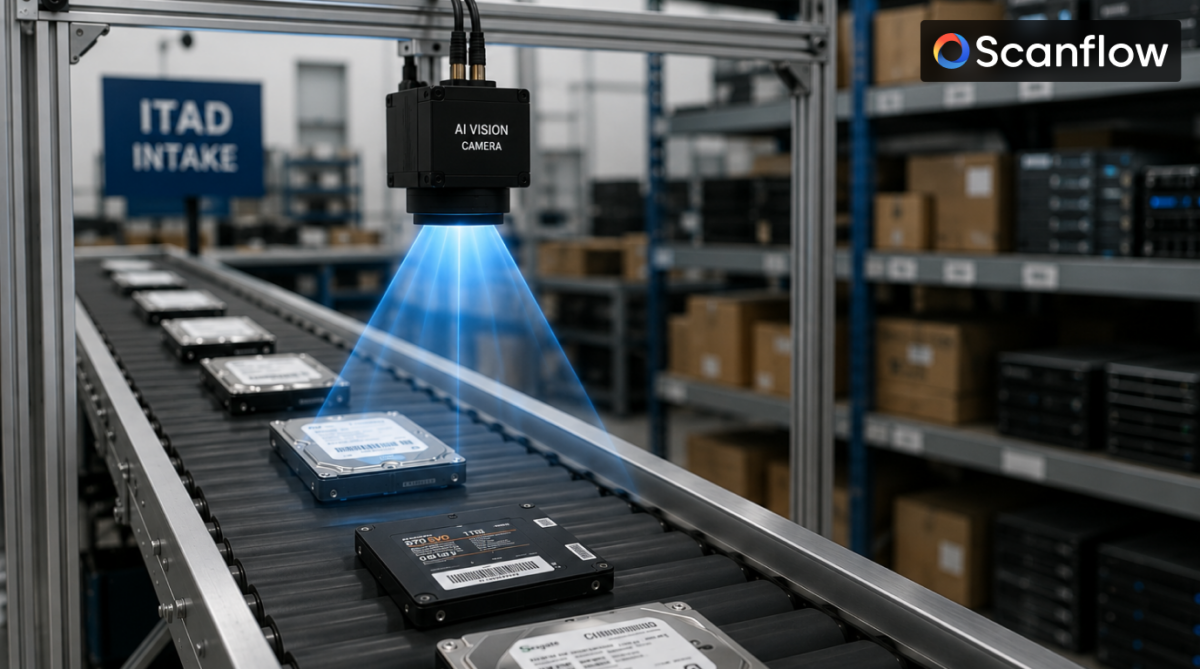
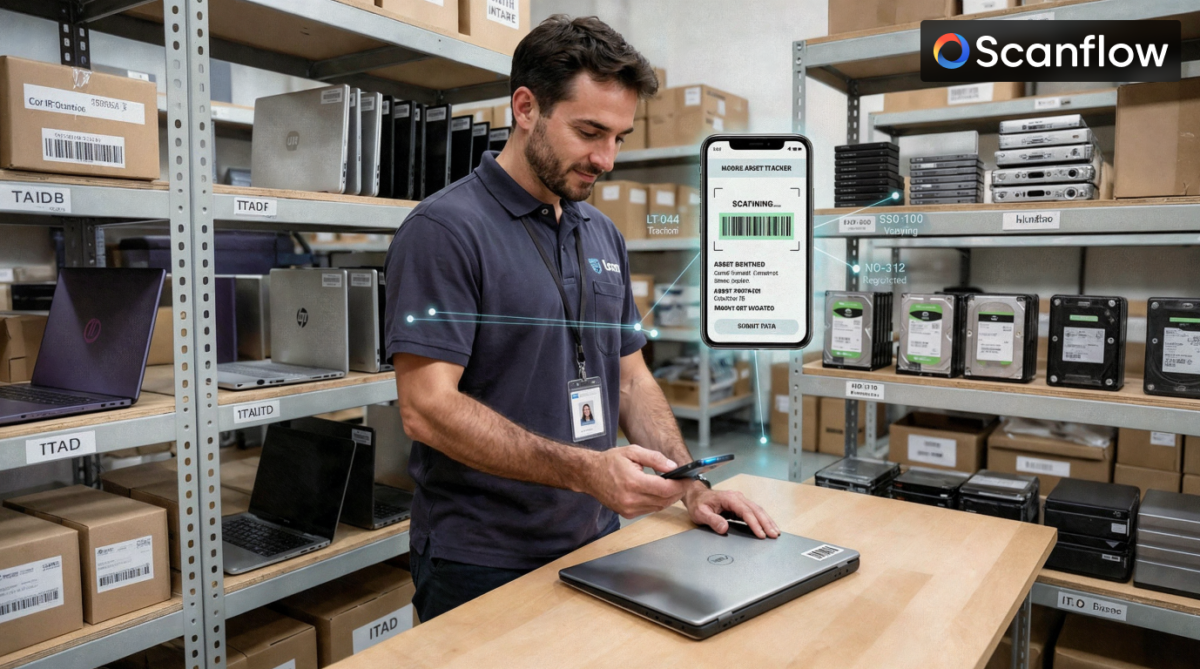
Manual asset tagging is slow, inconsistent, and error-prone. AI-powered scanning software can identify, classify, and log assets automatically using barcode scanning, RFID, computer vision, and serial number recognition. Every device entering the ITAD workflow is catalogued instantly, with data classification applied based on device type, storage media, and organisational policy no manual intervention required. 

The result: complete, accurate inventory records from the first moment of intake, rather than retrospective documentation assembled from imperfect records. 

Real-Time Chain of Custody Tracking 

Traditional chain-of-custody documentation relied on paper forms, spreadsheets, and manual sign-offs each one a potential point of failure. AI-enhanced ITAD platforms create a continuous, timestamped digital record of every custody event: pickup confirmation, in-transit tracking, facility intake, processing start, sanitisation completion, and final disposition. 

Each event is logged automatically, with alerts triggered by any deviation from expected workflow. If a device leaves a designated processing area, misses a scheduled step, or fails to match its manifest, the system flags it in real time before it becomes a compliance incident. 

AI-Driven Data Sanitisation Verification 

Verifying that data destruction has been performed correctly is one of the most technically demanding aspects of ITAD compliance particularly for modern SSDs, NVMe drives, and encrypted storage that behave differently from traditional HDDs. 

AI scanning software monitors and validates each sanitisation operation against the applicable NIST 800-88 method, generating pass/fail verification records automatically. For devices where cryptographic erasure is the appropriate Purge method, the system logs the verification of key destruction. For physical destruction, computer vision systems can confirm shredding output meets specification. 

This removes the most significant single point of failure in traditional ITAD compliance: human verification of a process that requires technical precision. 

Anomaly Detection and Exception Handling 

One of the most powerful advantages of AI in ITAD audit trails is the ability to detect patterns that humans would miss. Machine learning algorithms can flag: 

  • Assets appearing in the workflow without a corresponding intake record 
  • Sanitisation timestamps inconsistent with normal processing throughput 
  • Devices routed to downstream partners outside approved vendor lists 
  • Discrepancies between asset manifests and physical inventories 

These anomalies are precisely the kind of compliance gaps that surface during regulatory audits  and that are virtually impossible to catch with manual review processes operating at scale. 

Automated Compliance Reporting 

Generating audit-ready documentation manually is one of the most time-consuming aspects of ITAD compliance management. AI automation aggregates and formats audit data across all assets, producing destruction certificates, chain-of-custody reports, and regulatory compliance documentation automatically in the formats required by specific frameworks (HIPAA, GDPR, SOX, PCI-DSS) and in the timelines those regulations demand. 

Real-time dashboards give compliance teams continuous visibility into key metrics: assets processed, sanitisation method distribution, pending items, exception rates, and downstream partner status without requiring manual data compilation. 

Industry-Specific ITAD Compliance Requirements 

Healthcare and Life Sciences 

Healthcare organisations are among the highest-risk ITAD environments. HIPAA mandates that every piece of ePHI on decommissioned equipment be destroyed using NIST-aligned methods, with documented proof that destruction was irrecoverable. Business Associate Agreements with ITAD providers must explicitly address data handling, breach notification, and liability. The healthcare sector is growing at the highest ITAD CAGR of 25.39% driven in large part by the need for defensible compliance documentation that stands up to HHS enforcement scrutiny. 

Banking and Financial Services 

The BFSI sector accounts for nearly 28% of the global ITAD market, valued at approximately $3.5 billion in 2024. Financial institutions operate under an overlapping set of frameworks PCI-DSS, SOX, GLBA, GDPR each requiring certified destruction of sensitive customer and transactional data. Around 72% of financial institutions in North America have adopted professional ITAD practices to comply with these regulatory frameworks. 

Government and Defence 

Federal agencies retire more than 3 million IT assets annually. Government contractors face the most stringent ITAD requirements, with obligations extending to Controlled Unclassified Information (CUI) under NIST 800-171, classified system disposal under NISPOM 32 CFR Part 117, and NSA/CSS Policy Manual 9-12 for the highest sensitivity environments. AI-driven audit trail automation is increasingly critical in these contexts, where documentation must withstand inspector general review and GAO audit. 

Certifications That Matter: Building a Defensible ITAD Programme 

AI scanning software creates the evidence. The certifications validate the framework within which that evidence is generated. When evaluating an ITAD programme or provider, the following represent the compliance baseline: 

NAID AAA The gold standard for data destruction service validation, requiring scheduled and unannounced audits of destruction processes, personnel, and security controls. 

R2v3 (Responsible Recycling) Internationally recognised for both environmental responsibility and data security. By 2025, R2v3 had become a common procurement requirement for enterprise programmes, not merely a vendor differentiator. 

ISO 14001 Environmental management system certification, increasingly required as ESG commitments are subjected to the same audit scrutiny as financial reporting. 

ISO 27001 Information security management system certification, confirming that data handling within the ITAD process meets international security standards. 

The combination of AI-generated audit trail evidence and third-party certification creates what compliance teams increasingly describe as a “defensible compliance posture” documentation that holds up not just in internal audits, but in regulatory investigations and legal proceedings. 

What to Look for in AI-Powered ITAD Scanning Software 

Not all ITAD platforms are equal. For compliance officers and IT security leaders evaluating solutions, the critical capabilities to require include: 

Tamper-evident logging Audit records must be immutable once created. Any platform that allows retroactive editing of processing records is not audit-ready. 

100% asset coverage The system must account for every asset entering the workflow. Sampling-based approaches create exactly the documentation gaps regulators look for. 

Framework-specific reporting Export capabilities must map directly to the reporting requirements of the regulations your organisation operates under not generic reports that require manual translation. 

Downstream vendor integration Chain-of-custody does not end at your ITAD provider’s door. The platform must extend accountability to certified downstream partners and recyclers. 

Real-time exception alerting Compliance failures caught in real time are manageable. Compliance failures discovered during an audit are catastrophic. 

The Business Case: ITAD Compliance as a Competitive Advantage 

The compliance argument is compelling on its own. But forward-thinking organisations are recognising that a mature, AI-supported ITAD compliance programme also delivers tangible business value: 

Risk reduction: Proper ITAD implementation with certified destruction methods and comprehensive chain of custody can reduce data breach risk by up to 89%. 

Value recovery:  Remarketing retired assets through certified ITAD programmes recovers 15–40% of residual asset value that would otherwise be written off. 

ESG and sustainability reporting : Environmental reporting requirements are moving from voluntary disclosures to auditable obligations. ITAD programmes with documented recycling outcomes and e-waste diversion metrics are increasingly feeding directly into Scope 3 reporting frameworks. 

Cyber insurance Insurers are increasingly requiring evidence of NIST-compliant data destruction practices as a condition of policy coverage and claim approval. An AI-generated audit trail provides exactly the documentation underwriters need. 

Conclusion

In 2025 and beyond, the most valuable output of any ITAD programme is not the recovered hardware value, and not even the confirmed data destruction. It is the unbroken, tamper-evident, AI-generated audit trail that proves every step was executed correctly, to the right standard, by a certified process. 

Regulators are asking harder questions. Cyber insurers are requiring documented evidence. Enterprise procurement teams are making “show me the audit trail” a standard vendor qualification requirement. The organisations that can answer these demands with automated, real-time, framework-specific compliance documentation are not just protected they are operating ITAD as a genuine strategic asset. 

The technology exists. The regulatory pressure is here. The only question is whether your current ITAD programme is generating the audit trail your next audit will require.

Categories
ITAD

ITAD Maturity Checklist: 5 Levels for Modern IT Asset Disposition

Most organizations believe they are managing IT asset disposal properly until an audit, data breach of risk, or compliance requirement exposes gaps in their process. 

As companies refresh laptops, servers, and mobile devices every 3–5 years, advancing from basic to automated ITAD processes may require investment in new technologies and staff training, but these costs are offset by improved security, compliance, and sustainability outcomes. 

Yet ITAD maturity varies widely between organizations. Some still track retired devices in spreadsheets, while others run fully automated asset lifecycle programs with a verifiable chain of custody and certified data destruction. 

Understanding where your organization stands in ITAD maturity fosters confidence and clarity, reassuring IT managers of their current position and guiding effective improvements. 

This ITAD maturity checklist outlines five stages that IT managers can assess to feel empowered and motivated to advance their processes. 

The global ITAD market: Rapid growth and rising stakes 

The global IT asset disposition market is experiencing significant growth, reflecting the growing strategic importance of secure, sustainable asset disposal practices. According to multiple industry analyses, the market demonstrates strong momentum: 

  1. The global ITAD market was valued at approximately USD 17.5–25.3 billion in 2025 and may reach USD 34.3–54.5 billion by 2033–2035, growing at a CAGR ranging from 7.05% to 11.7% 
  2. North America remains the largest ITAD market, accounting for approximately 37–40% of global market share, driven by stringent data security regulations and compliance requirements. 
  3. Asia-Pacific is emerging as the fastest-growing region, with a projected CAGR of 15.8%, led by countries such as China, India, and Japan, which are experiencing rapid digital transformation. 
  4. The Indian ITAD market alone is growing from USD 746.2 million in 2024 to USD 1,781.9 million by 2033, reflecting a CAGR of 9.42%. 

This explosive growth signals that organizations worldwide are recognizing ITAD as a strategic business discipline, creating opportunities for leadership and innovation in security, compliance, and sustainability outcomes. 

 Three converging trends driving ITAD maturity 

Several powerful trends are pushing organizations to strengthen their ITAD programs in 2026 and beyond: 

  1. ESG andsustainabilityreporting requirements 

In 2026, ITAD has transitioned from a “nice-to-have” sustainability initiative to a board-level compliance priority[8]. Multiple regulatory frameworks are converging: 

  1. EU Corporate Sustainability Reporting Directive (CSRD) requires large companies to report FY 2025 ESG data by 2026, with independent assurance published alongside financial statements. 
  2. California SB 253 mandates Scope 3 emissions disclosure starting with 2026 reporting on 2025 data. 
  3. Voluntary adoption of the UK Sustainability Reporting Standards (UK SRS) begins in January 2026. 

Organizations must now demonstrate how they manage IT asset end-of-life, track environmental impact, and maintain chain-of-custody documentation. ITAD programs directly contribute to Scope 3 emissions reporting through measurable reuse rates, landfill diversion metrics, and CO₂-equivalent reporting. 

  1. Datasecurity andregulatory compliance 

Data security has always been a priority in ITAD, but the stakes today are higher than ever, emphasizing your role in protecting sensitive information and maintaining trust. 

Businesses face severe consequences for inadequate data protection, including financial penalties, legal action, lost revenue, and reputational damage. Data privacy regulations such as GDPR, HIPAA, CCPA, GLBA, and others require certified data destruction processes. 

Certified data destruction employs techniques such as secure erasure, physical destruction, and degaussing to ensure that organizations completely and irrevocably eliminate all information from decommissioned assets. Organizations operating in Europe must comply with the WEEE (Waste Electrical and Electronic Equipment) directives or face penalties. 

  1. AI and Automation Revolution 

AI and automation are revolutionizing the ITAD landscape, streamlining processes that were once manual and time-consuming: 

  1. AI-enhanced asset tracking monitors the status of retired devices throughout the asset disposition process, enhancing visibility and control 
  2. Automation tools make data destruction faster and more reliable, reducing human error and increasing efficiency 
  3. Automated logistics management optimizes the movement and handling of assets, lowering operational costs and minimizing delays. 
  4. Blockchain technology promises to increase visibility into asset tracking by providing immutable chain-of-custody records. 

Level 1: Ad-Hoc disposal 

The usual status of assets 

At this stage, asset disposal occurs only when devices accumulate in storage rooms or when employees request replacements. 

There is no formal ITAD policy, and teams often resort to reactive decision-making. 

Common characteristics 

  1. Usage of cupboards or server rooms for storing old laptops 
  2. Absence of centralized tracking of retired assets 
  3. Devices given away, recycled, or discarded without documentation 
  4. Limited understanding of data destruction requirements 

Risks 

This stage carries the highest security and compliance risk. 

Sensitive data can remain on retired drives, and organizations lack proof of destruction or recycling. 

For regulated industries, this can create serious compliance exposure. In the current regulatory environment with converging ESG reporting requirements and stringent data privacy laws, organizations operating at Level 1 face potential penalties, audit failures, and significant reputational damage. 

Level 2: Basic asset tracking 

Typical process 

Organizations begin tracking hardware disposal activities, often using manual spreadsheets or asset inventory tools. 

There is at least some visibility into which assets are being retired, but the process remains manual and inconsistent. 

Common characteristics 

  1. List of assets maintained in spreadsheets or inventory systems 
  2. Basic documentation of device disposal 
  3. Some use of third-party recycling vendors 
  4. Limited data destruction verification 

Improvements over level 1 

The key improvement here is visibility. 

IT teams’ understanding begins with: 

  1. Inventory of assets 
  2. Their date of retirement 
  3. Location of assets 

However, processes still depend heavily on manual coordination and trust in vendors. While this provides basic documentation, it falls short of the certified chain-of-custody requirements now mandated by ESG reporting frameworks and data privacy regulations. 

Level 3: Process-driven ITAD 

Typical process 

At this stage, ITAD becomes a defined operational process rather than a reactive activity. 

Organizations establish policies covering: 

  1. Asset retirement procedures 
  2. Data destruction methods 
  3. Vendor selection 
  4. Documentation requirements 

Common characteristics 

  1. Formal ITAD policies and procedures 
  2. Approved recycling or ITAD vendors with certifications (R2v3, e-Stewards, NAID AAA, ISO 27001) 
  3. Certificates of data destruction 
  4. Asset disposition records for audits 

Key benefits 

  1. Reduced data security risk 
  2. Better compliance with regulations 
  3. Improved accountability across teams 
  4. Foundation for ESG reporting requirements 

This stage marks the shift from informal asset disposal to controlled IT asset lifecycle management. 

Organizations at Level 3 begin meeting baseline compliance requirements, though they may still struggle with the granular reporting needed for comprehensive ESG metrics and Scope 3 emissions calculations. 

Level 4: Automated and traceable ITAD 

Typical process 

Organizations are beginning to integrate automation, tracking technologies, and asset lifecycle platforms into their ITAD workflows. 

Instead of relying on manual logs, asset tracking uses barcodes, QR codes, or serial number scanning throughout their lifecycle. 

Common characteristics 

  1. Automated asset tracking from deployment to retirement 
  2. Digital chain-of-custody documentation 
  3. Integration with IT asset management (ITAM) platforms 
  4. Verified data destruction workflows aligned with NIST 800-88 standards 
  5. Automated reporting for compliance and audits 
  6. Real-time environmental impact metrics 

Key advantages 

  1. Real-time visibility of asset status 
  2. Faster asset reconciliation during audits 
  3. Reduced manual errors 
  4. Improved operational efficiency 
  5. ESG-ready reporting capabilities with measurable reuse rates and landfill diversion metrics 

At this stage, organizations gain true operational control over their ITAD process by implementing automation and digital tracking technologies. 

The automation capabilities at Level 4 directly support the 2026 ESG compliance requirements, providing the granular documentation and metrics needed for CSRD, SB 253, and UK SRS reporting frameworks.  

Level 5: Strategic ITAD optimization 

How does it usually look? 

At the highest maturity level, ITAD becomes part of a strategic IT lifecycle and sustainability program. 

IT leaders no longer see disposal as a cost center they see it as an opportunity to recover value, drive sustainability, and reduce risk. 

Common characteristics 

  1. Integration between ITAD, ITAM, and procurement systems 
  2. Data-driven asset refresh planning with predictive analytics 
  3. Asset remarketing and value recovery programs 
  4. Sustainability reporting and ESG alignment with CO₂ equivalency tracking 
  5. Predictive insights on asset lifecycle performance 
  6. Zero landfill commitment with downstream audit trails[20] 
  7. Resale shareback models that reinvest recovered value into sustainability initiatives 

Business impact 

Organizations at this stage achieve: 

  1. Lower total asset lifecycle costs through value recovery 
  2. Improved compliance posture across data privacy and environmental regulations 
  3. Measurable sustainability outcomes that strengthen ESG ratings 
  4. Stronger data security governance with verifiable controls 
  5. Circular economy contributions through device reuse and material recovery 

ITAD becomes a strategic capability rather than a back-office task. 

Organizations at Level 5 meet and exceed the stringent reporting requirements of 2026 and beyond. They leverage full-stack asset lifecycle management solutions that are driving the fastest growth in the ITAD market, with CAGRs exceeding 12%. 

Quick ITAD maturity checklist 

IT managers should use these quick questions to assess their current stage and identify specific areas for growth in their ITAD processes. 

  1. Policy: Do we have a documented ITAD policy? 
  2. Asset Visibility: Can we easily identify all assets ready for retirement? 
  3. Data Security: Is certified data destruction consistently verified and documented? 
  4. Tracking: Do we track assets at every step of the disposal process using a digital chain of custody? 
  5. Automation: Are asset retirement and documentation automated? 
  6. Value Recovery: Do we recover value from retired assets through remarketing or resale programs? 
  7. ESG Reporting: Can we provide measurable sustainability metrics, including reuse rates, landfill diversion, and CO₂ equivalency? 
  8. Vendor Certification: Do our ITAD vendors hold relevant certifications (R2v3, e-Stewards, NAID AAA, ISO 27001)? 
  9. The more “yes” answers your organization has, the higher its ITAD maturity. 

Why ITAD maturity matters now more than ever? 

The convergence of regulatory requirements, security threats, and sustainability imperatives makes 2026 a pivotal year for the development of ITAD programs. 

Organizations must recognize that: 

  1. ESG reporting is no longer optional – Major regulatory frameworks (CSRD, SB 253, UK SRS) require verifiable documentation of IT asset end-of-life management 
  2. Data breaches from improperly disposed assets carry severe financial and reputational consequences under GDPR, HIPAA, CCPA, and other privacy regulations. 
  3. Circular economy practices drive both cost savings and environmental impact, with the ITAD market increasingly focused on reuse, refurbishment, and material recovery. 
  4. Stakeholder expectations have elevated – Investors, customers, and employees expect transparent sustainability practices backed by credible metrics. 

Without a mature ITAD process, organizations risk security breaches, compliance penalties, operational inefficiencies, and ESG reporting failures. 

The rapid growth of the global ITAD market projected to more than double by 2033–2035 reflects the increasing recognition that professional ITAD services are no longer a luxury but a business necessity.  

Building your ITAD maturity roadmap 

For organizations looking to advance their ITAD maturity, a phased approach offers the most practical path forward: 

Phase 1: Assessment (Current State Analysis) 

  1. Audit existing ITAD processes against the five maturity levels 
  2. Identify gaps relative to 2026 compliance requirements 
  3. Review vendor contracts for certification and documentation requirements 
  4. Establish baseline metrics for asset volumes, disposal timelines, and environmental impact 

Phase 2: Foundation building (Levels 1–3) 

  1. Develop formal ITAD best practices, policies and procedures 
  2. Select certified ITAD vendors (R2v3, e-Stewards, NAID AAA) 
  3. Implement basic asset tracking and documentation systems 
  4. Establish data destruction verification protocols aligned with NIST 800-88 

Phase 3: Automation and integration (Level 4) 

  1. Integrate ITAD tracking with ITAM platforms 
  2. Implement automated chain-of-custody documentation 
  3. Deploy barcode or QR code scanning technologies 
  4. Develop ESG reporting dashboards with real-time metrics 

Phase 4: Strategic optimization (Level 5) 

  1. Connect ITAD, ITAM, and procurement systems for end-to-end lifecycle visibility. 
  2. Launch asset remarketing and value recovery programs 
  3. Implement predictive analytics for asset refresh planning 
  4. Establish zero landfill commitments with downstream verification 
  5. Align ITAD metrics with enterprise ESG goals and stakeholder reporting 

Final thoughts 

IT asset disposition is no longer just about removing old hardware. 

It is about protecting data, maintaining compliance, recovering asset value, and supporting sustainability goals. 

By understanding the five levels of ITAD maturity, IT managers can identify gaps in their current processes and build a roadmap toward a more secure, efficient asset lifecycle strategy. 

Organizations that treat ITAD as a strategic discipline rather than a disposal task will be better prepared to meet the increasing demands of modern IT governance. 

With the global ITAD market projected to reach USD 34–54 billion by the early 2030s, organizations investing in mature ITAD programs today will gain a competitive advantage through enhanced security, regulatory compliance, cost optimization, and measurable sustainability outcomes. 

The question is no longer whether to mature your ITAD program, but how quickly you can advance to meet the demands of 2026 and beyond. 

Categories
ITAD

The 2026 ITAD Guide to Unlocking Asset Recovery Revenue

Every organization sitting on a stockpile of retired laptops, decommissioned servers, and end-of-life networking gear is looking at the same thing: a problem and an opportunity, occupying the same rack space. 

The problem is familiar; outdated equipment creates data security liability, chews up storage, and quietly accumulates disposal costs. The opportunity is often not understood that collection of old hardware represents real, recoverable revenue that many organizations leave largely untapped. 

IT Asset Disposition ITAD is a strategic process that can unlock significant revenue from retiring technology, making it a vital part of enterprise growth and sustainability. When approached strategically, it can be a meaningful line item on the credit side of the ledger, inspiring confidence in your organization’s financial management. 

In 2026, the stakes and potential returns have never been higher.  

Why ITAD Has Become a Board-Level Conversation 

Not long ago, IT asset disposal was an operational afterthought. A retiring device got wiped (hopefully), boxed up, and handed off to whoever came to collect it. If a few dollars came back, fine. If not, that was fine, too. 

That posture is no longer sustainable or financially rational. 

The global ITAD market was valued at approximately $19.7 billion in 2025 and may reach nearly $48.5 billion by 2034, growing at a compound annual rate of more than 10%. The enterprise segment alone is on track to more than double, from roughly $8.7 billion in 2026 to $21.5 billion by 2034. This projection is not a niche market, maturing slowly. It is an industry scaling fast in response to converging pressures: accelerating hardware refresh cycles, tightening data privacy enforcement, ESG reporting mandates, and a secondary market for enterprise IT equipment that is larger and more liquid than most IT buyers realize. 

Technology turnover is accelerating the volume problem. AI integration, remote work infrastructure buildouts, cloud migration, and security-driven hardware upgrades are all pushing organizations to retire from equipment sooner. Leveraging automation and AI tools can streamline disposition workflows, improve asset valuation accuracy, and unlock higher recovery revenue. 

For organizations managing large IT estates, treating disposition as a strategic function rather than a housekeeping task is the difference between recovering 20–30% of replacement cost on outgoing hardware and recovering close to nothing. Establishing clear KPIs such as recovery rate, residual value, and cycle time helps monitor and improve ITAD performance. 

The Asset Recovery Revenue Equation 

Before getting into tactics, it’s worth being precise about what “asset recovery revenue” means and how to monetize it. 

ITAD is the umbrella process. Asset recovery is the revenue-generating component within it. The basic formula looks like this: 

Net refresh cost = Cost of new equipment − Net recovery proceeds − Avoided costs 

Avoided costs matter here more than most organizations track. Remarketing every device instead of sending it to a recycler helps avoid disposal fees, reduces storage costs for idle hardware, and eliminates the security risks and IT ticket burden associated with equipment that sits unchecked in a closet. When you include those avoided costs in the recovery calculation, you will realize the underestimation of the true value of a well-managed ITAD program. 

Resale and remarketing account for approximately 37.6% of the entire ITAD market, the single largest value pathway in the industry. The remarketing segment may grow faster than any ITAD activity through 2035, at a CAGR of around 10.5%. The secondary market for enterprise IT hardware is deep, liquid, and well-organized. Large buyers specifically seek standardized, documented batches of corporate-grade equipment. The organizations supplying clean, certified, well-documented assets into that market are consistently capturing better returns than those approaching disposition as a one-off logistics problem. 

The Five Levers That Determine Recovery Value 

Not all retired equipment recovers equal value. Understanding what drives residual value is the first step toward engineering for better outcomes rather than hoping for them. 

  1. Age

Ageing is the single most important variable. A 2–3-year-old business-grade laptop can return anywhere from $120 to $450, depending on model, specifications, and condition. Devices older than 4 years tend to drop sharply in resale value, though components and materials still retain value. The practical implication: the sooner a device enters the disposition process after retirement, the better the return. Sitting on end-of-life equipment for six months while waiting to batch a shipment costs real money. 

  1. Condition and Cosmetic Grade

Condition is one of the most controllable variables in the recovery equation and one of the most consistently overlooked. Grade A devices (cosmetically excellent) typically sell for 20–40% more than equivalent devices in lower cosmetic grades. Good storage practices, proper handling during collection, and careful packaging during transit all preserve grades and, by extension, recover more revenue. Organizations that brief their office managers and facilities teams on how to handle outgoing devices during collection often see measurable improvement in average recovery rates. 

  1. Specifications

Not all hardware ages equally. High-performance workstations, premium laptops (ThinkPad, MacBook Pro, Dell XPS-class), servers with dense memory configurations, and networking gear from tier-one vendors hold value far longer than commodity hardware. When evaluating your retiring asset pool, segment them by specifications early; premium hardware warrants investment in refurbishment; you may note that the lower-spec devices may suit buyback or bulk recycling routes. 

  1. Volume and Consistency

Secondary market buyers prefer standardized, predictable batches. A uniform shipment of 500 laptops of the same model commands better per-unit pricing than a mixed lot of 500 different makes, models, and generations. Where possible, ITAD programs that align disposition with refresh cycles retiring uniform batches at natural intervals consistently outperform ad-hoc, mixed-lot approaches. Consistent volume can raise average rebate returns by nearly 30% compared to fragmented, irregular shipments. 

  1. Speed to Market

Market timing affects value, and the used IT equipment market moves. Delays are one of the most significant and preventable value destroyers in ITAD programs. Missing power supplies, incomplete documentation, unclear asset ownership, and mixed lots requiring all add time between retirement and resale and each week of delay erodes market price. A device that was worth $300 in January may be worth $240 by April, simply because newer equipment has entered the secondary market. 

 Remarketing vs. Buybacks: Choosing the Right Recovery Route 

Two primary commercial mechanisms exist for monetizing end-of-life IT equipment, and choosing between them is one of the most consequential decisions in program design. 

Remarketing is the higher-return, higher-involvement path. Your ITAD partner manages the full refurbishment, certification, and sale process on your behalf typically through a revenue-share arrangement. You see more upside, but the cash flow timeline is longer, and the final return depends on secondary market conditions. Remarketing works best for newer, higher-value equipment where the refurbishment investment justifies the market-rate return. 

Buybacks are the faster, simpler option. Your ITAD provider assesses the equipment and offers a lump sum payment based on age, condition, and brand ownership and all downstream risk. You receive immediate payment and are entirely out of the process. Buybacks trade upside for certainty and simplicity. They work best for older devices, lower-value commodity hardware, or organizations that need immediate cash flow and don’t want ongoing involvement in the resale process. 

A well-structured enterprise ITAD program typically uses both routes simultaneously  routing high-value recent-model equipment through remarketing channels and older or lower-spec assets through buyback or certified recycling pathways. The decision to grade and route is at the intake stage, based on the assessed residual value relative to the cost of refurbishment. 

There is also a third option worth considering: employee purchase programs. Some ITAD providers offer programs in which, after certified data sanitization, devices are made available for purchase by your employees. The recovery rate is typically strong, elevating employee satisfaction, and the sustainability story is compelling for ESG reporting purposes. 

Data Security Is Not a Step You Can Shortcut 

Asset recovery revenue is valuable; however, it can vanish if the disposition process results in a data breach that incurs significantly higher costs than the hardware  

itself. This issue is not merely theoretical. An inadequately wiped storage device containing regulated personal data can lead to penalties under GDPR, enforcement actions under HIPAA, or liabilities under CCPA. The costs associated with forensic investigations in such cases often exceed the total recovery amount from an entire fleet of retiring devices. 

The 2025 update to NIST SP 800-88 the definitive standard for IT media sanitization reinforced and expanded the framework’s three sanitization categories (Clear, Purge, and Destroy) with new guidance for modern solid-state storage and stronger verification and documentation requirements. The IEEE 2883-2022 standard provides additional technical detail on NVMe, embedded storage, and controller-based architectures, which are now standard in enterprise hardware. 

Build your ITAD program operating in 2026 on three non-negotiables: 

Certified data destruction using NIST 800-88 or IEEE 2883 methods, with sanitization appropriate to the media type not a one-size-fits-all wipe applied equally to HDDs and SSDs. 

Serialized chain-of-custody documentation that tracks every device from collection through final disposition, with audit-ready proof artifacts for every step. In 2026, documentation matters as much as the physical destruction itself. 

Third-party certified providers look for R2v3 (Responsible Recycling), e-Stewards, NAID AAA, and ISO 14001 certifications as minimum benchmarks for any ITAD partner handling regulated data. 

The good news is that rigorous data security and maximum asset recovery are not in tension with each other. A certified process that properly sanitizes a device also prepares it for the secondary market. The same documentation that satisfies your compliance audit also demonstrates provenance to secondary-market buyers.  

The Compliance Landscape in 2026: What’s Changed 

The regulatory environment governing IT disposition has shifted meaningfully over the past 18 months, and organizations need to stay current. 

The EU’s Digital Waste Shipment System (DIWASS) became operational in May 2026, requiring that all e-waste shipment notifications, routing decisions, and regulatory interactions across EU borders flow through a unified digital platform. For organizations with European operations disposing of hardware, this significantly alters the logistics workflow. Collaborating with ITAD providers in DIWASS is now essential. 

The Basel Amendments on e-waste reshaped cross-border compliance in 2025, broadening the scope of covered materials and requiring prior informed consent for cross-border shipments. Enterprises are now experiencing longer lead times and more restrictive routing options, making reuse and remarketing pathways close to the point of origin more attractive from a logistics standpoint and reinforcing the financial case for prioritizing remarketing over offshore recycling. 

The EU Corporate Sustainability Reporting Directive (CSRD) requirements mean that large, listed companies now need to report not just ESG metrics but also detailed governance and value chain information that must withstand external assurance. For ITAD programs, this means that diversion rates, chain-of-custody outcomes, and reuse metrics need to be reported with evidence not estimated. 

In the United States, HIPAA, CCPA, and GLBA enforcement continues to be the primary compliance driver for enterprise ITAD, with regulators showing continued willingness to pursue enforcement actions in cases of improper data disposal. 

Building a High-Performance ITAD Program: Where to Start 

If your organization currently lacks a structured approach to IT disposition, the gap between where you are and where you could be in terms of recovered revenue and reduced liability is significant. Here’s where the most impactful improvements typically come from. 

Start with an inventory audit. You cannot optimize what you cannot see. Many enterprises discover during their first structured ITAD engagement that they have significantly more end-of-life equipment in storage than their IT asset management records reflect devices that were retired but never formally processed. Every month, those devices age and lose secondary-market value. 

Define your asset classification framework. Not every device should follow the same path. Establish clear criteria by device type, age, specification tier, and data classification for routing assets to remarketing, buyback, donation, or certified destruction. Build this approach into your IT procurement and refresh planning process, not retrofitted after devices are already in a pile. 

Align ITAD with procurement. The most sophisticated enterprises in 2026 are designing IT procurement strategies around recovery potential selecting equipment partly based on residual value profiles and ease of refurbishment. What you buy today determines what you can recover tomorrow. Including ITAD considerations in hardware procurement discussions is a genuinely high-leverage practice. 

Choose your ITAD partner carefully. The differences among ITAD providers in recovery rates, data security practices, reporting quality, and downstream market access are substantial. Look for partners with demonstrable secondary market reach (not just connections to one or two buyers), certified data destruction capabilities for your specific storage media types, and transparent, itemized reporting that you can feed directly into ESG disclosures and audit documentation. 

Built-in reporting from day one. The outputs of a well-run ITAD program serialized chain-of-custody logs, sanitization verification records, diversion metrics, and resale proceeds are valuable well beyond the immediate financial return. They support compliance audits, insurance requirements, ESG reporting, and financing conversations. Organizations that start capturing these data points from the beginning of their ITAD program are better positioned to demonstrate value internally and satisfy external stakeholders. 

What the Numbers Look Like in Practice 

Benchmarks from the secondary market and ITAD industry analysis give a reasonable picture of what organizations should expect from a well-run program: 

2–3-year-old business-grade laptop (mid-spec ThinkPad, HP EliteBook, Dell Latitude class) typically returns $120–$300 through remarketing channels. Premium models  MacBook Pro, Lenovo X1 Carbon, Dell XPS can recover $300–$450 or more at that age. By year four or five, returns drop sharply but rarely to zero; components, memory, and storage still have parts-harvest value. 

Enterprise servers hold substantial residual value, particularly those with high memory density, NVMe storage, or premium CPUs. Server remarketing is one of the highest-value activities in ITAD and one of the areas where provider quality matters most specialist server resellers typically return more on this asset class than generalist ITAD firms. 

Structured recovery programs generate 25–30% savings over five years compared to unmanaged, ad-hoc disposition approaches, according to industry analysis. For organizations spending tens of millions annually on hardware, that is a material number. 

One London-based financial services firm recovered 28% of its replacement costs through a structured remarketing program as a result that meaningfully offset the cost of its next hardware refresh cycle.  

The ESG Dimension: Recovery as Sustainability 

Asset recovery is not just a financial story. It is increasingly a sustainability story as well, and in 2026, these stories need to be data driven. 

Every device that enters the secondary market rather than a recycling stream extends its useful life, displaces the carbon footprint of manufacturing a new replacement device, and keeps materials in circulation rather than sending them to extraction. The manufacturing phase represents most of a device’s total lifetime carbon emissions, often 70–80% for a laptop or smartphone. Reuse extends the value already embedded in those emissions rather than requiring them to be incurred again. 

For organizations under CSRD requirements, TCFD pressure, or investor for ESG scrutiny, ITAD outcomes are increasingly measured, reported, and verified. Diversion rates, reuse percentages, carbon offset estimates from avoided manufacturing are becoming standard metrics in sustainability reports for any technology-intensive enterprise. 

Choosing an ITAD partner with robust ESG reporting capabilities not just a line in their marketing materials but actual documented, verifiable outcomes per device is a consideration that belongs in the vendor evaluation process alongside recovery rates and data security certifications. 

 The Bottom Line 

Retired IT equipment is not a waste. It is an asset class with a secondary market, a compliance dimension, a sustainability footprint, and organizations willing to manage it strategically a meaningful revenue opportunity. 

The 2026 ITAD landscape offers more tools, better secondary-market infrastructure, and more sophisticated provider capabilities than ever before. The regulatory and reporting environment is adding pressure that, managed well, is actually an argument for investing more in ITAD program quality not less. 

Organizations that approach IT asset disposition as a strategic function, aligning it with procurement planning, building rigorous chain-of-custody processes, and partnering with capable providers who can access the full depth of the secondary market, are recovering real revenue. They’re also reducing compliance exposure, strengthening their sustainability metrics, and building the documentation infrastructure that auditors and ESG reviewers increasingly expect. 

The organizations still treating ITAD as an afterthought are paying for that posture in ways that rarely show up in a single line item but that add up faster than most finance teams realize. 

 

Categories
New Launches

Taking scanners to the Sky- All you need to know about Drone Scanning

In today’s world, drones have progressed as a technological headway that helps businesses to utilize them in building capabilities. The advancement in artificial technology and computer vision has created new ways of adopting drone technology in the business process. The applications of drone scanning vary and cover a wide range of industries such as agriculture, field services, and inventory management.

However, there is still a significant opportunity for other industries and technology companies to implement drone scanning to save costs and improve efficient workflows in their enterprise.

Industries are already shifting toward software-based scanners for efficient automation of their workflow process. Unlike conventional scanners, software scanners can be integrated into any existing smart device such as smartphones, tablets, wearables, drones, etc. They have the capability of transforming any smart device into an enterprise-grade scanner.

In certain scenarios of scanning, workers need to scan items placed on high shelves which require some external support such as a forklift or reach truck with which the workers have to manually scan the stocks and inventory. This procedure is time-consuming, expensive, and dangerous to workers handling it. Drone scanning is a game-changing solution for scanning products and pallets in warehouses. The drone captures data from text, barcodes, or any other object and provides the workers with real-time insights. Drone scanning has the ability to capture high-quality videos from aerial angles at any orientation.

Some of the use cases of drone scanning are farm surveying, tower inspections, and stock counting in large warehouses. These applications are gaining popularity, and help businesses to save money, improve safety, and produce quality results. Drone scanning requires less labor, reduces workforce hazards, and saves time and money.

Scanflow is an AI scanner on smart devices that captures data and automates a variety of industrial operations. It intelligently captures data from any text or object providing real-time information from it. Scanflow SDK works on mobiles, wearables, or drones and runs on a variety of operating systems such as iOS, Android, and frameworks like Xamarin, React Native, and other third-party systems. Drones can be seamlessly integrated with any enterprise and warehouse management system that can be accessed across multiple locations.

Drones help scan from places where workers cannot access them and provides instant information on the product or items being scanned without any errors. Drone scanning will act as an excellent method of liberating workers from potentially hazardous situations and the scanning can be completed without any human support from a safe distance.