What Really Happens to Your Old Company Laptops After You Throw Them Away
"Throw them away" is rarely literal. Very few organizations actually send retired laptops to a l...
 4 Mins read
Posted on Sep 11, 2026
March 20, 2026
9 Mins read


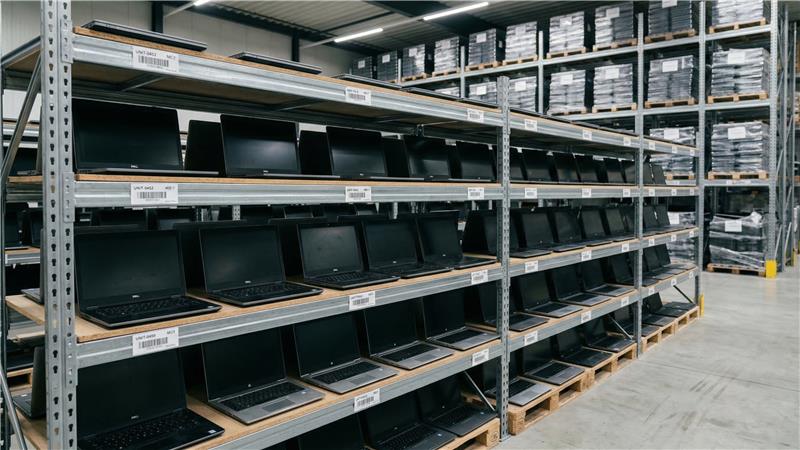
Every organization sitting on a stockpile of retired laptops, decommissioned servers, and end-of-life networking gear is looking at the same thing: a problem and an opportunity, occupying the same rack space. The problem is familiar; outdated equipment creates data security liability, chews up storage, and quietly accumulates disposal costs. The opportunity is often not understood that collection […]
Every organization sitting on a stockpile of retired laptops, decommissioned servers, and end-of-life networking gear is looking at the same thing: a problem and an opportunity, occupying the same rack space.
The problem is familiar; outdated equipment creates data security liability, chews up storage, and quietly accumulates disposal costs. The opportunity is often not understood that collection of old hardware represents real, recoverable revenue that many organizations leave largely untapped.
IT Asset Disposition ITAD is a strategic process that can unlock significant revenue from retiring technology, making it a vital part of enterprise growth and sustainability. When approached strategically, it can be a meaningful line item on the credit side of the ledger, inspiring confidence in your organization’s financial management.
In 2026, the stakes and potential returns have never been higher.
Not long ago, IT asset disposal was an operational afterthought. A retiring device got wiped (hopefully), boxed up, and handed off to whoever came to collect it. If a few dollars came back, fine. If not, that was fine, too.
That posture is no longer sustainable or financially rational.
The global ITAD market was valued at approximately $19.7 billion in 2025 and may reach nearly $48.5 billion by 2034, growing at a compound annual rate of more than 10%. The enterprise segment alone is on track to more than double, from roughly $8.7 billion in 2026 to $21.5 billion by 2034. This projection is not a niche market, maturing slowly. It is an industry scaling fast in response to converging pressures: accelerating hardware refresh cycles, tightening data privacy enforcement, ESG reporting mandates, and a secondary market for enterprise IT equipment that is larger and more liquid than most IT buyers realize.
Technology turnover is accelerating the volume problem. AI integration, remote work infrastructure buildouts, cloud migration, and security-driven hardware upgrades are all pushing organizations to retire from equipment sooner. Leveraging automation and AI tools can streamline disposition workflows, improve asset valuation accuracy, and unlock higher recovery revenue.
For organizations managing large IT estates, treating disposition as a strategic function rather than a housekeeping task is the difference between recovering 20–30% of replacement cost on outgoing hardware and recovering close to nothing. Establishing clear KPIs such as recovery rate, residual value, and cycle time helps monitor and improve ITAD performance.

Before getting into tactics, it’s worth being precise about what “asset recovery revenue” means and how to monetize it.
ITAD is the umbrella process. Asset recovery is the revenue-generating component within it. The basic formula looks like this:
Net refresh cost = Cost of new equipment − Net recovery proceeds − Avoided costs
Avoided costs matter here more than most organizations track. Remarketing every device instead of sending it to a recycler helps avoid disposal fees, reduces storage costs for idle hardware, and eliminates the security risks and IT ticket burden associated with equipment that sits unchecked in a closet. When you include those avoided costs in the recovery calculation, you will realize the underestimation of the true value of a well-managed ITAD program.
Resale and remarketing account for approximately 37.6% of the entire ITAD market, the single largest value pathway in the industry. The remarketing segment may grow faster than any ITAD activity through 2035, at a CAGR of around 10.5%. The secondary market for enterprise IT hardware is deep, liquid, and well-organized. Large buyers specifically seek standardized, documented batches of corporate-grade equipment. The organizations supplying clean, certified, well-documented assets into that market are consistently capturing better returns than those approaching disposition as a one-off logistics problem.
Not all retired equipment recovers equal value. Understanding what drives residual value is the first step toward engineering for better outcomes rather than hoping for them.
Ageing is the single most important variable. A 2–3-year-old business-grade laptop can return anywhere from $120 to $450, depending on model, specifications, and condition. Devices older than 4 years tend to drop sharply in resale value, though components and materials still retain value. The practical implication: the sooner a device enters the disposition process after retirement, the better the return. Sitting on end-of-life equipment for six months while waiting to batch a shipment costs real money.
Condition is one of the most controllable variables in the recovery equation and one of the most consistently overlooked. Grade A devices (cosmetically excellent) typically sell for 20–40% more than equivalent devices in lower cosmetic grades. Good storage practices, proper handling during collection, and careful packaging during transit all preserve grades and, by extension, recover more revenue. Organizations that brief their office managers and facilities teams on how to handle outgoing devices during collection often see measurable improvement in average recovery rates.
Not all hardware ages equally. High-performance workstations, premium laptops (ThinkPad, MacBook Pro, Dell XPS-class), servers with dense memory configurations, and networking gear from tier-one vendors hold value far longer than commodity hardware. When evaluating your retiring asset pool, segment them by specifications early; premium hardware warrants investment in refurbishment; you may note that the lower-spec devices may suit buyback or bulk recycling routes.
Secondary market buyers prefer standardized, predictable batches. A uniform shipment of 500 laptops of the same model commands better per-unit pricing than a mixed lot of 500 different makes, models, and generations. Where possible, ITAD programs that align disposition with refresh cycles retiring uniform batches at natural intervals consistently outperform ad-hoc, mixed-lot approaches. Consistent volume can raise average rebate returns by nearly 30% compared to fragmented, irregular shipments.
Market timing affects value, and the used IT equipment market moves. Delays are one of the most significant and preventable value destroyers in ITAD programs. Missing power supplies, incomplete documentation, unclear asset ownership, and mixed lots requiring all add time between retirement and resale and each week of delay erodes market price. A device that was worth $300 in January may be worth $240 by April, simply because newer equipment has entered the secondary market.
Two primary commercial mechanisms exist for monetizing end-of-life IT equipment, and choosing between them is one of the most consequential decisions in program design.
Remarketing is the higher-return, higher-involvement path. Your ITAD partner manages the full refurbishment, certification, and sale process on your behalf typically through a revenue-share arrangement. You see more upside, but the cash flow timeline is longer, and the final return depends on secondary market conditions. Remarketing works best for newer, higher-value equipment where the refurbishment investment justifies the market-rate return.
Buybacks are the faster, simpler option. Your ITAD provider assesses the equipment and offers a lump sum payment based on age, condition, and brand ownership and all downstream risk. You receive immediate payment and are entirely out of the process. Buybacks trade upside for certainty and simplicity. They work best for older devices, lower-value commodity hardware, or organizations that need immediate cash flow and don’t want ongoing involvement in the resale process.
A well-structured enterprise ITAD program typically uses both routes simultaneously routing high-value recent-model equipment through remarketing channels and older or lower-spec assets through buyback or certified recycling pathways. The decision to grade and route is at the intake stage, based on the assessed residual value relative to the cost of refurbishment.
There is also a third option worth considering: employee purchase programs. Some ITAD providers offer programs in which, after certified data sanitization, devices are made available for purchase by your employees. The recovery rate is typically strong, elevating employee satisfaction, and the sustainability story is compelling for ESG reporting purposes.
Asset recovery revenue is valuable; however, it can vanish if the disposition process results in a data breach that incurs significantly higher costs than the hardware
itself. This issue is not merely theoretical. An inadequately wiped storage device containing regulated personal data can lead to penalties under GDPR, enforcement actions under HIPAA, or liabilities under CCPA. The costs associated with forensic investigations in such cases often exceed the total recovery amount from an entire fleet of retiring devices.
The 2025 update to NIST SP 800-88 the definitive standard for IT media sanitization reinforced and expanded the framework’s three sanitization categories (Clear, Purge, and Destroy) with new guidance for modern solid-state storage and stronger verification and documentation requirements. The IEEE 2883-2022 standard provides additional technical detail on NVMe, embedded storage, and controller-based architectures, which are now standard in enterprise hardware.
Build your ITAD program operating in 2026 on three non-negotiables:
Certified data destruction using NIST 800-88 or IEEE 2883 methods, with sanitization appropriate to the media type not a one-size-fits-all wipe applied equally to HDDs and SSDs.
Serialized chain-of-custody documentation that tracks every device from collection through final disposition, with audit-ready proof artifacts for every step. In 2026, documentation matters as much as the physical destruction itself.
Third-party certified providers look for R2v3 (Responsible Recycling), e-Stewards, NAID AAA, and ISO 14001 certifications as minimum benchmarks for any ITAD partner handling regulated data.
The good news is that rigorous data security and maximum asset recovery are not in tension with each other. A certified process that properly sanitizes a device also prepares it for the secondary market. The same documentation that satisfies your compliance audit also demonstrates provenance to secondary-market buyers.
The regulatory environment governing IT disposition has shifted meaningfully over the past 18 months, and organizations need to stay current.
The EU’s Digital Waste Shipment System (DIWASS) became operational in May 2026, requiring that all e-waste shipment notifications, routing decisions, and regulatory interactions across EU borders flow through a unified digital platform. For organizations with European operations disposing of hardware, this significantly alters the logistics workflow. Collaborating with ITAD providers in DIWASS is now essential.
The Basel Amendments on e-waste reshaped cross-border compliance in 2025, broadening the scope of covered materials and requiring prior informed consent for cross-border shipments. Enterprises are now experiencing longer lead times and more restrictive routing options, making reuse and remarketing pathways close to the point of origin more attractive from a logistics standpoint and reinforcing the financial case for prioritizing remarketing over offshore recycling.
The EU Corporate Sustainability Reporting Directive (CSRD) requirements mean that large, listed companies now need to report not just ESG metrics but also detailed governance and value chain information that must withstand external assurance. For ITAD programs, this means that diversion rates, chain-of-custody outcomes, and reuse metrics need to be reported with evidence not estimated.
In the United States, HIPAA, CCPA, and GLBA enforcement continues to be the primary compliance driver for enterprise ITAD, with regulators showing continued willingness to pursue enforcement actions in cases of improper data disposal.
If your organization currently lacks a structured approach to IT disposition, the gap between where you are and where you could be in terms of recovered revenue and reduced liability is significant. Here’s where the most impactful improvements typically come from.
Start with an inventory audit. You cannot optimize what you cannot see. Many enterprises discover during their first structured ITAD engagement that they have significantly more end-of-life equipment in storage than their IT asset management records reflect devices that were retired but never formally processed. Every month, those devices age and lose secondary-market value.
Define your asset classification framework. Not every device should follow the same path. Establish clear criteria by device type, age, specification tier, and data classification for routing assets to remarketing, buyback, donation, or certified destruction. Build this approach into your IT procurement and refresh planning process, not retrofitted after devices are already in a pile.
Align ITAD with procurement. The most sophisticated enterprises in 2026 are designing IT procurement strategies around recovery potential selecting equipment partly based on residual value profiles and ease of refurbishment. What you buy today determines what you can recover tomorrow. Including ITAD considerations in hardware procurement discussions is a genuinely high-leverage practice.
Choose your ITAD partner carefully. The differences among ITAD providers in recovery rates, data security practices, reporting quality, and downstream market access are substantial. Look for partners with demonstrable secondary market reach (not just connections to one or two buyers), certified data destruction capabilities for your specific storage media types, and transparent, itemized reporting that you can feed directly into ESG disclosures and audit documentation.
Built-in reporting from day one. The outputs of a well-run ITAD program serialized chain-of-custody logs, sanitization verification records, diversion metrics, and resale proceeds are valuable well beyond the immediate financial return. They support compliance audits, insurance requirements, ESG reporting, and financing conversations. Organizations that start capturing these data points from the beginning of their ITAD program are better positioned to demonstrate value internally and satisfy external stakeholders.
Benchmarks from the secondary market and ITAD industry analysis give a reasonable picture of what organizations should expect from a well-run program:
A 2–3-year-old business-grade laptop (mid-spec ThinkPad, HP EliteBook, Dell Latitude class) typically returns $120–$300 through remarketing channels. Premium models MacBook Pro, Lenovo X1 Carbon, Dell XPS can recover $300–$450 or more at that age. By year four or five, returns drop sharply but rarely to zero; components, memory, and storage still have parts-harvest value.
Enterprise servers hold substantial residual value, particularly those with high memory density, NVMe storage, or premium CPUs. Server remarketing is one of the highest-value activities in ITAD and one of the areas where provider quality matters most specialist server resellers typically return more on this asset class than generalist ITAD firms.
Structured recovery programs generate 25–30% savings over five years compared to unmanaged, ad-hoc disposition approaches, according to industry analysis. For organizations spending tens of millions annually on hardware, that is a material number.
One London-based financial services firm recovered 28% of its replacement costs through a structured remarketing program as a result that meaningfully offset the cost of its next hardware refresh cycle.
Asset recovery is not just a financial story. It is increasingly a sustainability story as well, and in 2026, these stories need to be data driven.
Every device that enters the secondary market rather than a recycling stream extends its useful life, displaces the carbon footprint of manufacturing a new replacement device, and keeps materials in circulation rather than sending them to extraction. The manufacturing phase represents most of a device’s total lifetime carbon emissions, often 70–80% for a laptop or smartphone. Reuse extends the value already embedded in those emissions rather than requiring them to be incurred again.
For organizations under CSRD requirements, TCFD pressure, or investor for ESG scrutiny, ITAD outcomes are increasingly measured, reported, and verified. Diversion rates, reuse percentages, carbon offset estimates from avoided manufacturing are becoming standard metrics in sustainability reports for any technology-intensive enterprise.
Choosing an ITAD partner with robust ESG reporting capabilities not just a line in their marketing materials but actual documented, verifiable outcomes per device is a consideration that belongs in the vendor evaluation process alongside recovery rates and data security certifications.
Retired IT equipment is not a waste. It is an asset class with a secondary market, a compliance dimension, a sustainability footprint, and organizations willing to manage it strategically a meaningful revenue opportunity.
The 2026 ITAD landscape offers more tools, better secondary-market infrastructure, and more sophisticated provider capabilities than ever before. The regulatory and reporting environment is adding pressure that, managed well, is actually an argument for investing more in ITAD program quality not less.
Organizations that approach IT asset disposition as a strategic function, aligning it with procurement planning, building rigorous chain-of-custody processes, and partnering with capable providers who can access the full depth of the secondary market, are recovering real revenue. They’re also reducing compliance exposure, strengthening their sustainability metrics, and building the documentation infrastructure that auditors and ESG reviewers increasingly expect.
The organizations still treating ITAD as an afterthought are paying for that posture in ways that rarely show up in a single line item but that add up faster than most finance teams realize.

What Really Happens to Your Old Company Laptops After You Throw Them Away
4 Mins read
Posted on Sep 11, 2026

Why Visual Grading Is the Bottleneck in IT Asset Resale
5 Mins read
Posted on Jul 15, 2026

How ITAD Companies Fail Compliance Audits — And How Asset Tracking Software Prevents It
7 Mins read
Posted on May 27, 2026