Categories
Tire Sidewall

How Tire Recycling Companies Can Avoid Costly Compliance Fines in 2025

Executive Summary


In 2025, U.S. tire recyclers face tightening state and federal compliance requirements for waste tire transportation, storage, and recycling documentation. Manual recordkeeping and paper manifests are no longer sufficient to meet evolving mandates from agencies such as CalRecycle (California), TCEQ (Texas), and the EPA.

To stay compliant and profitable, tire recyclers are turning to AI-powered scrap tire scanning that automates tire identification, helps with manifest preparation and reporting. These solutions deliver real-time data accuracy, audit-ready documentation, and end-to-end visibility reducing compliance costs and eliminating the risk of fines.

By leveraging AI, recycling facilities can digitize their compliance workflows, streamline manifests, and ensure consistent reporting accuracy, while maintaining data privacy and operational efficiency. Human oversight remains essential for interpreting context and validating data integrity, ensuring that automation supports not replaces regulatory accountability.

The 2025 Compliance Landscape for Tire Recyclers

State and Federal Oversight Intensifies

  • CalRecycle mandates hauler registration, manifests for loads of 10+ tires, and electronic trip logs for waste tracking.
  • TCEQ (Texas) enforces annual reporting and digital manifesting under its Scrap Tire Program.
  • Colorado’s 6 CCR 1007-2 regulation requires manifests and 3-year record retention for all generators and recyclers.
  • EPA sustainability frameworks are pushing for digital waste tracking systems across multiple industries by 2025.

Key Compliance Risks

  • Missing or incomplete tire manifests.
  • Incorrect or unreadable DOT codes on sidewalls.
  • Inconsistent reporting between transporters and processors.
  • Lost paper documentation during audits.

Fines can reach $25,000 per violation with additional penalties for repeat offenders.

AI-Powered Compliance: The New Standard

AI is transforming compliance from a reactive reporting task into a proactive, automated process.

Automated Tire Identification

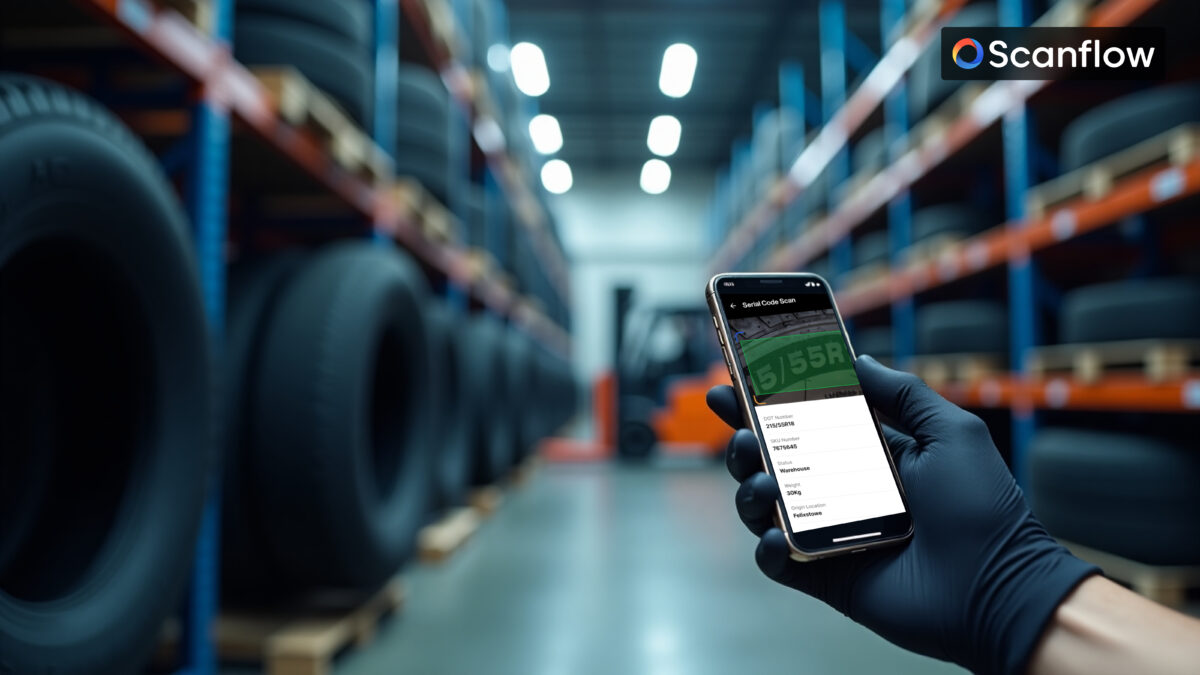
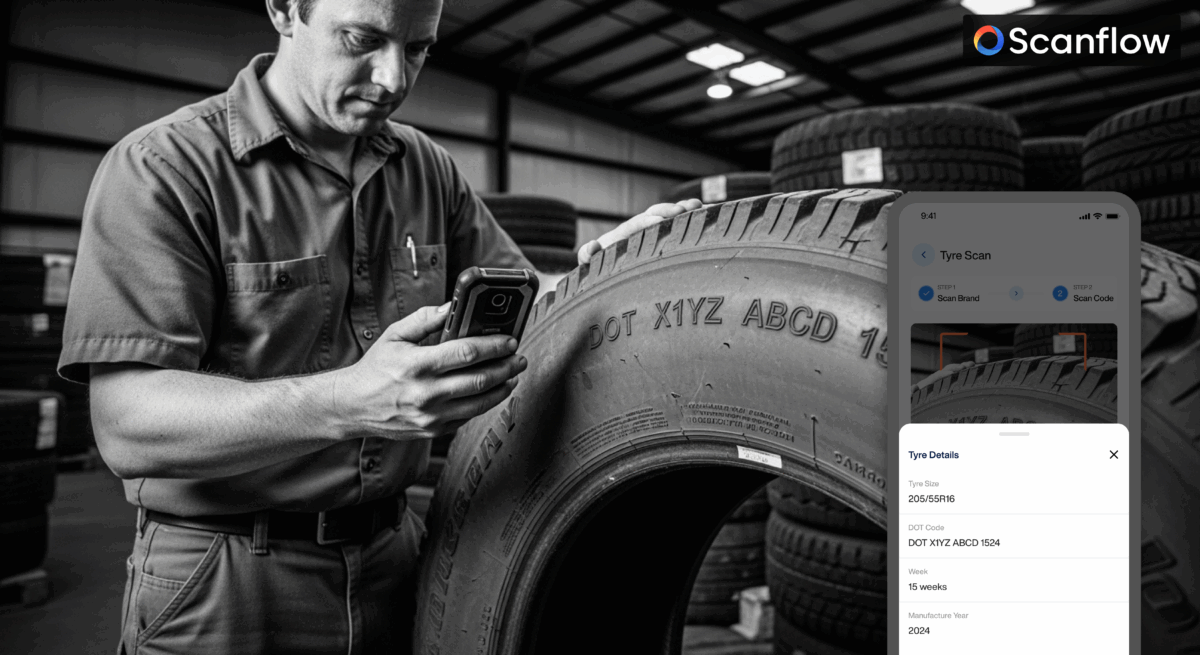
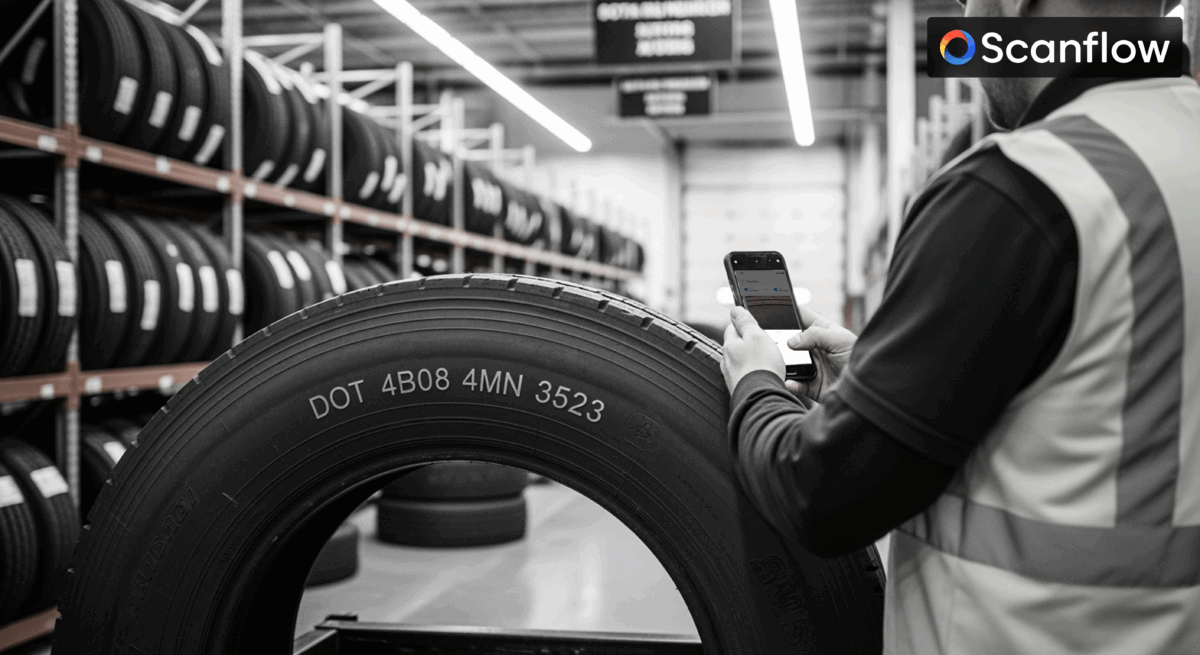
  • AI tire sidewall scanners capture DOT codes, brands, and serial details in real time.
  • Visual intelligence models identify sidewalls even under dirt, damage, or low light.
  • Each scan produces structured, tamper proof digital data ready for audit review.

Manifest Generation and Reporting

  • AI solutions like Scanflow compile captured data into complete digital manifests, automatically linking:
  • Source and destination facilities.
  • Transporter identification and load IDs.
  • Timestamped scan logs and batch summaries.
  • Helps create manifests that align with CalRecycle’s CTL and TCEQ reporting templates, minimizing administrative overhead.

Predictive Compliance Monitoring

  • AI flags missing tire counts, duplicate records, and data anomalies before audits.
  • Dashboards track real-time compliance performance, providing alerts for immediate correction.

Operational Transformation with AI Tire Scanning

Speed, Scale, and Precision

AI scanning enables tire processors to access huge volumes of tires, integrating seamlessly into existing systems.

  • Continuous scanning ensures uninterrupted workflow.
  • Batch-level reporting aggregates data for bulk shipments.
  • Local (on-device) processing ensures immediate feedback and no internet dependency.
  • All data is processed locally for full offline capability.
  • Meets EPA, GDPR, and state-level data privacy standards.

Business Impact: Turning Compliance into Competitive Advantage

AI tire scanning isn’t just about avoiding fines it’s a strategic investment in efficiency and growth.

Outcome AI-Driven Impact
Faster Operations 60–70% increase in throughput via automation.
Fewer Errors 80% reduction in data discrepancies and reporting mistakes.
Improved Audit Readiness Instant manifest retrieval and clean digital records.


By embedding AI into daily recycling operations, companies gain a long term edge in both compliance reliability and operational agility.

Optimizing Compliance Workflows with Scanflow

Scanflow’s Tire Sidewall Scanner helps recyclers implement digital compliance seamlessly through:

  • Hardware Integration: AI tire sidewall scanners retrofit easily into systems and inspection lines.
  • Data Dashboards: Real-time monitoring of tire inventory, shipment progress, and manifest status.
  • Reporting: Export-ready files compatible with CalRecycle, TCEQ, and EPA databases.
  • Predictive Insights: Early warnings for potential non-compliance issues.

This makes compliance visible, measurable, and verifiable turning regulatory obligations into process efficiency.

Practical Benefits for Tire Recyclers

  • Faster Audit Response: Generate digital manifests in seconds; auditors get clean, timestamped data instantly.
  • Lower Administrative Overhead: Reduce manual documentation and repetitive data entry, freeing staff for higher-value tasks.
  • Scalable and Flexible: Works across multi-site operations, from regional haulers to national recycling networks.
  • Real-Time Compliance Assurance: Get notified the moment a record goes missing or a data mismatch occurs.

Conclusion: The Future of Tire Recycling Compliance

AI is redefining how compliance is achieved, managed, and measured. By integrating tire sidewall scanning and automated manifest generation, recyclers can eliminate manual errors, reduce risk, and build transparency across their operations.

In 2025, compliance isn’t just about meeting regulations it’s about leading with precision, trust, and innovation. Scanflow enables recyclers to do exactly that.

Book a Demo with Scanflow

Regulatory compliance doesn’t have to slow your business down. With Scanflow, you can automate compliance tracking, manifest creation, and audit reporting all in real time.
👉 Book Your Demo at Scanflow

Categories
Tire Sidewall

Why Intelligent Tyre Traceability Is Becoming Standard Practice for European Distributors 

Across Europe, tyre distribution is undergoing a quiet transformation. What was once a largely manual process dependent on visual checks, handwritten logs, and disconnected data systems is now being redefined by intelligent traceability technologies. Distributors are realizing that knowing exactly what tyre they are handling, from its brand and size to its DOT and TIN information, is no longer optional. It’s a requirement driven by tighter regulations, customer expectations, and supply chain efficiency. 

At Scanflow, we see this shift not just as a compliance necessity but as an opportunity. Intelligent tyre traceability brings accuracy, transparency, and speed to an industry long challenged by complexity. Our Tyre Sidewall Scanner was built to meet these evolving needs empowering distributors and warehouse operators with real-time tyre identification using advanced AI and mobile scanning technology. 

The Growing Demand for Tyre Traceability in Europe 

The European tyre market is one of the most tightly regulated in the world. With increasing emphasis on product authenticity, sustainability, and lifecycle tracking, distributors needs to ensure that every tyre is traceable from arrival to sale. European Union initiatives such as the Circular Economy Action Plan and Extended Producer Responsibility schemes have intensified this focus, pushing distributors to demonstrate full visibility over their tyre inventories. 

At the same time, the supply chain has become more dynamic. Tyres often move between multiple storage facilities, retail outlets, and regions before reaching their final destination. In such a distributed ecosystem, even minor data inconsistencies can lead to significant inefficiencies from shipment errors to warranty claim disputes. 

Real-World Pain Points in Tyre Distribution 

Despite advances in warehouse automation, tyre distribution still suffers from unique and persistent challenges that trace back to poor identification and data capture.

1. Time-Consuming Tyre Identification
In most distribution centers, workers still rely on manual reading of tyre markings to log DOT and TIN codes. These alphanumeric sequences are often embossed on curved, dirty, or low-contrast sidewalls. The result is frequent misreads, inconsistent entries, and wasted time. For large distributors handling thousands of tyres daily, this slows operations dramatically.

2. Stock Aging and Traceability Gaps

Without automated traceability, it’s easy for older tyres to remain unnoticed in inventory. Distributors risk shipping products that are nearing or beyond recommended shelf age creating liability concerns and dissatisfied customers. Maintaining visibility into tyre age and batch details becomes almost impossible when data capture is inconsistent or delayed.

3. Warranty and Recall Management Difficulties
When a manufacturer issues a recall or quality alert, distributors must act fast. But without precise DOT/TIN traceability, identifying affected tyres can take days or weeks. That delay not only risks compliance penalties but also damages customer trust.

4. Inconsistent Branding and Model Data
Tyres from multiple manufacturers arrive daily with varying layouts, fonts, and surface conditions. This diversity makes it hard to standardize records. A tyre might be logged as “Pirelli P7” in one system and “Pirelli Cinturato P7” in another. Such discrepancies complicate data analytics, forecasting, and ERP synchronization.

5. Pressure for Digital Integration
Distributors are modernizing rapidly, connecting their warehouse management systems (WMS) and enterprise resource planning (ERP) platforms. Yet, without accurate tyre-level data capture, the full potential of digital transformation remains out of reach.

How Scanflow Tyre Sidewall Scanner Solves These Challenges 

The Scanflow Tyre Sidewall Scanner was designed specifically to address these operational realities. Using AI-powered mobile scanning, it can recognize and extract critical tyre details including DOT and TIN codes, size, brand, and age instantly and accurately. 

Unlike traditional barcode or manual OCR methods, Scanflow’s solution interprets sidewall text and patterns through deep learning models trained on thousands of tyre variations. It operates effectively under the real conditions of warehouses: low light, uneven surfaces, and varying tyre orientations. 

Key Advantages: 

  • Mobile-First Design
    Scanflow Tyre Sidewall Scanner can be deployed on smartphones or rugged mobile devices. This gives warehouse operators flexibility to scan anywhere on the floor without fixed stations or specialized hardware. 
  • AI Precision in Real Conditions
    The system adapts to different fonts, engravings, and surface wear. Even partially obscured or aged sidewall markings can be recognized with high accuracy, minimizing manual intervention. 
  • Instant Data Capture and Integration
    Captured tyre data syncs automatically with warehouse or ERP systems, enabling seamless traceability across the supply chain. Every scan becomes a verified data point enhancing accuracy in stock records, inventory audits, and shipment planning. 
  • Traceability with Speed and Simplicity
    What once required slow manual logging can now be completed in seconds. Distributors gain both efficiency and compliance assurance without changing existing workflows.

The Operational Impact for European Distributors 

Adopting intelligent tyre traceability isn’t only about technology; it’s about transforming operations. With Scanflow Tyre Sidewall Scanner, distributors can expect measurable improvements in several areas: 

  • Reduced Handling Time: Workers can identify and record each tyre’s details instantly, accelerating inbound and outbound processing. 
  • Error-Free Data: Eliminates human input errors and ensures consistency across systems. 
  • Optimized Stock Rotation: Real-time visibility into tyre age and production batches prevents over-aging and improves inventory utilization. 
  • Regulatory Readiness: Maintains complete digital traceability aligned with emerging European sustainability and labeling standards. 
  • Streamlined Warranty Management: Enables rapid identification of affected tyres during recalls or audits. 

These capabilities give distributors a new level of control and visibility. Instead of reacting to errors or delays, they can proactively manage quality, compliance, and performance. 

Intelligent Traceability: The New Standard 

As the European tyre industry continues to evolve, intelligent traceability will become the standard expectation rather than a competitive advantage. Distributors who adopt early gain not just efficiency but trust from manufacturers, regulators, and customers alike. 

With growing scrutiny over tyre origin, sustainability, and lifecycle data, the ability to verify every tyre’s identity in real time is critical. Scanflow’s Tyre Sidewall Scanner brings that capability within reach of every distributor, combining AI intelligence with mobile convenience. 

 Conclusion 

The future of tyre distribution in Europe is digital, data-driven, and transparent. Intelligent tyre traceability is no longer an aspiration; it’s a necessity for competitiveness and compliance. 

At Scanflow, we are committed to helping distributors embrace this transformation seamlessly. Our Tyre Sidewall Scanner delivers the accuracy, speed, and integration capability required to make traceability a natural part of everyday operations. 

Categories
Tire Sidewall

What does DOT/TIN data really mean for scrap tire traceability and reporting? 

In the complex world of tire recycling and waste management, accurate data collection and traceability have become critical challenges for tire recyclers and scrap tire handlers. The Department of Transportation (DOT) and Tire Identification Number (TIN) codes printed on tire sidewalls contain a wealth of information that, when properly captured and processed, can enhance the industry’s approach to compliance, reporting, and operational efficiency. 

Understanding DOT/TIN data: The foundation of tire traceability 

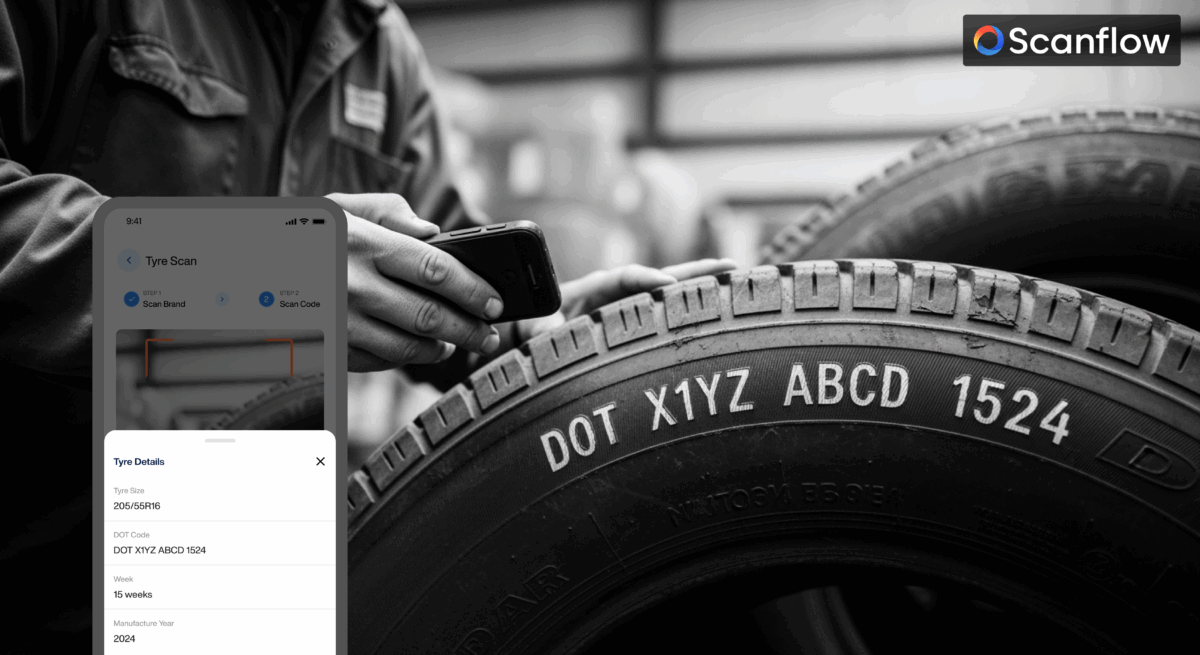
Every tire manufactured for highway use carries a DOT code that serves as its unique fingerprint. This alphanumeric sequence contains crucial information, including the manufacturer’s plant code, tire size, brand code, and most importantly, the production date. For tire scrapers and recycling facilities, this data represents far more than simple identification; it’s the key to comprehensive scrap tire traceability and regulatory compliance. 

The TIN portion of the DOT code identifies explicitly the date and place of manufacture, enabling precise tracking throughout its lifecycle. This information becomes invaluable when preparing manifests, meeting state regulatory requirements, and maintaining accurate inventory records for tire disposal operations. 

The challenge of manual data collection 

Traditional methods of collecting tire data involve manual inspection and handwritten logs, a process that’s not only time consuming but prone to significant errors. Scarp Tire recyclers often struggle with: 

  • Data entry errors that compromise manifest accuracy 
  • Inconsistent documentation across different operators 
  • Time-intensive processes that slow down operations 
  • Difficulty in maintaining structured tire data for reporting purposes 
  • Challenges in meeting state compliance requirements efficiently 

These manual processes create bottlenecks in tire recycling operations, increasing the risk of regulatory non-compliance and potentially resulting in costly penalties and operational disruptions. The relief from these challenges is a significant benefit of AI tire scanning. 

How AI scrap tire scanning transforms operations? 

Modern AI scanners have emerged as a game-changer for the tire recycling industry. Tire sidewall scanning solutions leverage artificial intelligence to automatically capture, interpret, and process DOT/TIN data with unprecedented accuracy and speed, empowering industry professionals with more control and confidence. 

Scanflow’s Tire Sidewall SDK represents a breakthrough in automated tire identification, offering tire recyclers and scrapers a comprehensive solution that addresses the industry’s most pressing data collection challenges. The solution utilizes advanced computer vision for tires to: 

Capture data with mobile flexibility 

The solution works seamlessly with mobile applications and IP cameras, allowing operators to scan tire sidewalls using existing devices. This mobile tire scanning capability means facilities can implement the technology without significant infrastructure investments, making it accessible and convenient for operations of all sizes. 

Integrate with existing systems 

One of the key advantages of Scanflow’s approach is its ability to integrate with any backend system customers already have in place. This tire data management integration ensures that scanned information flows directly into existing workflows, eliminating data silos and maintaining operational continuity. 

Deliver structured data and analytics 

The Tire Sidewall scanning SDK automatically structures collected data into actionable insights through comprehensive dashboards. This capability provides real-time visibility into tire volumes, types, and processing status, enabling better decision-making and resource allocation. 

Streamlining manifest preparation and compliance 

The most significant benefit of automated tire scanning is its impact on manifest preparation. State regulations require detailed documentation of tire disposal activities, and manually preparing these documents is both time-consuming and error-prone. 

With AI Tire Sidewall Scanning, manifest creation becomes automated mainly. The system captures all necessary tire specifications, including size, brand, and TIN/DOT codes, and formats this information in accordance with regulatory requirements. This digital tire tracking approach not only saves time but also significantly reduces the risk of compliance issues. 

The future of tire recycling/scarp operations 

As state regulations become increasingly stringent and the volume of scrap tires continues to rise, the need for efficient and accurate data collection becomes more critical. Tire scanning solutions not only improve operational efficiency and compliance but also represent a significant step towards more sustainable, environmentally friendly tire recycling operations. 

The implementation of AI tire sidewall scanning offers immediate benefits in terms of operational efficiency and compliance, while also providing the foundation for advanced analytics and process optimization. Facilities that adopt these technologies position themselves to meet growing regulatory demands while maintaining competitive advantages through improved efficiency. This can lead to significant cost savings in terms of reduced manual labor, fewer compliance issues, and optimized resource allocation. 

Conclusion: Embracing digital transformation in tire recycling 

The integration of DOT/TIN data capture through advanced scrap tire scanning technology represents more than just an operational upgrade; it’s a fundamental shift toward data-driven tire recycling operations. By leveraging Scanflow’s Tire Sidewall SDK, tire recyclers and scrapers can transform their approach to compliance, reporting, and operational management. 

 As the industry continues to evolve, those who embrace intelligent tire scanning solutions will find themselves better positioned to navigate regulatory complexities, reduce operational costs, and build more sustainable business models. The future of tire recycling lies in accurate, automated data collection, and that future is available today. 

Discover how Scanflow enables recyclers to capture DOT/TIN data with accuracy and speed.  

[Schedule a Demo]

Categories
Logistics

The Ultimate Guide to Automating Asset Identification in Warehouse and Logistics Operations

Introduction

In today’s complex supply chains, AI-powered asset identification capturing barcodes, serial numbers, or QR codes is critical. Traditional manual scanning and entry are slow, error-prone, and costly. Scanflow’s AI-based Asset Identification SDK eliminates these constraints, enabling rapid, accurate, and automated asset identification via mobile and stationary devices.

Challenges in Modern Warehousing & Logistics

  • Manual entry errors lead to miscounted and incorrectly logged inventory.
  • Weak real-time tracking delays reconciliation and fulfilment.
  • Poor label readability – damaged, rotated, or obscured codes hinder accuracy.
  • Operational inefficiencies escalate costs and disrupt workflows.
  • Compliance risks due to misrouting or missing asset data.

Scanflow’s Asset Identification Solution Can Scan

Scanflow’s AI-powered Asset Identification SDK supports a wide range of use cases tailored to various industry needs:

  • Tire Sidewall Scanning: Identify and trace tires by reading TINs and embossed data.
  • VIN (Vehicle Identification Number) Scanning: For automotive logistics and inventory tracking.
  • License Plate Recognition (LPR): Monitor dock entries, yards, and fleet movements.
  • Shelf Scanning: Retail shelf-level inventory validation and stockout prevention.
  • Label Scanning: Reads printed or handwritten labels.
  • Barcode & QR Code Scanning: Supports 1D/2D codes, even when damaged or rotated.
  • Serial Number Scanning: Extracts alphanumeric IDs for asset tracking.

Core Use Cases & Workflows

  • Inbound & Receiving: Verifies shipment labels at docks, reducing misroute error rates and enhancing real-time asset tracking.
  • Sorting & Cross‑Docking: Scans packages swiftly in high-throughput zones, supported by warehouse automation tools.
  • Inventory Management & Reconciliation: Accurate cycle counts, put-away, and real-time WMS updates enhance warehouse inventory scanning.
  • Exception Handling & Safety: Detects duplicates, misplaced assets, or missing tags for quick corrective action, boosting automated asset identification accuracy.

Technical Advantages of Scanflow’s SDK

  • 98%+ accuracy in varied conditions makes it one of the most reliable AI for logistics and supply chain operations.
  • Seamless integration with ERP/WMS/CRM platforms: SAP, Oracle, Salesforce, D365.
  • Enables offline scanning on mobile, tablet, fixed stations, drones, and cameras making it ideal for dynamic logistics environments.

Real‑World Impact & KPIs

  • Up to 75% reduction in misrouting and verification delays.
  • 98%+ scan success in poor lighting; 30–50% faster reads than legacy scanners.
  • Cost savings and minimized regulatory fines for pharma and industrial sectors real gains through real-time asset tracking.

Industry Applications

  • Pharma & regulated industries: Automates batch number and expiration date scanning with full traceability.
  • Automotive & industrial: Captures VINs, tire TINs, component codes on-the-fly, supporting automated asset identification.
  • Retail & e‑commerce: Enables shelf scanning, POS verification, and counterfeit detection for logistics barcode scanning.
  • Manufacturing: Integrates serial/OCR scanning into production lines for quality control and traceability using AI-powered asset identification.

Best Practices for Adoption

  • Choose deployment: mobile SDK for flexible use cases or fixed stations for high-throughput zones.
  • Train AI with facility-specific labels for accuracy.
  • Use seamless integrations into ERP/WMS for real-time sync and better warehouse automation tools.

Conclusion & Next Steps

Scanflow’s Asset Identification SDK transforms warehousing and logistics by significantly improving speed, accuracy, traceability, and cost efficiency. If you’re looking to elevate your operations to a higher standard of automation and reliability, consider reaching out to Scanflow for a demo.

FAQs

Q1: How does AI improve accuracy in asset identification?
AI enables real-time recognition of barcodes, serial numbers, and printed text even in tough conditions like poor lighting, low print quality, or curved surfaces. It reduces manual errors and ensures consistent, high-accuracy scanning across operations.

Q2: What types of assets can Scanflow identify?
Scanflow supports a wide range of asset types including barcodes, QR codes, serial numbers, license plates, VINs, tire sidewalls, product labels, and shelf inventory all processed through a unified AI scanning engine.

Q3: Can AI handle damaged or rotated labels effectively?
Yes Scanflow reads damaged, rotated, or low-light barcodes with over 98% success.

Q4: What integrations are available?
Compatibility with SAP, Oracle, Salesforce, Dynamics 365, and can be deployed via mobile SDK, IoT cameras, or edge devices.

Categories
Tire Sidewall Text Scanning

How Tire Sidewall Scanning using AI is transforming tire warehousing in Automotive Manufacturing

In automotive manufacturing, precision in tire identification is non-negotiable. But inside warehouses, the way tires are received, stored, and retrieved still relies heavily on manual intervention, leading to mismatches, delays, and an inability to manage inventory effectively. Sidewall data capture introduces a system of record built directly from the tire, enabling smarter, faster, and more accurate warehouse operations.


In most tire warehouses, the process begins with unloading. Tires are manually counted and logged using either handheld scanners or visual checks. From this point forward, tracking relies on printed barcodes, handwritten logs, or product labels that are easy to misread or lose. The warehouse is left operating on estimates, assumptions, and static records.


  • Inaccurate SKU matching: Selecting the wrong tire model or size during retrieval is common when multiple similar variants are stored in close proximity.
  • Manual data entry errors: Serial numbers and model information are often typed in by hand, increasing the risk of mismatch or duplication.
  • Lack of visibility into tire aging: There is no reliable mechanism to track how long each unit has been stored, leading to slow-moving stock building up unnoticed.
  • No real-time inventory insight: Most systems only offer a point-in-time view, which becomes outdated as soon as stock is moved or reallocated.
  • Increased turnaround time: The time it takes to find, verify, and dispatch the correct tire grows, especially as SKU complexity increases.
  • High man-hour cost: Staff must spend time on low-value tasks like physical checks, double entry, and re-scanning due to initial inaccuracies.

In fast-moving production environments, these issues quickly become bottlenecks – not just for the warehouse, but for the entire supply chain that depends on it.

  • Every tire has essential data embedded in its sidewall. This includes:
  • The Tire Identification Number (TIN)
  • Size and load index
  • Manufacturer and model
  • Batch or production code

Instead of relying on external labels, barcodes, or manual logs, sidewall data capture uses computer vision and optical character recognition to extract this information directly from the tire. The system identifies each unit as it is received, moved, or retrieved without requiring any manual input.

This data is immediately matched to the expected SKU and stored in the warehouse management system in real time. As a result, the warehouse has a live, continuously updated inventory view based on what is actually in storage, not just what was scanned in at the door.

1. Asset-Level Identification at Entry

Tires are identified individually as they are unloaded, with precise data linked to each unit. This eliminates reliance on aggregated batch-level logging or barcode stickers that may detach or degrade.

2. Reduced SKU Mismatch During Retrieval

Operators retrieve tires based on validated data from the sidewall, not assumptions or packaging labels. The system flags any discrepancies between what is picked and what is expected.

3. Live Tracking of Tire Aging

Because each tire is scanned and time-stamped at arrival, its storage duration is tracked automatically. This enables FIFO or FEFO practices and prevents the creation of slow-moving or expired stock.

4. Real-Time Warehouse Snapshot

Management gets a complete picture of what is stored where, down to the model and age of each unit. This allows for better layout planning, stock rotation, and dispatch prioritization.

5. Space Utilization Optimization

With clear data on high-movement SKUs, warehouse teams can adjust placement zones and stacking logic to reduce time and effort spent on retrieval.

6. Reduction in Man-Hour Cost

Automated capture eliminates the need for repeated checks, re-scanning, and dual entry. Fewer errors mean fewer corrections, and fewer hands are needed to manage day-to-day tracking tasks.

Moving from Manual to Measurable

The shift from manual identification to structured AI sidewall capture is not just about saving time. It is about enabling tire warehousing operations to work with a level of data integrity and speed that matches the rest of the automotive manufacturing process.

Inaccurate or missing tire data delays dispatches, inflates inventory cost, and slows down assembly. When identification happens at the source; at the moment the tire is unloaded, these problems no longer accumulate. Warehouses become faster. Decisions become more informed. Stock becomes more visible and manageable.

Conclusion

Sidewall data capture transforms warehouse operations from manual and reactive to intelligent and data driven. By building traceability from the physical asset itself, it eliminates errors at the point of entry, improves selection accuracy during retrieval, and gives real-time visibility into every tire in the system.

For tire manufacturers, OEMs, and their warehousing partners, the message is simple: better data starts at the sidewall and the time to capture it is now.

If your teams are still spending time on manual tire checks, SKU revalidations, or inventory clean-ups, you’re losing more than just time – you’re losing traceability, efficiency, and cost control.

Scanflow lets you capture tire sidewall data directly from the tire; fast, accurate, and fully integrated into your existing workflows.

No guesswork. No double entry. Just clean data, from source to dispatch.

Book a walkthrough with our team to see how Scanflow fits into your warehousing environment.

Schedule a demo or Download SDK to start.

QR Floating