Categories
label capture

How to Capture Serials, IMEIs and Label Data in One Scan

Serial Number Scanner: How to Capture Serials, IMEIs and Label Data in One Scan

Key takeaways

  • A serial number scanner uses a camera and OCR or barcode decoding to read a product’s serial number instead of typing it.
  • Most device labels carry several identifiers at once: serial, IMEI, model, part number and one or more barcodes.
  • Barcode-only scanners miss labels with no barcode or a damaged one. Single-line OCR reads one field and misses the rest.
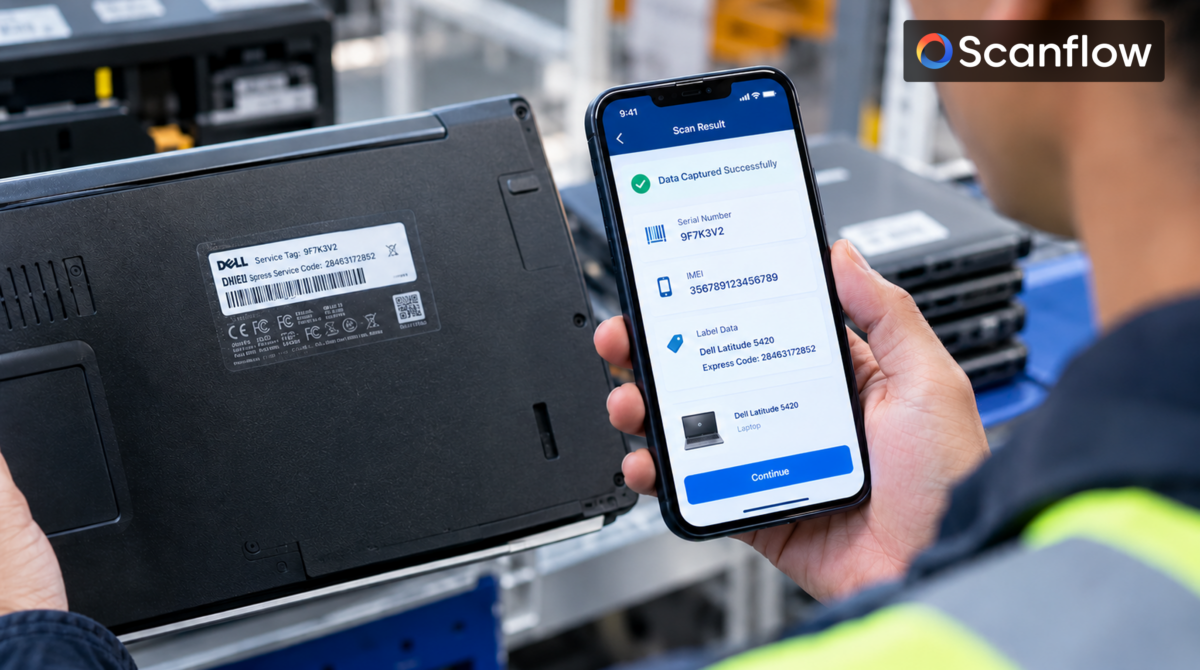
  • Label capture reads barcodes and printed text together and returns each field your app needs.
  • The best SDK for the job handles worn, small, curved and low-contrast labels, not just clean ones.

What Is a Serial Number Scanner?

A serial number scanner is software that reads a product’s unique serial number from a label or part using a camera, then sends it to an app or system. It replaces typing long strings of letters and numbers by hand.

Serial number scanners work in two ways. Some decode a barcode or QR code that encodes the serial. Others use optical character recognition (OCR) to read the printed characters directly. The most useful ones do both.

Why Serial Numbers on Labels Are Hard to Read

Serial numbers look simple on a spec sheet. On a real device in a warehouse or service van, they are some of the hardest text to capture.

Where the serial isWhat's usually on itWhat makes it hard
Laptop and server labelsSerial, model, part number, barcode(s), regulatory marksSmall print, many look-alike fields, faded after years of use
Phone and tablet boxes or traysSerial, IMEI 1, IMEI 2, model, colour, storageSeveral barcodes side by side, glossy surfaces
Hard drives and SSDsSerial, model, capacity, firmware, barcodeTiny labels, reflective metal, scratches
Industrial equipment nameplatesSerial, model, rating dataStamped or engraved metal, low contrast, curved surfaces
Returned or used devicesAny of the aboveTorn, smudged or partially missing labels

The common thread is that the serial is never alone. A scanner has to find the right field among several, and still read it when the label is worn.

Barcode Scanning vs OCR vs Label Capture

There are three ways to capture a serial number from a label. They solve different problems.

MethodHow it worksGood forBreaks when
Barcode scanningDecodes the barcode that encodes the serialClean labels with one known barcodeThere's no barcode, it's damaged, or several barcodes sit side by side
Single-line OCRReads one line of printed textA single serial printed on its ownThe label has many fields, or the serial must be matched to its IMEI or model
Label captureReads barcodes and printed text together, then picks out each fieldMulti-field labels: serial + IMEI + model + part number

For most operations, the question is not “can it read a serial?” but “can it read every field I need from this label in one go?” That is what label capture is built for. For background on barcode formats, see our guide to types of barcodes.

Where Teams Scan Serial Numbers Every Day

Serial number capture sits at the start of many workflows. If it is wrong there, every record after it is wrong too.

  • ITAD intake: every laptop, phone and drive is logged by serial on arrival. That serial links to its erasure record, grade and final disposition the backbone of an R2v3 chain of custody.
  • Electronics retail and returns: serial and IMEI are captured at sale and at return to stop fraud and process warranties.
  • Field service: technicians record the serial of the unit they repair, often on equipment in awkward, dim places.
  • Warehouse and 3PL: serialised stock is scanned at receiving, picking and shipping for traceability.
  • Manufacturing and assembly: part serials are recorded so a finished product can be traced back to its components.

What to Look for in a Serial Number Scanner SDK

If you are adding serial number scanning to your own app, test SDKs on your hardest labels, not on clean demo samples. Check these six things:

  1. Multi-field capture. Can it return serial, IMEI, model and barcode values from one scan, each labelled?
  2. Format rules. Can you define the pattern a serial should follow, so a misread is flagged instead of saved?
  3. Hard surfaces. Does it read worn, small, glossy, curved and low-contrast labels, including stamped metal?
  4. Barcode + text together. Does it fall back to printed text when a barcode is damaged, or cross-check one against the other?
  5. Platform fit. Native iOS and Android support, and how it fits into your existing app.
  6. Data handling. Where images and results are processed and stored, to match your security needs.

How Scanflow Label Capture Works

Scanflow Label Capture is part of Scanflow Capture, an AI-enabled asset identification SDK for iOS and Android. It reads barcodes and printed text on a label in a single capture and returns the fields your workflow needs.

A typical flow looks like this:

  1. The user points a phone or tablet at the label.
  2. The SDK finds the barcodes and text blocks on the label.
  3. It identifies the fields you configured, such as serial number, IMEI, model and part number.
  4. It returns each value to your app, ready to save against the asset record.

Scanflow is built for the identifiers ordinary scanners struggle with: damaged labels, low-contrast and stamped serials, and labels with many fields. The same SDK also covers serial number and text scanning, VIN scanning and tire sidewall scanning, so one integration handles several identification jobs.
Categories
label capture

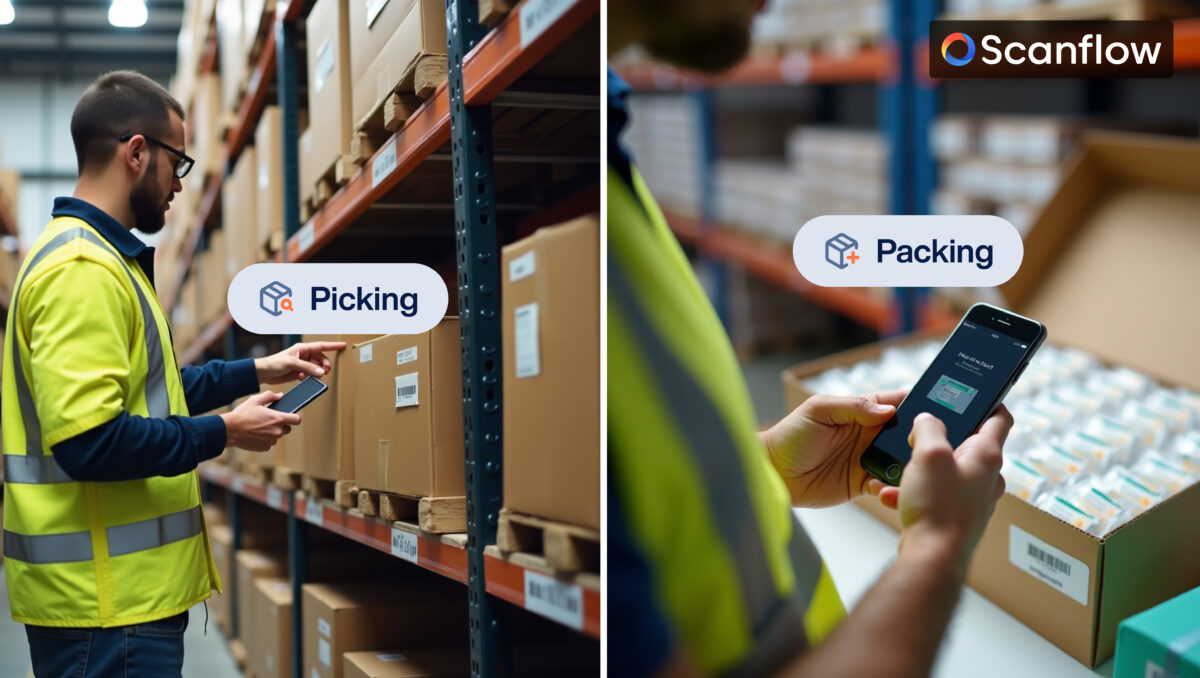
5 Warehouse Challenges Solved by Scanflow Pick and Pack Solution

In today’s high velocity supply chain, warehouse operations face pressure to meet rising order volumes, shorten delivery times, and eliminate errors all while maintaining cost-efficiency. Yet, many organizations still rely on manual or semi-automated pick and pack processes that can’t keep pace with operational demands.

Scanflow’s Pick and Pack Automation addresses these inefficiencies through a smart, AI system that brings accuracy, speed, and system-level integration into warehouse workflows. Below, we explore five common challenges warehouses face and how Scanflow solves them.

Challenge 1: Picking Errors and Mislabeling

The Challenge: Manual picking is one of the most error-prone processes in a warehouse. Misselected items, wrong quantities, and labeling mistakes lead to customer dissatisfaction, product returns, and additional handling costs. 

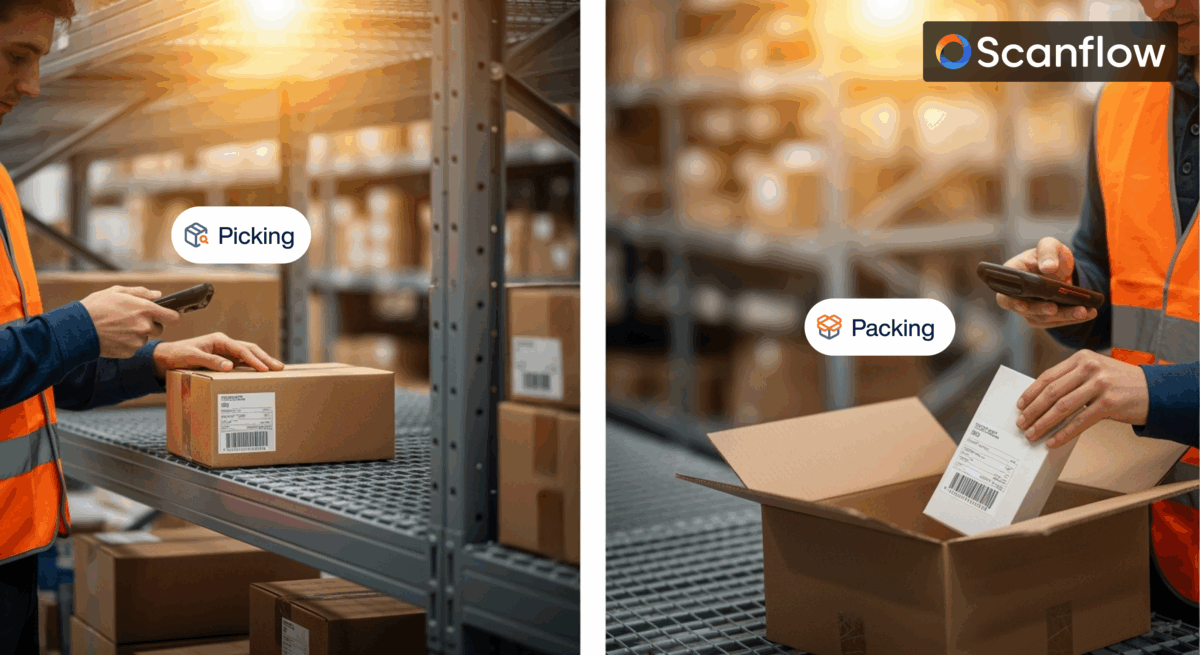
How Scanflow Solves It: Scanflow uses AI-driven computer vision to validate every item as it’s picked. The system checks against order data in real-time, ensuring the right SKU and quantity are selected. It also automates label generation and placement, reducing human error and guaranteeing that every item is packed and tagged correctly before dispatch.

Challenge 2: Slow Fulfilment and Dispatch Delays

The Challenge: As order volumes grow, manual processes can’t scale fast enough. Fulfilment teams struggle to meet tight timelines, and dispatch delays become inevitable especially during peak periods. 

How Scanflow Solves It: Scanflow speeds up the entire pick and pack cycle by providing guided workflows, real-time verifications, and automated decision points. Operators are directed through optimized picking paths, and AI instantly verifies items before packing. This ensures orders move faster through the warehouse without sacrificing accuracy, helping businesses consistently meet SLA deadlines. 

Challenge 3: Lack of Workflow Synchronization Across Warehouse Systems 

The Challenge: Many warehouse operations suffer from disconnected systems  where picking, inventory, packing, and order management tools function in isolation. The lack of end-to-end visibility causes delays, miscommunication, and inefficient workflows. 

How Scanflow Solves It: 
Scanflow is built for seamless integration with existing WMS, ERP, and inventory platforms. Its API-first architecture enables real-time data exchange across warehouse functions, aligning the picking, verification, and packing steps into a single, unified process. This synchronization improves coordination, reduces manual intervention, and ensures every action is tracked and recorded across systems. 

Challenge 4: Inefficient Packing and Material Waste 

The Challenge:
Packing inefficiencies such as selecting the wrong carton size, packing items in the wrong sequence, or using excess filler lead to material waste, damaged products, and higher shipping costs. 

How Scanflow Solves It:
Scanflow optimizes packing operations by using AI-assisted logic that selects the ideal packaging based on item dimensions and order requirements. Operators receive packing guidance on-screen, and the system verifies contents before sealing. This minimizes packaging waste, reduces damage risk, and ensures every box is prepared for safe, efficient shipping.

Challenge 5: Lack of Real-Time Visibility and Tracking 

The Challenge: Manual processes offer limited insights into order status, picking accuracy, and workforce productivity. Managers are left guessing when problems occur and discovering issues only after a shipment fails or a customer complains. 

How Scanflow Solves It: With Scanflow, every step from pick to pack is digitally tracked and logged. Managers get real-time dashboards and visual audit trails, allowing them to monitor orders, identify bottlenecks, and resolve issues proactively. Integration with WMS and ERP systems ensures consistent data visibility across platforms, enabling better decision-making and operational control.

Conclusion 

Manual pick and pack operations are no longer sustainable in today’s fulfillment environment. Errors, delays, siloed systems, and lack of visibility not only slow down operations but also increase costs and customer dissatisfaction. 

Scanflow’s Pick and Pack Automation offers a comprehensive, integrated solution that eliminates inefficiencies and builds resilience into warehouse operations. With vision-based verification, AI-guided workflows, and seamless system integration, it helps enterprises unlock higher speed, accuracy, and scalability exactly what modern supply chains demand. 

Categories
label capture

How Scanflow AI SDK Transforms Barcode and QR Code Scanning

In today’s fast paced digital economy, accurate and lightning fast scanning of barcodes and QR codes is crucial across industries like retail, logistics, manufacturing, and healthcare. Traditional scanning solutions often struggle with poor lighting, damaged codes, or varying angles. Enter Scanflow AI SDK, a game changer that redefines how businesses approach barcode and QR code scanning, delivering robust performance, speed, and flexibility.

What is Scanflow AI SDK?

Scanflow AI SDK is an advanced software development kit designed to empower mobile and enterprise applications with smart barcode and QR code scanning capabilities. Unlike traditional scanning engines, it leverages artificial intelligence and deep learning to deliver superior results in complex scanning scenarios.

Key Features That Set Scanflow AI SDK Apart

1. AI-Powered Decoding Engine

The heart of Scanflow AI SDK is its AI-driven engine, which:

  • Recognizes damaged, blurred, or distorted barcodes and QR codes.
  • Processes scans rapidly, even on low-end devices.
  • Works reliably under challenging lighting conditions.

This AI capability ensures high accuracy and minimizes scanning errors that can disrupt workflows.

2. Multi-Code and Bulk Scanning

Modern industries often need to scan multiple codes simultaneously for instance, picking multiple items in a warehouse or verifying batches of products. Scanflow AI SDK:

  • Scans multiple barcodes or QR codes in a single frame.
  • Reduces operational time dramatically.
  • Enhances user convenience in high-volume environments.

3. Wide Barcode Format Support

Scanflow AI SDK isn’t limited to a few common formats. It supports over 30 barcode and QR code symbologies, including:

  • 1D barcodes like Code 128, Code 39, EAN-13, and UPC.
  • 2D codes like QR Code, Data Matrix, Aztec, and PDF417.

This flexibility makes it suitable for diverse applications across global markets.

4. Offline Functionality

In logistics, retail, or field operations, internet connectivity isn’t always guaranteed. Scanflow AI SDK works fully offline, allowing users to:

  • Scan codes without needing a cloud connection.
  • Protect sensitive data by processing locally on the device.
  • Ensure smooth operations in remote areas.

5. Easy Integration Across Platforms

Scanflow AI SDK supports major development frameworks:

  • iOS and Android native apps
  • Cross-platform tools like Flutter, React Native, and Xamarin
  • Web applications via WebAssembly

Its clean API and lightweight footprint mean developers can integrate it quickly without bloating their apps.

Benefits of Using Scanflow AI SDK

Businesses adopting Scanflow AI SDK experience several advantages:

  • Increased Productivity: Faster scans reduce wait times and boost efficiency.
  • Cost Savings: Accurate scans lower the risk of costly errors and rework.
  • Enhanced Customer Experience: Smooth scanning leads to better app usability and user satisfaction.
  • Future-Proof Solution: AI keeps improving, allowing businesses to stay ahead of technological trends.

Real-World Applications

Scanflow AI SDK is revolutionizing scanning across industries:

  • Retail: Quick checkouts, inventory management, and digital loyalty cards.
  • Logistics & Warehousing: Bulk scanning for faster picking, packing, and shipping.
  • Healthcare: Secure scanning of medication barcodes to prevent errors.
  • Manufacturing: Tracking parts and production processes seamlessly.

Why Choose Scanflow AI SDK Over Traditional Scanners?

Traditional barcode and QR code scanners often:

  • Fail in poor lighting.
  • Struggle with damaged codes.
  • Require expensive dedicated hardware.

Scanflow AI SDK overcomes these limitations by:

  • Using AI to interpret imperfect codes.
  • Running on everyday smartphones and tablets.
  • Delivering enterprise-grade performance without specialized hardware costs.

Conclusion

Scanflow AI SDK is transforming how businesses handle barcode and QR code scanning, offering unparalleled speed, accuracy, and adaptability. Its AI-driven capabilities help companies streamline operations, reduce costs, and deliver exceptional user experiences.

If you’re building apps requiring reliable scanning, Scanflow AI SDK might just be the competitive edge you’re looking for.

For more details, visit Scanflow AI SDK and explore how it can elevate your scanning solutions.

Categories
label capture

Top 5 Ways Asset Identification Transforms Pharma Pick and Pack Operations

Pharmaceutical companies today face real problems with manual tracking systems that just don’t cut it anymore. Workers spend hours manually entering batch numbers, checking labels, and verifying products  all while dealing with tight deadlines and zero tolerance for mistakes. One wrong batch number can trigger a costly recall. Scanflow’s asset identification SDK changes this completely by using AI mobile scanning to read and verify product information straight from the packaging, making pharma distribution operations faster and more reliable.

How Scanflow Transforms Pharma Operations

1. Batch Number Capture

Manual batch tracking is where most pharma operations lose time and money. Workers squint at tiny printed numbers, type them into systems, and hope they got it right. With thousands of products moving through facilities daily, human error is inevitable.

Scanflow’s system reads batch numbers directly from packages using AI technology. It achieves 98% accuracy rates, which beats manual entry by a wide margin. The system works even when batch numbers are printed on difficult surfaces like curved bottles or glossy labels. No more transcription errors, no more having to double-check every entry, and no more recalls caused by tracking mistakes.

2. Real-Time Inventory Control

Most pharma distribution centers still rely on outdated tracking methods that update inventory hours or even days after products move. This creates blind spots where nobody knows exactly what’s in stock or where specific batches are located.

Scanflow optimizes asset tracking and inventory management, automating barcode processing and improving in pharma distribution and warehouses. The asset identification solution provides real-time visibility into pharmaceutical inventory levels, locations, and movement throughout the pharma distribution supply chain. When products move, the system updates immediately. Integration with existing WMS and ERP systems means inventory records stay current without extra work from warehouse staff.

3. Complete Label Verification in One Scan

Current label checking processes require workers to manually verify multiple data points – expiration dates, lot numbers, NDC codes, dosage information. This takes time and creates opportunities for oversight, especially during busy periods.

Scanflow’s system reads and validates different data fields from pharmaceutical labels in a single scan. This eliminates the tedious manual checking process while ensuring every package meets specifications.

4. Faster Operations With Better Accuracy

Traditional pick and pack operations in pharmaceutical facilities and pharma distribution centers often involve time consuming manual verification processes. Scanflow’s asset identification solution improves operational efficiency by automating multiple verification steps simultaneously. Workers can scan, verify, and process products 70% faster than manual methods.

The system handles product codes, batch numbers, expiration dates, and quality checks all at once. This speed increase means facilities can process more orders per day without adding staff. Workers focus on handling products and solving problems instead of data entry and verification tasks.

5. Complete Product Traceability from Start to Finish

Tracking products through the entire supply chain is mandatory in pharma, but most companies struggle with gaps in their traceability records. When regulators ask for complete product history or when recalls happen, teams scramble to piece together information from multiple systems and paper records.

Scanflow creates an unbroken chain of custody for every product that passes through your facility. Every scan captures location, timestamp, operator ID, and product details automatically. The system tracks products from receiving through storage, picking, packing, and shipping without requiring extra data entry from workers.

When you need traceability information whether for a routine audit, customer inquiry, or recall situation – everything is already documented and searchable. The system shows exactly where each batch has been, who handled it, and when each step occurred. This complete visibility helps companies respond faster to regulatory requests and reduces the time spent investigating product history issues.

Scanflow’s Mobile SDK Technology

Scanflow’s asset identification solution is built on a mobile SDK that works with existing pharmaceutical operations. The platform uses computer vision algorithms trained specifically for pharmaceutical packaging, handling different box sizes, label formats, and printing styles commonly found in pharma distribution.

The scanning technology adapts to various lighting conditions and package orientations that occur in real warehouse environments. The AI learns from each facility’s specific products and improves recognition over time. The mobile SDK works on handheld devices, tablets, and fixed scanning stations, giving companies flexibility in how they deploy the technology.

Business Impact and Measurable Results

Companies using Scanflow’s asset identification solution see results within months of implementation. Labor costs drop significantly when workers stop spending time on manual data entry. Error rates decrease, which means fewer returns, recalls, and compliance issues. Processing speed increases allow facilities to handle more volume without expanding staff.

The system scales across multiple facilities and product lines as companies grow. The technology integrates with existing warehouse management systems without disrupting current workflows. For pharmaceutical operations dealing with increasing volume and tighter regulations, automated asset identification isn’t just helpful it’s becoming necessary for staying competitive.

Categories
label capture

Inventory Management and Data Traceability in Pharma Distribution

In today’s rapidly evolving pharmaceutical distribution landscape, maintaining accuracy and efficiency in inventory management is crucial, especially for organizations working in mission-critical sectors such as humanitarian aid and global healthcare. However, many organizations continue to rely on manual workflows, which are prone to errors, inefficiencies, and compliance risks.

Manual data entry, especially in pharmaceutical packaging, can lead to costly mistakes, including incorrect labeling, missed batch numbers, and missing expiry dates, resulting in delays, stock discrepancies, and non-compliance with regulatory standards. These inefficiencies not only affect the timely delivery of vital medicines but also undermine the integrity of the entire supply chain. Without automation, organizations may face:

  • Inaccurate data capture: Errors in batch number entries, expiration dates, and labeling inconsistencies.
  • Compliance risks: Regulatory requirements are not met, leading to potential penalties and product recalls.
  • Inventory discrepancies: Mismanaged stock levels due to incorrect data tracking, resulting in overstock or stockouts.

Scanflow provides an advanced, offline-capable AI solution that transforms manual data entry into an automated process for seamless inventory management. By leveraging Barcode/QR code recognition, OCR for text extraction, and accurate capture of batch numbers, Scanflow ensures that pharmaceutical distribution is streamlined, error-free, and compliant with regulatory standards.

Here’s how Scanflow enhances inventory management in pharmaceutical distribution:

  • Barcode/QR Code Recognition: Automated scanning of barcodes and QR codes provides real-time, accurate tracking of product inventory. This ensures that batch numbers, manufacturing, and expiry dates are captured effortlessly, ensuring that all items are traceable and compliant with industry regulations.
  • OCR for Text Extraction: Scanflow uses Optical Character Recognition (OCR) to capture and validate essential details like batch numbers, expiry dates, and product information from labels, ensuring no vital information is overlooked.
  • Seamless Integration with Existing Workflows: Scanflow can integrate with a variety of existing systems and platforms, ensuring smooth data flow from warehouse management systems (WMS) to inventory tracking platforms without disruption.
  • Offline Functionality: Even in areas with poor connectivity, Scanflow’s offline capabilities allow users to continue scanning and updating inventory data, which is then synced with the central system when connectivity is restored.

A leading humanitarian NGO involved in the global distribution of medical supplies faced challenges in their inventory management. The organization required a solution that would ensure real-time tracking of pharmaceuticals and medical equipment, while ensuring compliance with international regulations. Scanflow provided the perfect solution, using AI scanning to automate processes across multiple stages:

  • Barcode Serialization: Ensures traceability and data integrity for every product distributed.
  • 2D Barcode and QR Code Scanning: Facilitates efficient parcel tracking during transport.
  • Datamatrix Scanning on Packing Lists: Accurately identifies key product information even on space-constrained packaging lists.
  • OCR for Shelf-Stored Items: Extracts critical data from medical supplies stored on shelves, enabling seamless inventory tracking.

With Scanflow’s automated data capture solution, the organization significantly improved its inventory accuracy, reduced manual workload, and enhanced regulatory compliance across its global operations. This led to more efficient supply chain management, reduced errors, and improved healthcare outcomes in the field.

In today’s fast-paced pharmaceutical distribution industry, leveraging automation is no longer optional; it’s a necessity. Scanflow’s visual AI solution helps organizations streamline their workflows, enhance inventory accuracy, and improve compliance. Whether it’s in pharma packaging, warehouse management, or distribution, Scanflow ensures that the right product gets to the right place on time, every time, with complete traceability and data integrity.

Explore the benefits of Scanflow for your operations and see how it can help you streamline your pharma logistics and improve your inventory management.

Interested in improving your pharmaceutical distribution with streamlined inventory management?

Discover how Scanflow’s automated data capture can ensure accuracy, compliance, and operational efficiency. Request a Demo or Get in Touch with Our Experts to learn more.

Categories
label capture

Revolutionizing Car Door Component Inspections with Scanflow’s Vision Intelligence technology

In the competitive automotive industry, ensuring quality control is paramount. For manufacturers, every component in a car must meet stringent standards to guarantee performance, safety, and customer satisfaction. Yet, manual inspection of complex parts like car doors is often time-consuming and prone to errors. What if this process could be automated to enhance efficiency, accuracy, and cost savings? 

This is where Scanflow’s vision intelligence technology steps in, transforming the way car door components are inspected. 

The Business Impact: Why Automated Inspections Matter 

For manufacturers, even minor defects in car door components can lead to:

  • Increased Costs: Reworking or replacing defective parts adds to production expenses. 
  • Reputation Damage: Faulty components can tarnish a brand’s image and lead to customer dissatisfaction. 
  • Safety Concerns: Critical issues with door alignment, seals, locks, or window mechanisms may compromise passenger safety. 

Automating the inspection process ensures that every component meets quality standards, minimizing defects and optimizing production workflows. 

How Scanflow’s Vision Intelligence Enhances Door Component Inspections 

Scanflow leverages advanced vision intelligence to automate and optimize the inspection of key car door checkpoints. This AI-powered system is designed to identify defects across four critical areas: 

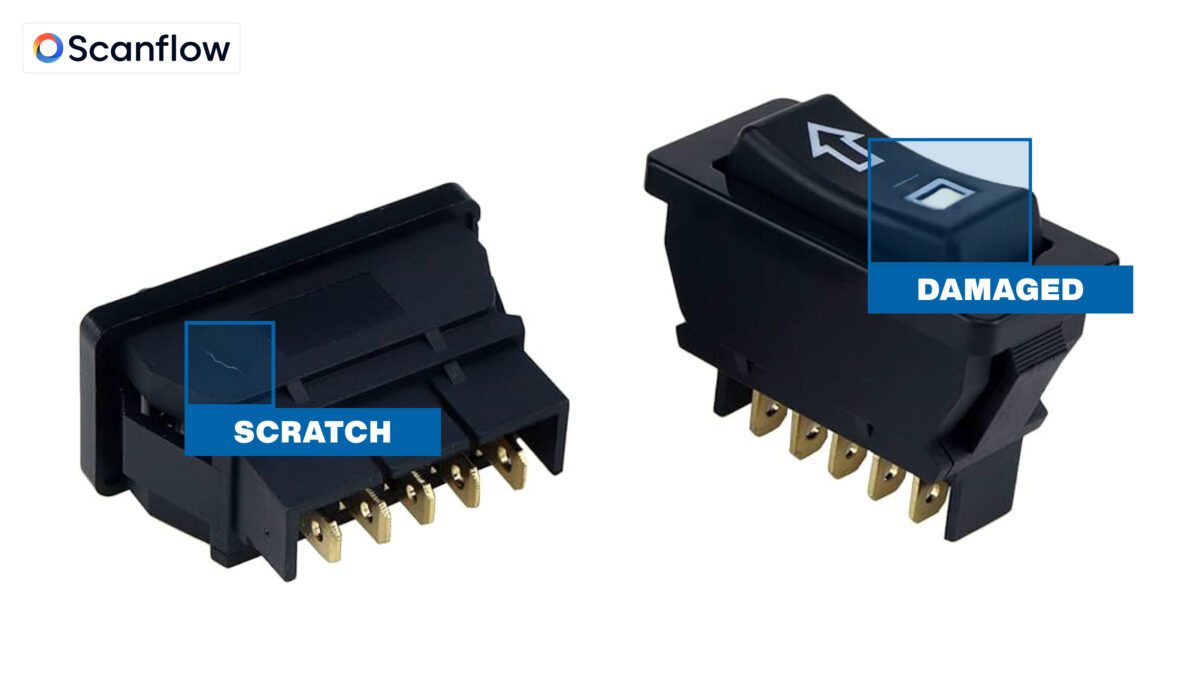
  1. Door Alignment and Fitment: Scanflow’s imaging technology accurately detects misalignments between the door and the vehicle’s body. Its precision ensures that any deviations are flagged for immediate rectification. 
  2. Lock and Latch Mechanisms: By analysing the structural integrity and operation of locks and latches, Scanflow identifies any inconsistencies or potential failures, ensuring top-notch security. 
  3. Window Operation: The system evaluates the smoothness and reliability of manual or electric window mechanisms, highlighting any issues that could impact functionality. 
  4. Seal Integrity: Using high-resolution imaging, Scanflow examines seals for wear, gaps, or cracks, ensuring a perfect barrier against water, noise, and external elements. 

The Benefits of Automating Inspections with Scanflow 

Integrating Scanflow’s vision intelligence into the production line delivers numerous business advantages: 

  • Improved Accuracy: Detects even the smallest defects that might be missed by human inspectors. 
  • Faster Inspections: Streamlines quality control processes, reducing production time. 
  • Cost Efficiency: Minimizes rework, waste, and the risk of recalls by ensuring consistent quality. 
  • Enhanced Safety Standards: Ensures components meet safety requirements, building trust with customers. 
  • Data-Driven Insights: Provides detailed reports and analytics to improve manufacturing processes continuously. 

Why Scanflow is the Game-Changer for Automotive Manufacturers 

With Scanflow, automotive manufacturers can transition from reactive quality control to a proactive, data-driven approach. Its vision intelligence technology not only identifies defects but also enables teams to address potential issues early, maintaining the highest standards of quality and reliability. 

Conclusion: Elevate Your Quality Control with Scanflow 

Automating car door component inspections is no longer a future aspiration—it’s a necessity in today’s competitive landscape. With Scanflow’s vision intelligence, manufacturers can achieve unparalleled precision and efficiency, ensuring every vehicle leaves the production line flawless. 

Ready to transform your quality control process?  

Contact us today to see how Scanflow can drive your success.