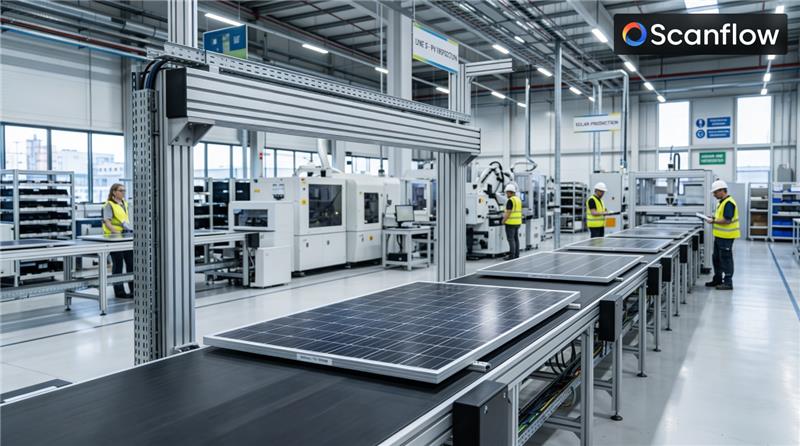
Why Some Solar Defects Are Invisible Until They’ve Already Cost You Power
The United States is in the middle of the largest solar buildout in its history. Developers are on t...
 6 Mins read
Posted on Jul 13, 2026
March 18, 2026
8 Mins read


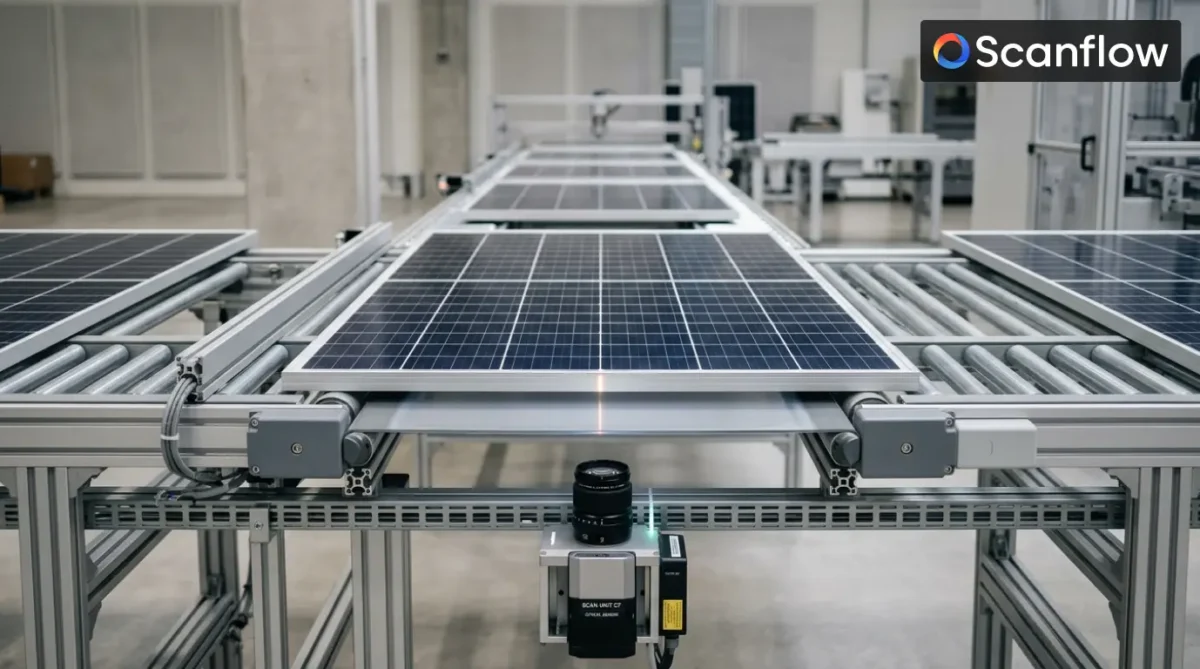
There are now more than 5 million solar installations across the United States alone, and that figure may triple by 2034. Globally, solar PV capacity surpassed 1,200 gigawatts in 2024, with another 655 GW of new installations expected by the end of 2025. That is a staggering amount of infrastructure to track, inspect, and maintain.
For much of the industry’s history, operations and maintenance (O&M) teams have relied on scheduled walkthroughs, paper-based records, and gut instinct. Technicians would physically walk row after row of panels, clipboard in hand, hoping to catch problems before they snowballed. It worked barely when solar farms were smaller. But it simply doesn’t scale.
Artificial intelligence is changing that. From drone-based serial number scanning to machine learning models that predict inverter failure weeks in advance, AI is quietly becoming the backbone of modern solar asset management. To help industry professionals understand its practical application, this development is not a distant future scenario. It is happening today on utility-scale farms across Europe, Australia, and North America, and the economics are compelling enough that smaller operators are paying close attention.
Before exploring what, AI can do, it helps to understand what solar operators are actually up against.
A utility-scale solar farm might house 200,000 individual panels spread across hundreds of acres. Each of those panels can develop its own unique problems of microcracks from hail, soiling from bird droppings, hotspots from cell degradation, or shading from a branch that grew into a sight line. Any single underperforming panel might lose only a fraction of a percent of total output, but multiply that across thousands of modules, and the financial impact becomes significant quickly.
Traditional inspection methods are slow and expensive. Unplanned downtime across industrial operations costs an estimated $50 billion annually, and solar is not immune to it. Manual inspection crews cannot feasibly survey an entire large-scale installation more than once or twice per year, which means problems often go undetected for months.
Reactive maintenance, fixing things after they break, and even scheduled preventive maintenance, both leave money on the table. The emerging paradigm, driven by AI, is predictive maintenance: identifying anomalies before they become failures, dispatching crews only when and where needed, and keeping panels producing at peak capacity throughout their service life.
One of the most overlooked challenges in solar asset management is surprisingly basic: operators often don’t have accurate records of the installed panels, specifically by type and location. Addressing this can give asset managers a sense of control and confidence in their operations.
This scenario matters more than it might seem. If a panel needs a warranty service, you need its serial number. If a string of panels is underperforming, you need to know exactly which units are involved. If a module exhibits early degradation, you want to cross-reference its manufacturing batch against similar failures elsewhere in your portfolio.
Historically, installers manually logged solar panel serial numbers during installation. Workers would scan barcodes or transcribe alphanumeric strings one by one, then match them to position maps in a process prone to transcription errors, sequence mix-ups, and gaps in documentation. One drone-based inspection company found a 30% error rate in customer documentation created through manual tracking methods. That’s not an edge case; it’s an industry-wide problem.
The solution that’s gaining ground fast is drone-mounted computer vision. Drones equipped with high-resolution cameras fly in a systematic grid pattern over solar arrays, capturing images of every module. AI-powered image recognition software then automatically detects and extracts serial numbers from the panel labels, linking each identifier to its GPS-mapped position within the asset management platform. However, challenges such as weather conditions, label degradation, and initial setup costs can impact effectiveness, which industry professionals should consider when planning AI integration.
Current drone scanning systems achieve read rates of 85–95% even under real-world conditions where labels may be affected by weather, soiling, or partial shading. The remaining unreadable panels are flagged for targeted manual verification, dramatically reducing the total labor required. What once took weeks of ground-level work can now be completed in a single day, even for a large installation.
Technology is moving quickly. Several large independent power producers (IPPs) and asset managers already use drone scanning for annual portfolio inventory audits. RFID tags, either attached to or embedded in panel frames, are becoming increasingly common among major manufacturers, adding another layer of machine-readable identification alongside traditional solar barcodes.
The European Commission’s Digital Product Passport initiative is adding urgency to this shift. Forthcoming regulations will mandate that every solar panel carries machine-readable identifiers linked directly to lifecycle documentation covering everything from manufacturing provenance to end-of-life recycling records. Industry players who adapt now will feel proactive and ahead of compliance requirements.
For asset managers, getting your serial number tracking right now is not just an operational nicety; it’s increasingly a compliance requirement.
Beyond identification, AI is reshaping how operators find and diagnose panel defects. The traditional approach, walking the rows, eyeballing panels, hoping to spot discoloration or cracks, is giving way to a far more sophisticated system.
The most powerful tool in the AI inspection arsenal is thermal imaging combined with machine learning analysis. Solar panels generate heat unevenly when they malfunction. A cracked cell, a failed bypass diode, or a hotspot caused by soiling will all produce characteristic thermal signatures that differ from healthy panels. Infrared cameras mounted on drones or fixed monitoring systems capture these heat patterns across entire arrays.
Machine learning algorithms trained on large defect datasets can then classify what they see with remarkable precision. They distinguish between hotspots caused by soiling (which need cleaning) versus those caused by cell degradation (which may warrant replacement). They can flag panels exhibiting early warning signs before performance actually drops.
In one documented case study, drone-based thermal inspections helped a solar operator avoid an estimated $296,000 in annual revenue loss by catching degradation early enough to intervene.
Dust and biological soiling particularly bird droppings are among the most persistent performance killers in solar O&M. A heavily soiled panel can lose 30% or more of its energy output, and bird droppings create especially damaging hotspot conditions because of their resistance to natural cleaning by rain.
AI-assisted soiling detection using drone-captured RGB imagery is maturing into a commercial solution. Researchers have developed custom architectures, such as SDS-YOLO (Soiling Detection System, based on the YOLOv5 framework), specifically trained to identify and localize soiling patterns at the module level in aerial images. The system distinguishes between dust which may be manageable without immediate intervention and bird droppings, which warrant urgent cleaning.
By knowing exactly which panels are soiled and how severely, operators can move away from scheduled blanket cleaning toward targeted, data-driven cleaning schedules. The energy savings and reduced water usage are significant at scale.
Companies like Aispect.ai, Raptor Maps, and SmartHelio are building end-to-end platforms that ingest drone imagery, apply deep learning defect detection, and surface actionable work orders for maintenance crews all within a single interface. Rather than having a technician manually interpret thermal images, the AI performs classification and priority ranking, directing human attention to the issues that matter most.
These platforms are increasingly integrating robotics as well. AI-controlled autonomous ground robots are being developed for cleaning and targeted maintenance, guided by the same AI systems that detect the problems in the first place. Research from 2025 demonstrated robotic cleaning systems that achieved 91.3% cleaning efficiency, reducing dust density dramatically and restoring up to 31% of energy output on heavily soiled panels.
The third major frontier of AI in solar asset management is predictive maintenance using machine learning to anticipate equipment failures before they happen.
Inverters are the workhorses of any solar installation, and they’re among the most failure-prone components. A failed inverter can take an entire string of panels offline, and the losses accumulate with every hour of downtime. Machine learning algorithms are being trained on inverter error logs, operational telemetry, and environmental data to predict fault conditions days or even weeks before failure occurs.
This approach matters because it changes how O&M teams operate. Instead of dispatching a technician in response to an alarm, operators can schedule preventive service during planned maintenance windows reducing emergency call-outs, extending equipment life, and keeping energy production consistent.
All solar panels degrade over time. Most manufacturers warrant panels against dropping below 80% of rated output over their 25-year lifespan. But degradation is not uniform. Some panels degrade faster than others due to manufacturing variation, installation conditions, or site-specific environmental stressors.
AI applied to time-series performance data can track individual panel degradation rates, identify outliers that are declining faster than expected, and help asset managers make informed replacement decisions. More sophisticated analysis can even identify why a panel is degrading distinguishing between shading from a nearby obstruction, cell degradation, or connection issues providing context that a simple performance alert cannot.
Research projects aggregating data from thousands of solar plants across multiple companies are building the training datasets needed to make these models genuinely predictive rather than merely descriptive. The result is a shift from looking at historical averages to getting forward-looking insight into which panels, strings, or inverters are likely to need attention next.
Predictive maintenance extends beyond hardware failure. AI is also transforming how operators forecast energy output a capability that matters for grid management, energy trading, and financial planning.
Hybrid models combining physics-based simulations with machine learning trained on satellite imagery, sky-camera data, and historical plant telemetry can now predict solar irradiance and energy generation up to 48 hours ahead with significantly better accuracy than traditional weather forecasting methods. Studies have found that AI forecasting models reduce forecast error by more than 27% compared to conventional numerical weather prediction approaches.
For asset managers running large portfolios, that forecasting accuracy translates directly into better contract performance, reduced balancing costs, and stronger relationships with offtake partners.
The ROI argument for AI in solar asset management is becoming hard to ignore:
The global investment signal is clear, too. The energy sector has seen more than $13 billion invested in AI technologies, with over 50 identified applications across the solar value chain. The technology is no longer experimental it’s becoming a competitive differentiator.
The ecosystem developing AI tools for solar asset management includes a mix of established energy software companies and well-funded newcomers:
SmartHelio (an EPFL spin-off) has built a physics-informed AI platform for predictive analytics and automated fault detection across utility, commercial, and residential solar installations without requiring additional hardware.
FairFleet has made a name for itself specifically in drone-based PV serial number scanning and asset documentation, operating across more than 70 countries and integrating results directly into asset management platforms.
Proximal Energy has partnered with major developers, including Excelsior Energy Capital, to deliver AI-powered asset management for utility-scale solar, including an AI “agent” approach to performance optimization.
Aispect.ai, launched in early 2025, offers computer vision inspection tools that identify cracks, soiling, and misalignment from drone imagery, with plans to expand the technology into agriculture, security, and manufacturing.
Raptor Maps has built one of the most established drone-inspection platforms in the industry, with documented partnerships with major drone manufacturers and a track record on large installations.
If you manage a solar portfolio whether a single commercial rooftop installation or a multi-site utility portfolio the practical takeaways from the AI revolution in this space are fairly concrete:
Start with data integrity. AI is only as good as the data it learns from. If your panel-level serial number records are incomplete or inaccurate, addressing that foundation potentially with AI-assisted drone scanning unlocks every downstream capability.
Evaluate predictive maintenance platforms. The gap between reactive and predictive O&M is wide, and it’s widening financially every year. Platforms that integrate real-time SCADA telemetry with AI anomaly detection are no longer cost-prohibitive for mid-sized operators.
Think about the regulatory horizon. Digital Product Passport requirements and other traceability mandates are on the way, particularly in Europe. Getting ahead of these requirements now is cheaper and less disruptive than scrambling to comply after the fact.
Don’t underestimate thermal inspection ROI. A single drone thermal survey can pay for itself multiple times over by identifying revenue-eroding defects that manual inspections would miss for months.
The solar industry is on an extraordinary growth trajectory, and the pressure on asset managers to do more with less will only intensify. AI doesn’t replace experienced O&M professionals it makes them dramatically more effective, directing their expertise toward decisions that genuinely require human judgment while automating the time-consuming work of monitoring, identification, and preliminary diagnosis.
The operators who embrace AI-powered solar panel identification and asset management now are building a data advantage that will compound over time. As models train on more plant data, as drone technology improves, and as regulatory requirements for traceability tighten, the gap between AI-enabled and traditional O&M approaches will grow wider.
The question is no longer whether AI will transform solar operations. It already is. The question is how quickly the rest of the industry will catch up.

Why Some Solar Defects Are Invisible Until They’ve Already Cost You Power
6 Mins read
Posted on Jul 13, 2026
How Solar Panel Manufacturers Lose Warranty Claims Due to Poor Serial Number Tracking
9 Mins read
Posted on Jun 10, 2026
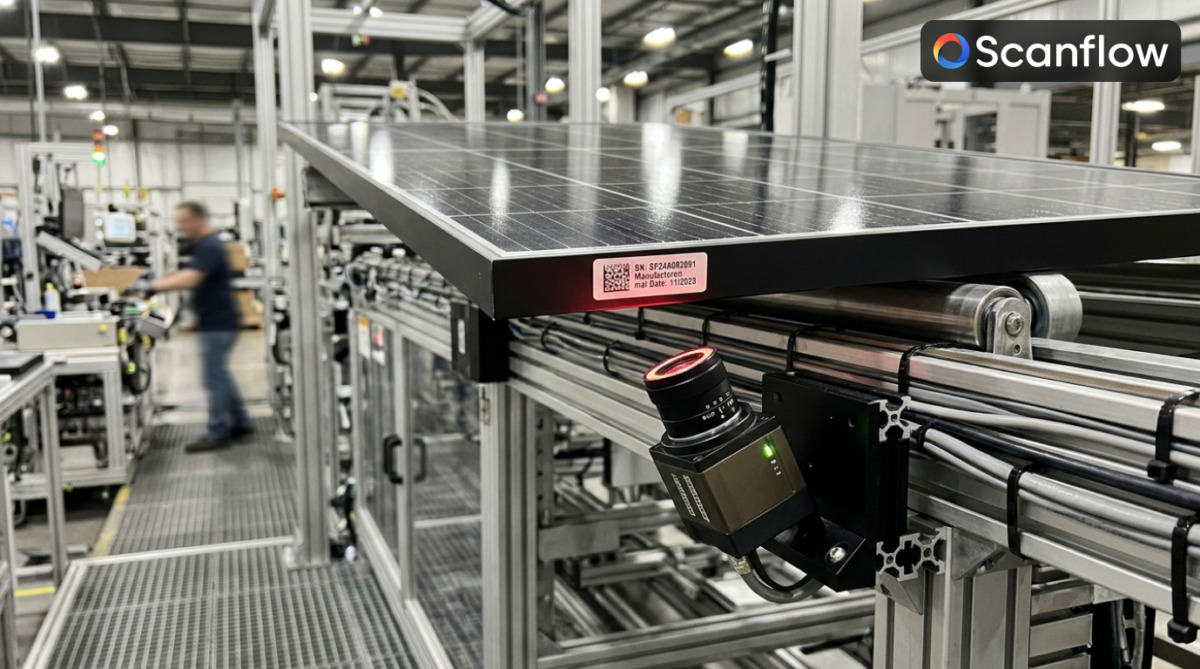
Why Solar Panel Serial Number Traceability Is Critical for Warranty and Claims?
10 Mins read
Posted on Apr 27, 2026