Why Some Solar Defects Are Invisible Until They’ve Already Cost You Power
The United States is in the middle of the largest solar buildout in its history. Developers are on t...
 6 Mins read
Posted on Jul 13, 2026
March 24, 2026
5 Mins read


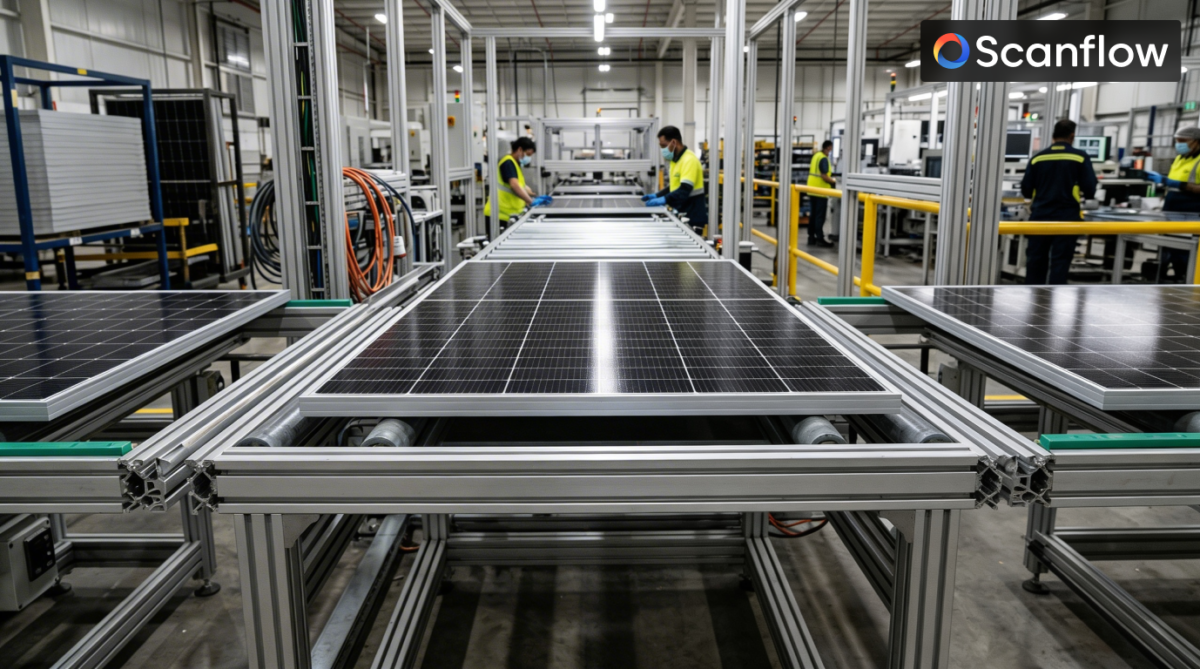
A barcode label might seem like a small detail, but emphasizing its durability is crsucial because it underpins warranty claims, maintenance records, and performance analysis over the panel’s 25–30-year lifespan. When labels fail, the consequences are costly: denied warranty claims, lost asset records, and O&M teams working in the dark. This guide covers what actually works for […]
A barcode label might seem like a small detail, but emphasizing its durability is crsucial because it underpins warranty claims, maintenance records, and performance analysis over the panel’s 25–30-year lifespan. When labels fail, the consequences are costly: denied warranty claims, lost asset records, and O&M teams working in the dark.
This guide covers what actually works for solar panel barcode labeling based on field experience from manufacturers, installers, and asset managers.
Poor barcode labeling creates five major problems in solar panel identification.
Most barcode failures come from choosing the wrong label material. Here’s what works and what doesn’t:
DON’T USE: Paper Adhesive Labels
Standard paper labels with acrylic adhesive fail within 3-7 years outdoors. UV exposure makes them brittle, moisture kills the adhesive, and thermal cycling accelerates both. These are fine for indoor logistics but completely unsuited to solar installations.
FIELD REALITY: In a 2017 ground-mount installation audited in 2024, 60% of paper labels were unreadable or missing. The operator spent $150,000 re-labeling 25,000 panels.
MINIMUM STANDARD: Polyester + UV Laminate
Polyester labels with UV-resistant overlaminate are the minimum for outdoor use. They last 10-15 years in most climates. Specify silicone-based adhesive rated for -40°C to +150°C.
Cost: $0.50-$1.00 per label (5-10x more than paper, but worth it)
For 25–30-year durability, use anodized aluminium labels (riveted or high-temp adhesive) or laser-etched codes directly on the frame or glass. These survive the full lifespan of the panel without degradation.
Cost: $3-$8 per panel (higher upfront, but eliminates re-labeling costs later)
Embedded RFID tags in junction boxes are readable through dirt and soiling, don’t require line-of-sight, and store additional data beyond serial numbers. They cost $5-$12 per panel but enable automated drone scanning and batch reads.
| Label Type | Outdoor Lifespan | Cost Per Panel |
|---|---|---|
| Paper adhesive | 3–7 years | $0.10–$0.25 |
| Polyester + UV | 10–15 years | $0.50–$1.00 |
| Anodised aluminum | 25–30 years | $3.00–$6.00 |
| Laser-etched | 30+ years | $4.00–$8.00 |
| RFID embedded | 20–25 years | $5.00–$12.00 |
WHAT BARCODE TYPE TO USE
Use QR codes (2D barcodes) instead of traditional linear barcodes. Here’s why:
By choosing QR codes with built-in error correction, technicians can feel assured that even when labels are dirtied or scratched, the codes remain readable, supporting their confidence in efficient scanning during installation and maintenance.
Traditional linear barcodes (such as Code 128) lack error correction. Any damage makes them completely unreadable.
BEST PRACTICE: Print both a QR code and a traditional barcode on the same label for redundancy. The QR code handles long-term durability, while the linear barcode works with older warehouse scanners during shipping.
Label placement affects both scanning efficiency and durability.
CONSIDER: Redundant Labeling
For critical installations, place labels in two locations: one on the frame and one laser-etched on the back sheet. This approach provides backup if reading the primary label fails. The extra cost is minimal compared to losing traceability on a 25-year asset.
Camera-based imager scanners read QR codes, handle damaged labels, and work reliably in bright sunlight. Look for ruggedised models with Bluetooth, IP67 sealing, and long battery life. Pair with tablets running your asset management app.
Cost: $300-$800 per scanner
Modern smartphones can scan QR codes with their cameras. Works for small installations or occasional scanning, but dedicated scanners are faster and more reliable for high-volume commissioning work.
Drone-mounted cameras with computer vision can scan panel labels from the air, achieving 85-95% read rates on well-maintained labels. This technology is rapidly maturing and in use by large asset managers for annual audits.
Scanning is only valuable if the data flows into your asset management system automatically, with no spreadsheets or manual re-entry.
Your scanning app should push data directly to your CMMS or asset management platform via API. This process enables immediate validation: the app can check whether a serial number exists in the manufacturer’s database, whether it has already commissioned elsewhere, or whether it matches the expected panel model.
Platforms with APIs: Salesforce, SAP PM, IBM Maximo, SolarEdge, and most modern O&M platforms
Solar sites often have poor connectivity. Your scanning app must work offline, queuing scanned records locally and syncing when connectivity returns. This process ensures field teams never lose data.
Catch errors immediately by validating each scan against:
DURING INSTALLATION: Capture Everything Once
When scanning a panel during commissioning, capture a complete record in a single transaction:
Design your mobile app to enforce this workflow with validation checks that prevent incomplete records.
DURING O&M: Log Every Touch
Document every panel interaction: scan the barcode and log the activity (inspection, cleaning, testing, repair, replacement). This process creates a service history that’s invaluable for warranty claims and predictive maintenance.
ANNUAL AUDITS: Verify Physical Reality
Conduct annual physical audits in which every panel is scanned and reconciled with system records. This method catches labeling failures before they become critical and verifies your database still matches reality.
Symptom: Labels fall off within 5-8 years
Cause: Standard acrylic adhesive fails under UV and heat
Fix: Use silicone adhesive or mechanically attached labels (rivets)
2. UV FADE & PRINT DEGRADATION
Symptom: Label stays attached, but barcode becomes unreadable
Cause: UV breaks down ink and substrate
Fix: Use UV-stabilised laminate, laser printing, or laser-etched codes
3. DATA SILOES & INTEGRATION GAPS
Symptom: Multiple conflicting databases with no authoritative source
Cause: Manual data entry and spreadsheet reconciliation
Fix: Establish a single system of record, integrate all scanning via API
Upgrading from basic labels to durable labeling costs more upfront but pays back many times over:
COST COMPARISON (10 MW installation, 25,000 panels)
VALUE RECOVERY
Bottom line: Spending an extra $1-$5 per panel on durable labeling pays for itself many times over.
Barcode labeling isn’t just a technical detail it’s the infrastructure that enables warranty claims, O&M efficiency, performance analytics, and regulatory compliance over a 25-30-year asset lifetime.
The technology to get this right is mature and accessible. The challenge is organizational discipline: specifying the right materials, training field teams on consistent workflows, maintaining system integration, and enforcing data quality.
Invest in durable labels and integrated scanning workflows now, and your future warranty claims, O&M teams, and asset managers will thank you.

Why Some Solar Defects Are Invisible Until They’ve Already Cost You Power
6 Mins read
Posted on Jul 13, 2026
How Solar Panel Manufacturers Lose Warranty Claims Due to Poor Serial Number Tracking
9 Mins read
Posted on Jun 10, 2026
Why Solar Panel Serial Number Traceability Is Critical for Warranty and Claims?
10 Mins read
Posted on Apr 27, 2026