How the VIN Check Digit Catches Most Typing Errors and Why Smart VIN Scanners Use It to Validate Every Scan
A VIN has 17 characters and every one of them has to be right. Typed by hand, a long code like that ...
 5 Mins read
Posted on Nov 18, 2026
November 18, 2026
2 Mins read


A VIN (Vehicle Identification Number) is a unique 17-character code that identifies one specific vehicle. No two vehicles built since 1981 share the same VIN.
The VIN is used to register and insure a vehicle, check recalls, pull a vehicle history report, order the right parts and prove ownership. That is why it appears in several places on the vehicle and on its paperwork.
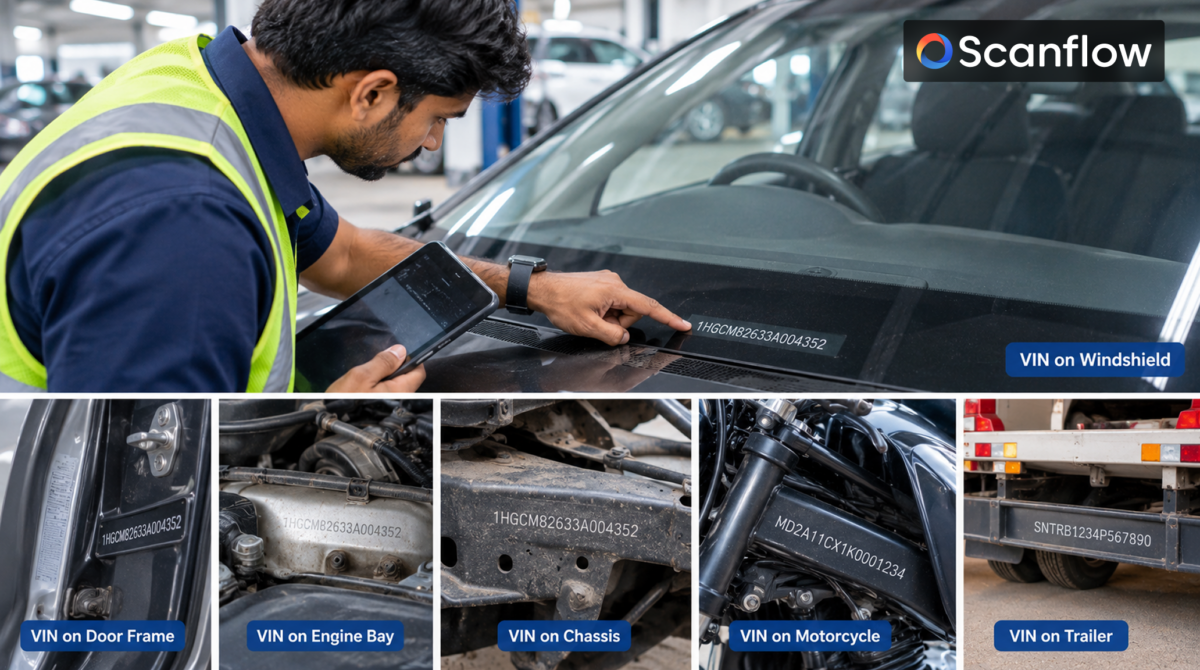
Most cars show the VIN in at least four places. Start with the dashboard it’s visible without opening anything.
If the VINs in two places don’t match, ask a dealer or your state’s motor vehicle agency before buying or registering the car.
Cars follow a fairly standard pattern. Other vehicles don’t.
| Vehicle | Where to look first | Other places to check |
|---|---|---|
| Car / SUV | Driver-side dashboard through the windshield | Driver door jamb, engine bay, title, insurance card |
| Pickup truck | Driver-side dashboard | Driver door jamb, frame rail near the front wheel |
| Commercial truck | Driver door jamb or door frame | Frame rail, dashboard, cab firewall |
| Motorcycle | Steering neck (frame tube behind the handlebars) | Frame near the engine, engine case, title |
| Trailer | Tongue or A-frame at the front | Frame rail, side plate or sticker near the front |
| RV / motorhome | Driver-side dashboard | Door frame, chassis frame |
| Off-road and heavy equipment | Frame plate (often a PIN rather than a VIN) | Operator station, engine plate, ownership documents |
A VIN is read in three sections: who made the vehicle, what it is, and which individual vehicle it is.
| Position | What it tells you |
|---|---|
| 1–3 | World Manufacturer Identifier - country and maker |
| 4–8 | Vehicle descriptor - model, body, engine, restraint type |
| 9 | Check digit - a calculated digit used to detect invalid VINs (North America) |
| 10 | Model year |
| 11 | Assembly plant |
| 12–17 | Production sequence number - the individual vehicle |
VINs never use the letters I, O or Q, because they look too much like 1 and 0. If you think you see one, it’s a 1 or a 0.
Finding one VIN is easy. Recording hundreds a day, correctly, is not and that is the daily job at dealerships, auctions, rental and fleet yards, insurers, inspection stations and vehicle logistics hubs.
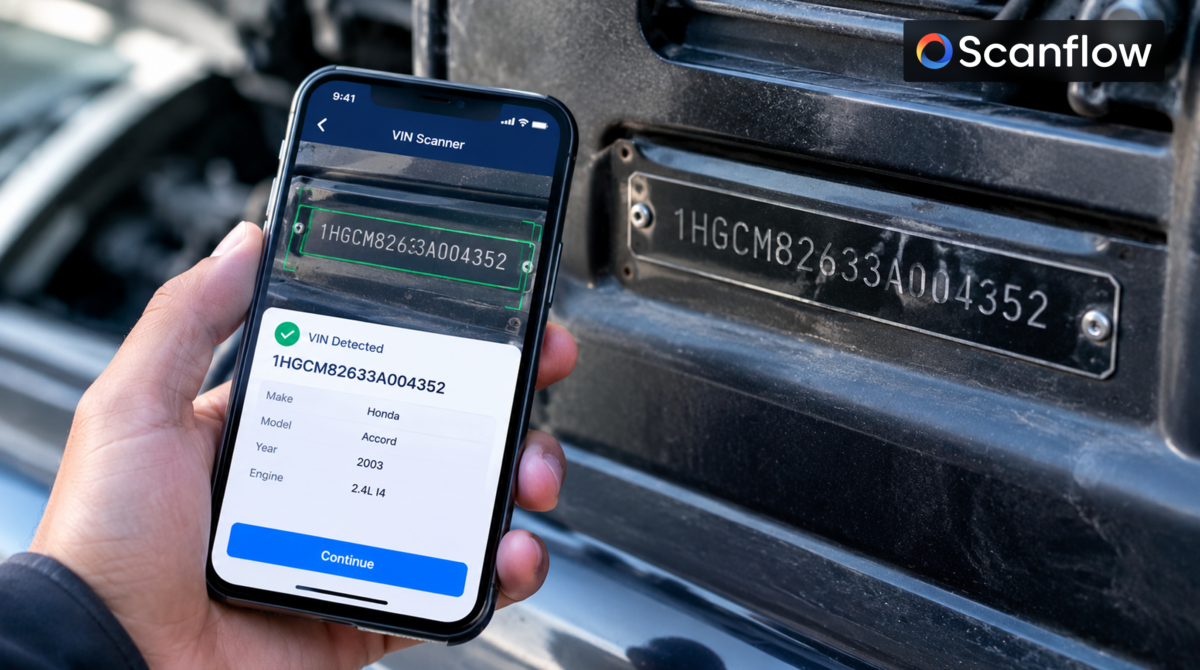
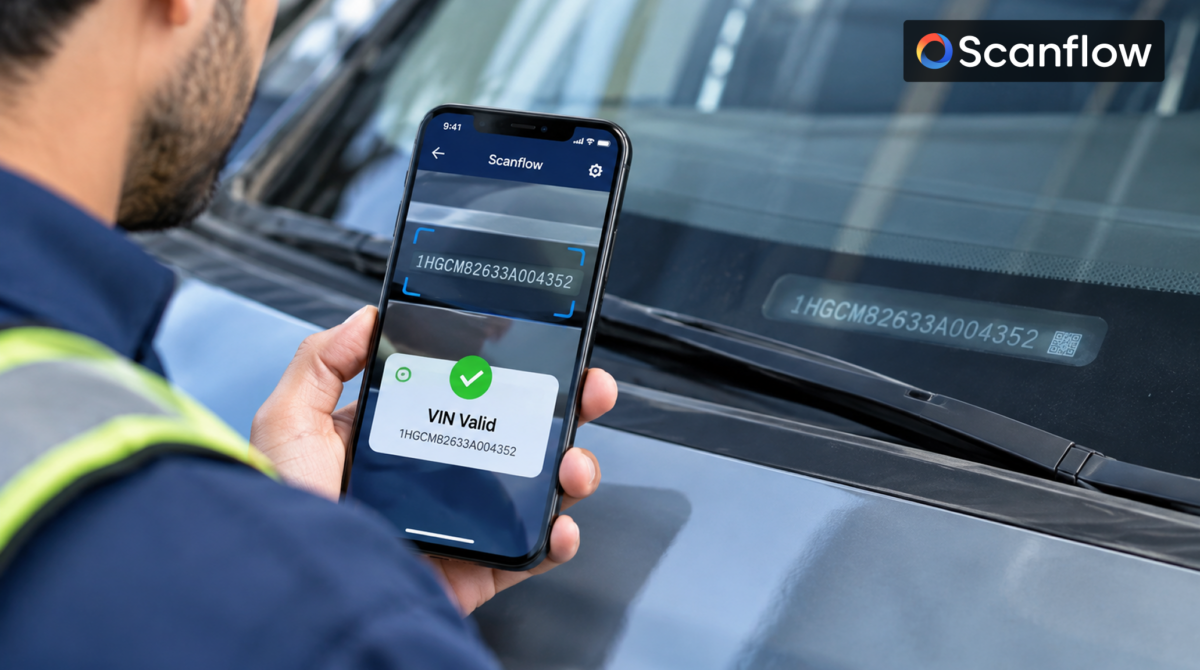
A VIN scanner reads the VIN from the vehicle with a phone camera and drops it into an app, so nobody has to type 17 characters.
The Scanflow VIN scanner SDK is part of Scanflow Capture, an AI-powered asset identification SDK for iOS and Android. It reads the VIN from the places that matter most in the field the windshield plate, the door-jamb sticker and VIN barcodes and returns it to the app your team already uses.
For teams that handle vehicles at volume, three things matter:
See how it works to scan a VIN with your phone.

How the VIN Check Digit Catches Most Typing Errors and Why Smart VIN Scanners Use It to Validate Every Scan
5 Mins read
Posted on Nov 18, 2026
Why One Wrong VIN Digit Can Cost You a Used Car Auction Deal and How Mobile VIN Scanning Fixes It
5 Mins read
Posted on Oct 28, 2026