How Fleet Managers Can Audit Hundreds of Vehicles a Day by Scanning VINs on a Phone
Picture a fleet yard at seven in the morning. Trucks are lined up, drivers are waiting to leave and ...
 5 Mins read
Posted on Oct 16, 2026
November 4, 2026
5 Mins read


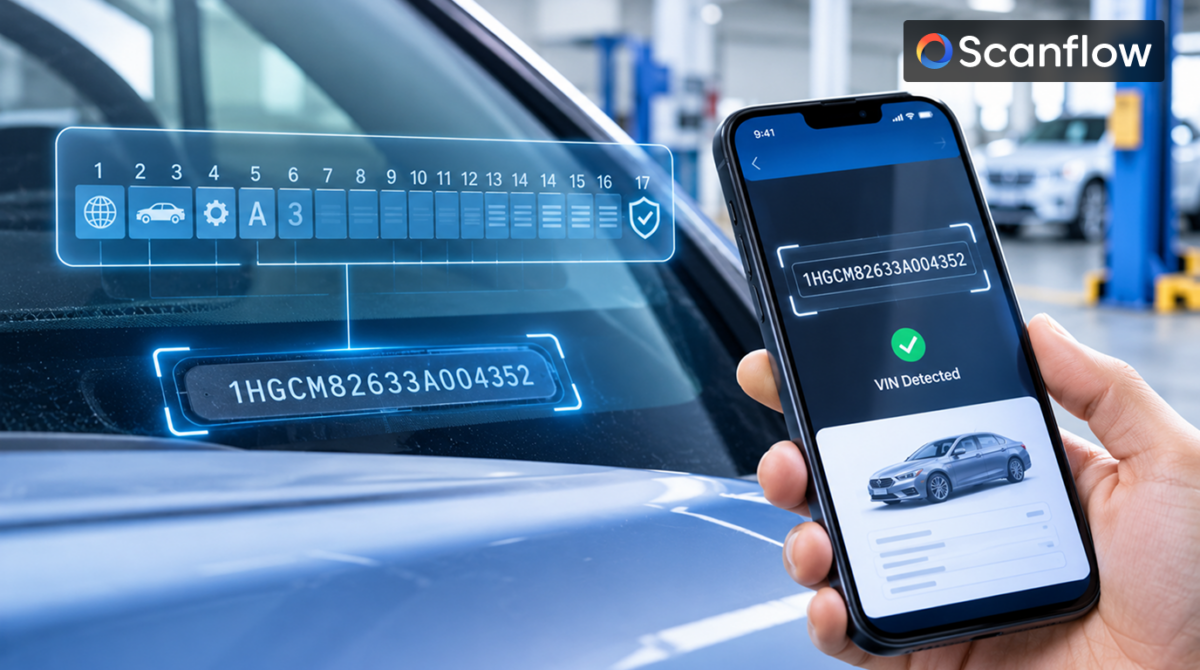
A VIN looks like a random string of letters and numbers stamped on a plate. It is actually a structured code and each of its 17 characters has a job. Once you know how it is laid out, you can read a lot about a vehicle before you ever open the door. This blog walks through what each part of a VIN tells you, why reading it accurately matters and how AI VIN scanning captures all 17 characters in seconds without anyone typing them.
A VIN can be split into three blocks. The first block says who built the vehicle. The second describes the vehicle itself. The third is the part that makes it unique. The layout below follows the common standard and the details can vary a little by region and manufacturer.
Characters 1 to 3, who made it. These characters form the manufacturer identifier. The first character usually points to the country or region where the vehicle was built. The second identifies the manufacturer. The third points to the vehicle type or the manufacturer’s division. Together they answer a simple question: which company built this, and where?
Characters 4 to 8, what it is. This block describes the vehicle. It typically covers details such as the model, body style, engine type, and sometimes safety equipment. The exact meaning of each position is set by the manufacturer, so the same character can mean different things on different brands. This is why a VIN needs a decoding source behind it, not just a person who knows the code.
Character 9, the check character. In North America, the ninth character is a check digit. It is worked out from the other characters using a fixed formula, so that a VIN with a mistyped or misread character can be spotted because the numbers no longer add up. Not every market uses this rule in the same way, but where it applies it is a built-in safeguard.
Character 10, the model year. One character records the model year. The codes use a mix of letters and numbers and they repeat after a long cycle, so the year is read together with other clues about the vehicle.
Character 11, the assembly plant. This character shows which plant the vehicle came from. For a manufacturer with several factories, it narrows down where the car was built.
Characters 12 to 17, the serial number. The last six characters are the production sequence. They separate one vehicle from every other vehicle built with the same specification. This is the part that makes the VIN unique.
One more rule is worth knowing. VINs do not use the letters I, O, and Q, because they are too easy to confuse with the numbers 1 and 0.
Each block feeds a decision. The manufacturer block helps confirm that a vehicle is what it claims to be. The description block drives which parts, specifications, and service procedures apply. The year and plant help with warranty and recall questions. The serial number ties everything to one specific car.
The trouble is that a single wrong character can send the whole lookup in the wrong direction. A transposed digit in the serial section points to a different vehicle. A mistake in the description block can return the wrong engine or trim. Manual VIN entry is where compliance risk starts, because a person copying 17 characters from a plate, often under time pressure, will sooner or later get one wrong.
The VIN appears in several places on a vehicle. A plate sits on the dashboard, visible through the windshield. A label on the door frame carries it too. It may also be etched on the chassis or on the windshield, and printed on documents. Each location has its own problems. Dashboard plates sit behind glass, with glare and reflections. Door labels get scuffed. Etched numbers have low contrast. Curved surfaces distort the characters. None of that helps a tired eye.
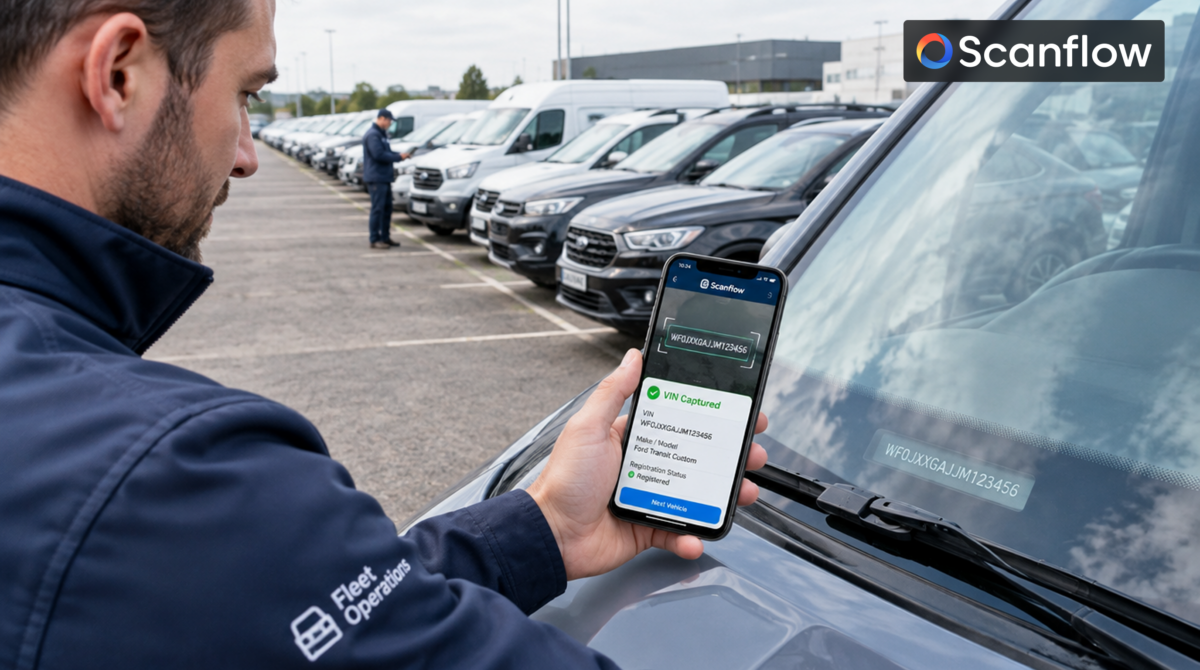
AI VIN scanning replaces reading and typing with a camera. A person points a phone at the VIN and the software captures the characters directly. Scanflow’s VIN scanning reads VIN barcodes, etched chassis numbers, dashboard stickers, and door jamb labels, even in glare, low light, or on curved surfaces and it also reads windshield serials. It works with any smartphone camera, so there is no dedicated hardware to buy and it is built to handle damaged labels, poor lighting, and non-standard printing.
Because the VIN is text, the same tool can handle VIN text capture as well as barcodes. Whichever form the VIN takes on a given car, the team can capture it the same way.
Capturing the characters is the first step. The software then decodes the 17-digit VIN serial code and returns structured vehicle identity data. With instant VIN decode to vehicle specs, the person scanning can see what the VIN says the vehicle is, and check it against the car in front of them. Scanflow describes the result as verified vehicle identity data that can be pushed to a DMS, fleet platform or CRM.
What gets returned depends on the decoding source behind the scan, so it is worth asking any provider which fields you will receive. The decode is only as useful as the data it is matched against.
The check character offers another advantage for any decoding system. Because it is calculated from the other 16 characters, software can use it to flag a VIN that does not add up, which suggests a misread or a mistyped number. Whether a particular tool applies this check is worth confirming, since it is a simple way to catch errors early.
The same slip can do very different damage depending on where it lands. A wrong character in the first three positions can point to the wrong manufacturer. A wrong character in the description block can change the engine or trim that comes back from a lookup. A wrong character in the last six positions can match a different car altogether. Because the damage depends on position, it is hard for a person to judge which mistakes are harmless. The safer approach is to avoid typing the code at all.
Scanning takes seconds, which is what makes it practical on a busy lot or line. In areas with poor signal, VIN data is scanned and inferred on-device, so the work continues without a connection and syncs later. That matters for yards, auction lanes and workshops where signal is uneven.
It is also worth being honest about the limits. A VIN identifies a vehicle and describes how it was built. It does not tell you the car’s condition, its accident history, who owns it, or whether the plate has been tampered with. Those answers come from history reports, inspections, and official records. Scanflow’s page states 99 percent or better scan accuracy, which is a vendor claim worth testing on your own vehicles.
Seventeen characters carry the manufacturer, the vehicle description, a built-in check, the year, the plant, and a unique serial number. That is a lot of information, and all of it depends on the characters being captured correctly. AI VIN scanning removes the weakest step, the human typing and gives teams a clean, repeatable reading of every vehicle they handle.

How Fleet Managers Can Audit Hundreds of Vehicles a Day by Scanning VINs on a Phone
5 Mins read
Posted on Oct 16, 2026
Transforming Fastener Manufacturing: How Vision Intelligence Ensures Accurate Bolt and Nut Counts for Perfect Shipments
2 Mins read
Posted on Nov 22, 2024