Categories

Improving Inventory Management and Batch Tracking in Pharma Manufacturing with Smart Asset Identification

In the pharmaceutical industry, accurate inventory management and batch tracking are critical to ensuring product integrity and regulatory compliance. A pharmaceutical packaging unit faced recurring challenges due to manual data entry and labeling errors, resulting in mismanagement of batch information and inventory discrepancies. This not only put the company at risk for compliance issues but also disrupted the efficiency of their packaging operations.

Pharmaceutical packaging units often struggle with manual processes when tracking batch numbers and verifying product labels. These processes are time-consuming and prone to errors, leading to challenges such as:

  • Manual tracking increases the risk of errors in stock levels, leading to incorrect inventory data.
  • Incorrect batch numbers or missing information on product labels, which could lead to regulatory violations.
    • Failing to meet industry standards for traceability and batch verification could result in severe legal and financial repercussions.

The company needed an efficient, reliable solution to automate these tasks and ensure seamless batch tracking and labeling verification.

Scanflow’s asset identification SDK was deployed to address the company’s challenges with manual data entry, inventory inaccuracies, and batch tracking. By integrating Scanflow into their existing packaging workflows, the company was able to automate label scanning and batch number verification. The solution utilized advanced optical character recognition (OCR) and image processing to read batch numbers directly from product packaging.

  • Scanflow’s AI technology captures batch numbers and other relevant product information directly from labels, eliminating the need for manual data entry.
  • The captured data is automatically updated in the warehouse management system (WMS), ensuring up-to-date inventory tracking and accurate batch verification.
    • Scanflow’s SDK integrates easily with existing packaging systems, enabling smooth adoption without major disruptions to operations.

After deploying Scanflow’s asset identification SDK, the pharmaceutical packaging unit saw significant improvements across several key metrics:

Impact Area Before Scanflow After Scanflow
Inventory Accuracy Frequent errors in inventory updates Real-time, accurate stock tracking
Batch Tracking Manual errors in batch number capture Automated and accurate batch tracking
Regulatory Compliance Risk of compliance violations due to errors Ensured adherence to regulatory standards
Operational Efficiency Slow manual processes Streamlined workflow, reduced time spent on data entry
      1. Improved Inventory Accuracy:
        • By eliminating manual entry, Scanflow ensured that the inventory was always accurate and up-to-date.
        • Efficient Batch Tracking:
          • The automated system allowed for seamless tracking of batches from production to distribution, minimizing the risk of errors and mismanagement.
        • Regulatory Compliance:
          • The automation of label and batch number capture ensured compliance with industry standards, reducing the risk of regulatory penalties.
        • Enhanced Operational Efficiency:
          • Automating manual processes allowed the team to focus on more value-added tasks, optimizing workforce utilization.

Scanflow’s asset identification SDK provided a reliable, scalable solution for automating batch number capture and label verification in the pharmaceutical packaging process. By addressing key challenges such as manual data entry, inventory inaccuracies, and compliance risks, Scanflow helped the pharmaceutical packaging unit streamline its operations and ensure product quality and regulatory compliance.

This success story demonstrates the value of adopting smart asset identification solutions in regulated industries. With Scanflow, businesses can improve efficiency, reduce errors, and maintain strict compliance, all while ensuring the integrity of their products.


[Schedule a Demo] [Download SDK]

Categories

How scanflow helped automate tire handling, improve visibility, and reduce operational cost

When a global e-commerce supply chain team sought to improve the way they track and manage tire inventory across warehouses, their requirement was clear. They needed a solution that could eliminate manual SKU counting, track tire aging, and reduce turnaround time, all without relying on on-premises software. 

The challenges were deeply operational: 
  • Manual tire identification during unloading and storage introduced frequent errors in SKU matching and quantity counts 
  • There was no way to track tire aging, leading to SLOB (slow-moving and obsolete) stock buildup 
  • Retrieval workflows were slow, requiring repeated physical checks 
  • High man-hour consumption due to multiple verifications across touchpoints 
  • No real-time visibility into what was stored, where, or for how long 

The solution also had constraints. It had to be deployed in the cloud on the client’s AWS account with only hardware (if any) deployed on-site. The goal was a lightweight, scalable way to automate tire tracking using their existing infrastructure. 

Scanflow’s Approach: AI Data Capture for Asset Identification 

Scanflow deployed its enterprise-grade data capture system, using AI to enable real-time tire recognition through sidewall scanning. Operators used handheld smart devices and cameras positioned at loading and storage points to extract tire information directly from the physical asset, including TIN, size, and model codes. 

Each tire was instantly verified against the warehouse management system. The capture workflow did not rely on barcodes or printed tags. Instead, it read the markings directly from the tire’s sidewall using optical character recognition and computer vision. 

All scan data was processed in real time and transmitted to the client’s private AWS environment, aligning with internal data residency and compliance requirements. 

What Scanflow Enabled 
  1. SKU-Level Identification at Entry and Retrieval
    Tires were captured and validated on the spot, reducing mismatch errors and improving inbound accuracy. 
  2. Aging Visibility with Timestamped Tracking
    Each tire was logged with its arrival time, enabling rotation and active removal of aging stock before it became obsolete. 
  3. Live Warehouse Snapshot
    Warehouse managers could see a real-time view of stock levels, distribution by zone, and tire movement, improving space utilization. 
  4. Reduced Turnaround Time for Picking and Dispatch
    Because tire type and location were tied to live data, retrieval paths were optimized, cutting delays. 
  5. No On-Prem Software Required
    The solution ran securely in the client’s AWS cloud instance, with edge-only processing at the point of scan. 
  6. System Integration with Existing WMS
    Scan events and validations were passed directly into the warehouse platform using secure APIs. 

Results Delivered 

  • 80 percent reduction in SKU mismatch and manual entry errors 
  • 55 percent faster tire retrieval and dispatch turnaround time 
  • Reduction in SLOB inventory through proactive aging insights 
  • Lower man-hour usage through fewer touchpoints and fewer rechecks 
  • Full compatibility with cloud-first environments and edge data capture 

Final Note 

Scanflow enabled the client to move away from spreadsheets, barcode dependency, and repetitive checks into a structured, data-driven tire management model. By capturing data from the tire itself and syncing it directly to cloud systems, the warehouse team gained clarity, speed, and measurable control over tire operations. 

To learn how Scanflow can bring structured data capture to your tire or asset tracking workflows, connect with our solutions team.

Request a walkthrough by reaching out to us via [info@scanflow.ai]

or simply click – schedule a demo to start the discussion with us today. 


Categories

Automated Invoice Scanning & Processing: How Scanflow Helped a Leading Enterprise Reduce Errors and Improve Efficiency in invoice scanning

Manual invoice scanning and processing is one of the most time-consuming and error-prone tasks in financial operations. Businesses dealing with large volumes of invoices often struggle with delays, data entry mistakes, and inefficiencies in validation. A leading enterprise faced these challenges daily, affecting their operational efficiency and financial accuracy. They approached Scanflow to implement an intelligent solution that could automate invoice processing, eliminate errors, and integrate seamlessly with their existing enterprise resource planning (ERP) system. 

Challenges with the Manual Process:

Before implementing Scanflow’s solution, the client encountered five major issues:

a) Manual Errors
Traditional bill scanning and data entry led to frequent inaccuracies, causing delays and inefficiencies in payment processing.

b) Time-Consuming Processes
Employees had to manually scan and email invoices, requiring significant effort and coordination, leading to slower turnaround times.

c) Document Storage & Retrieval
Managing and retrieving invoices manually was cumbersome, often resulting in misplacement and difficulty in tracking payment records.

d) Integration Issues
The lack of an automated workflow delayed data synchronization with the ERP system, making financial reconciliation a time-consuming task.

e) Scalability & Performance Constraints
As invoice volumes grew, handling them manually became overwhelming, creating bottlenecks and reducing operational efficiency. 

These inefficiencies caused bottlenecks in workflows, increasing operational costs and delaying vendor payments. The company needed a solution that could automate data extraction, ensure validation accuracy, and integrate smoothly with their financial system without disrupting existing processes. 

Solution: AI-Powered Bill Processing for Seamless Automation

1. Eliminating Manual Processes with AI Automation

  • Manual bill processing was inefficient and error prone. To solve this, an AI-powered automation system was deployed to streamline the entire workflow. The solution removed redundant steps, reduced errors, and ensured seamless integration with existing processes.

2. AI-Driven OCR for Accurate Data Extraction

  • The system used Optical Character Recognition (OCR) technology to scan and extract key invoice details, such as invoice number, vendor name, amount, and transaction date. Unlike traditional scanning, AI ensured structured and error-free data extraction.

3. Automated Email Subject Generation

  • To maintain consistency, the system automatically generated email subject lines based on predefined patterns. This eliminated human errors, ensuring uniform formatting across all transactions.

4. Multi-Page Invoice Processing & Smart PDF Generation

  • Instead of handling separate uploads, AI compiled all scanned pages into a single high-resolution PDF. The document was automatically named based on extracted invoice details, ensuring easy retrieval and identification.

5. Instant Transmission & Seamless Integration

  • Once processed, the structured data and final document were instantly sent to a predefined email recipient. The AI system handled this autonomously, reducing processing time and minimizing human intervention.

6. Real-Time Logging for Better Tracking

  • Every processed invoice was logged into the company’s internal records, making financial audits and document retrieval effortless. This removed the need for manual record-keeping and improved compliance.
Business Impact: Operational Efficiency, Cost Savings & Scalability 

1. Reduced Processing Time

  • AI automation cut down the time required for bill processing, enabling real-time invoice handling without human delays. Employees could focus on higher-value tasks instead of repetitive data entry.

2. Enhanced Accuracy & Compliance

  • Human errors in invoice details, email formatting, and data entry were eliminated. The structured system ensured uniformity, making financial tracking and compliance easier.

3. Cost Savings & Workforce Optimization

  • With reduced manual intervention, the organization saved costs related to document handling and reallocated resources to more strategic functions. This improved workforce efficiency.

4. Faster Document Retrieval

  • Smart PDF naming and structured storage allowed quick and hassle-free retrieval of invoices. Employees no longer had to search through cluttered email threads to find past transactions.

5. Scalable & Secure Processing

  • The AI-driven system handled high transaction volumes without performance issues. Built-in security measures safeguarded financial data, ensuring regulatory compliance and protection against data breaches.
A Smarter, Faster, and More Reliable Bill Processing System: By adopting AI automation, the organization significantly improved efficiency, accuracy, and scalability. The transition eliminated manual inefficiencies, reduced costs, and ensured a secure, future-ready financial processing system.


Categories

Streamlining Operations with advanced AI enabled Tractor Movement Detection: Learn how Scanflow Automates Gate Control and Safety Alerts

In industries that rely heavily on machinery and vehicle movement, such as agriculture, logistics, and manufacturing, ensuring seamless operations while maintaining safety is a priority. Tractor movement can often create bottlenecks or pose safety risks if not managed efficiently. How can businesses automate these processes for better efficiency and safety? Enter Scanflow’s AI vision intelligence technology, which not only identifies tractor movements in real-time but also triggers automated responses such as gate control and safety alerts to streamline workflows. The Challenges of Managing Tractor Movement Managing tractor movement within operational spaces often comes with several challenges:

  • Delays: Manual gate control can slow down the workflow, affecting productivity.
  • Safety Risks: Uncoordinated movement can result in accidents or near-misses with workers and other machinery.
  • Inefficiency: Relying on human monitoring for vehicle movement is prone to oversight and errors.

Businesses need an intelligent system to detect movement accurately and respond promptly, reducing delays and enhancing safety.

How Scanflow Detects Tractor Movement and Automates Responses

Scanflow leverages advanced vision intelligence to track and monitor tractor movement with precision. Here’s how it works:

  • Real-Time Detection: The AI system uses cameras to identify when a tractor moves from one location to another, recognizing patterns and distinguishing tractors from other objects or vehicles.
  • Signal Integration with PLC: Once a tractor is detected, the system sends signals to a Programmable Logic Controller (PLC), enabling automated actions such as:
    • Opening and closing gates to allow smooth passage
    • Triggering alarms to alert users or nearby machinery to stay clear of the path
    • Customizable Alerts: Depending on the operational needs, the system can produce visual or audible alarms, ensuring workers are always aware of ongoing tractor movements.
    • Data Logging and Analysis:Every movement is logged, providing valuable insights into operational efficiency and helping to optimize workflow further.

Benefits of Automating Tractor Detection with Scanflow

By integrating Scanflow into your operations, businesses can experience:

  • Improved Efficiency: Automated gate controls reduce manual intervention, speeding up workflows.
  • Enhanced Safety: Timely alerts ensure that workers and machinery remain out of harm’s way during tractor movements.
  • Seamless Integration: The system works seamlessly with existing PLCs and machinery, requiring minimal changes to infrastructure.
  • Cost Savings: Reducing delays and preventing accidents leads to lower operational costs in the long run.
  • Data-Driven Decisions: Insights from movement data enable better planning and process optimization.

Applications Across Industries

While this technology is particularly useful in agriculture, where tractors are a cornerstone of daily operations, it is equally beneficial in:

  • Logistics Hubs: Ensuring safe and efficient movement of goods.
  • Manufacturing Plants: Coordinating machinery and vehicle flow within production spaces.
  • Construction Sites: Managing heavy equipment movement and preventing collisions.

Why Choose Scanflow for Tractor Movement Automation?

Scanflow’s vision intelligence technology combines accuracy, reliability, and ease of integration. It not only addresses current challenges but also future-proofs operations by creating a smarter, safer, and more efficient workflow.

Conclusion: Automate Tractor Movement for a Safer, Smarter Workflow

Managing tractor movement doesn’t have to be a manual, error-prone task. With Scanflow, businesses can achieve automated precision, ensuring productivity and safety go hand in hand. 

Curious about how Scanflow can transform your operations?  

Contact us today to explore the possibilities! 

Transforming Fastener Manufacturing: How Vision Intelligence Ensures Accurate Bolt and Nut Counts for Perfect Shipments

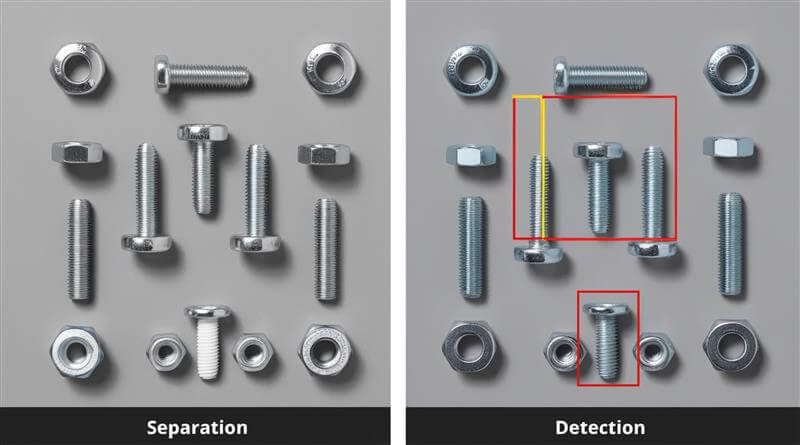
In the world of fastener manufacturing, precision is everything. A leading fastener manufacturer in the US faced a persistent issue: ensuring the accurate count of bolts and nuts post-production before shipment. Missing components in shipment boxes led to customer dissatisfaction and increased returns, impacting the manufacturer’s reputation and operational efficiency.

To address this challenge, Scanflow introduced a state-of-the-art solution using vision intelligence technology. This innovative approach revolutionized the counting process, ensuring every shipment meets exact specifications. Below, we explore the problem, the implemented solution, and the significant impact on the manufacturer’s operations.

For the fastener manufacturer, the challenge was twofold:

  • Counting Accuracy: The manual or semi-automated process of counting bolts and nuts after retrieval from the furnace conveyor was prone to errors. This often led to discrepancies in the packed quantities.
  • Customer Dissatisfaction: Boxes with missing components resulted in customer complaints, returned shipments, and a loss of trust. This not only disrupted operations but also added costs for re-shipping and quality rechecks.

The manufacturer needed an automated, reliable solution to eliminate counting errors and ensure accurate shipments.

Vision Intelligence for Counting Precision

  • Challenge: Achieving accurate counts of bolts and nuts before packaging.
  • Solution:

  • Camera-Based Vision System: Scanflow implemented a vision intelligence solution utilizing high-resolution cameras to capture images of bolts and nuts as they move along the conveyor.
  • Automated Counting Algorithm: Advanced image processing algorithms analyze the captured visuals to count each bolt and nut accurately in real-time.
  • Integration with Packing Systems: The system integrates seamlessly with the packaging process, ensuring the correct quantity of components is packed into each box.

Quality Control Verification

  • Challenge: Making shipments QC-verified before dispatch.
  • Solution:

  • Final Inspection Alert: The system flags any discrepancies in count before boxes are sealed, allowing operators to correct errors immediately.
  • Real-Time Reporting: A dashboard displays live count data, providing transparency and accountability in the QC process.

The implementation of vision intelligence technology delivered transformative results:

  • 100% Accuracy in Counts: The automated system eliminated human errors, ensuring every box contained the precise number of bolts and nuts as per customer requirements.
  • Reduced Returns: Accurate shipments drastically reduced the number of returned boxes, enhancing customer satisfaction.
  • Increased Operational Efficiency: Automation streamlined the counting and packaging processes, reducing time and labor costs.
  • Enhanced Reputation: Consistent quality assurance reinforced the manufacturer’s reliability and strengthened customer relationships.
  • Data-Driven Insights: Real-time reporting provided valuable data for process optimization and future scalability.

AI Visual Inspection Solutions

By leveraging vision intelligence, this fastener manufacturer overcame a critical quality control challenge, transforming its operations and reinforcing its commitment to excellence. The integration of cutting-edge technology not only ensured precise shipments but also enhanced customer trust and operational efficiency.

In the fast-paced world of manufacturing, adopting innovative solutions like Scanflow’s vision intelligence is essential for staying competitive, delivering exceptional quality, and driving growth in the industry.

Precision in Every Ride: Advanced Solutions for Tire Fitment and Wheel Accuracy in Automotive Manufacturing

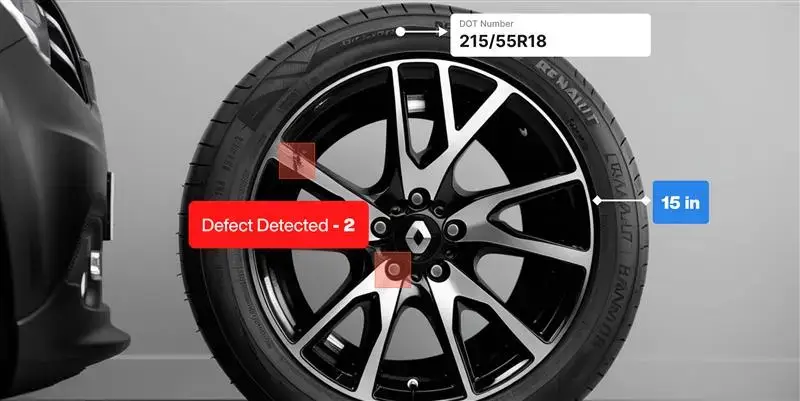
In today’s competitive automotive landscape, delivering impeccable quality control is non-negotiable for ensuring customer satisfaction and maintaining brand trust. A prominent car manufacturer recently faced a critical challenge during the final production stage: verifying the fitment of all four tires, ensuring the correct alloy wheels were installed, and confirming that plastic rim covers were properly secured.

Without a reliable system to address these concerns, the risks included operational inefficiencies, increased recalls, and potential customer dissatisfaction. To tackle this, we introduced a state-of-the-art camera-based quality inspection system designed for real-time verification. Here’s how our solution transformed their quality control process, addressing key challenges and delivering measurable impact.

The manufacturer required a robust system capable of:

  • Verifying Tire Fitment: Ensuring the correct tires were installed on all four wheels.
  • Validating Alloy Wheel Accuracy: Confirming that each vehicle received the correct alloy wheels according to its specifications.
  • Securing Plastic Rim Covers: Guaranteeing that rim covers were properly attached to the wheels.
  • Streamlining Inspections: Automating the process without disrupting production workflows.

Manual inspection methods, while traditional, were prone to errors and inefficiencies, necessitating an automated approach to meet modern quality standards.

Tire Specification Verification Through Vehicle Identification

    • Challenge: Ensuring the right tire specifications for each vehicle on the production line.

Solution:

  • Camera-Based VIN Scanning: Cameras installed on the conveyor line scan the vehicle’s VIN in real-time.
  • Database Integration: The system cross-references the VIN with a master database, retrieving the precise tire and wheel specifications for the vehicle.
  • Immediate Alerts: If any discrepancies are identified, an alert system (e.g., red lights) signals operators for corrective action.

Multi-Camera System for Comprehensive Wheel Inspection

    • Challenge: Confirming the proper tire and wheel specifications for all four wheels, including left and right sides.

Solution:

  • Dual-Side Camera Setup: Cameras strategically positioned on both sides of the vehicle capture high-resolution images of all wheels.
  • Real-Time Image Processing: Advanced algorithms verify alloy wheel type and rim cover attachment instantly.
  • Seamless Line Integration: The system operates in sync with the production line, ensuring zero delays in workflow.

Integrating this cutting-edge inspection system has revolutionized the manufacturer’s quality control processes, offering:

  • Unmatched Quality Assurance: Eliminates human error, ensuring every vehicle meets exacting standards.
  • Operational Efficiency: Automating inspections minimizes bottlenecks, reducing production time and increasing throughput.
  • Enhanced Customer Satisfaction: Delivering vehicles with guaranteed precision strengthens consumer confidence and loyalty.
  • Cost Savings: Early detection of defects prevents costly warranty claims and recalls.
  • Future-Ready Scalability: The modular design enables easy upgrades to meet evolving production needs.

By adopting advanced camera-based inspection technology, the manufacturer has transformed its quality control process, ensuring every vehicle leaves the assembly line flawlessly. This innovation not only enhances operational efficiency but also solidifies trust in their brand, giving them a competitive edge in a demanding market.

In a rapidly evolving automotive industry, embracing intelligent solutions like these is essential for driving excellence and sustaining growth.

Transforming Catalyst Inspection Through Scanflow Automation: A Success Story

In the dynamic and demanding field of automobile manufacturing, the need to uphold rigorous quality standards is paramount. Automotive components must be flawless to ensure optimal vehicle performance, reliability, and compliance with environmental regulations. Among these, the catalyst component—essential for controlling emissions—demands particularly meticulous inspection. Catalysts must be free from defects that could impact vehicle efficiency, durability, or pollutant emissions. Any defect could have far-reaching consequences, not only for product quality but also for brand reputation and regulatory compliance.

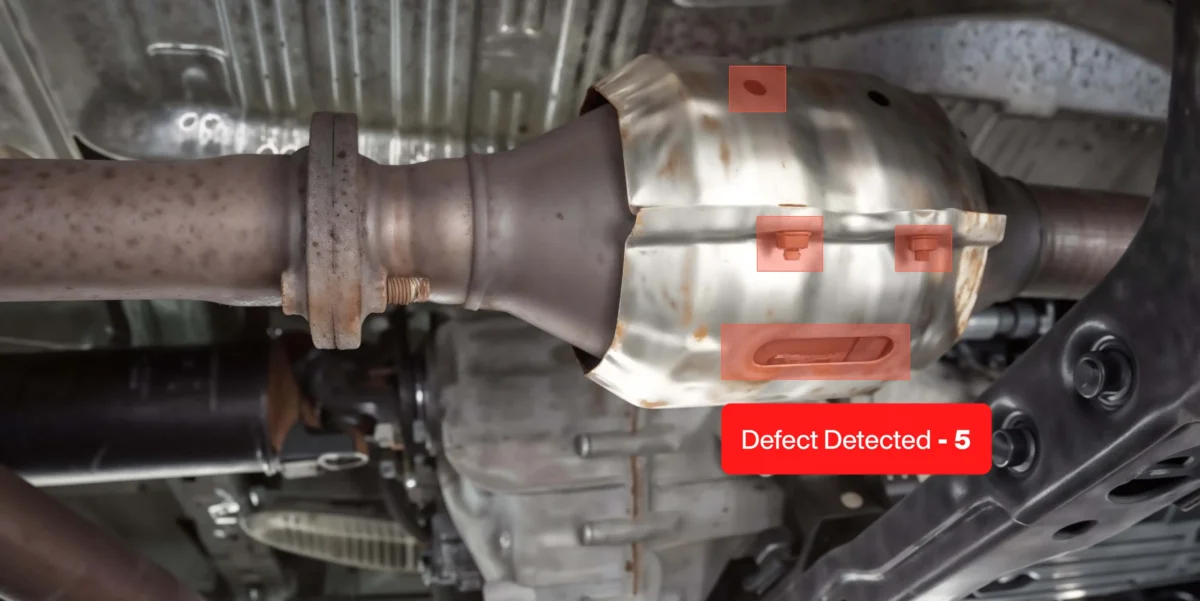
Traditionally, the inspection process for catalysts has been conducted manually, with human operators assessing each component through up to 20 specific checkpoints to ensure it meets quality standards. While effective to a degree, this manual process is inherently flawed. It is slow, labor-intensive, and highly susceptible to human error, resulting in inconsistencies that challenge the manufacturer’s ability to maintain a high-quality standard. As production scales, maintaining both speed and accuracy through a manual process becomes nearly impossible. Additionally, the monotonous nature of repetitive inspection tasks can lead to fatigue and oversight, further increasing the likelihood of defects slipping through.

These challenges reveal the need for a more advanced and efficient approach – one that can handle the high volume of inspections with both speed and precision, eliminate human error, and seamlessly adapt to increasing production demands. The solution would need to ensure the thorough, accurate, and repeatable inspection of catalysts, providing manufacturers with the confidence that each component meets stringent industry standards. Recognizing these requirements, the manufacturer sought a solution that could overcome the limitations of manual inspection and offer a step-change in quality assurance. This created an opportunity for Scanflow to bring its expertise in AI-driven solutions to the forefront.

To address the limitations of manual inspection and meet the manufacturer’s high standards, Scanflow introduced an AI-powered computer vision system tailored for catalyst inspection. This cutting-edge solution leverages the latest advancements in computer vision and machine learning to automate the inspection process, offering unparalleled accuracy, speed, and reliability.

The core of Scanflow’s solution is a sophisticated AI system designed to recognize a range of defects across all 17-20 critical checkpoints on each catalyst component. Using high-resolution imaging and complex machine learning algorithms, the system inspects every component in real time as it moves along the production line. It identifies even the most subtle defects, ensuring that no component with potential issues makes it past inspection. This real-time analysis replaces the need for manual intervention, creating a streamlined process that maintains the highest level of consistency and accuracy.

To ensure seamless integration with the manufacturer’s existing workflows, Scanflow’s AI computer vision system is fully compatible with the current production infrastructure. This compatibility allows the solution to be implemented without major disruptions, enabling the manufacturer to transition smoothly from manual to automated inspection. The system not only performs real-time inspections but also provides advanced reporting capabilities, offering manufacturers full visibility into inspection outcomes. Detailed reports are generated for each inspection cycle, ensuring that manufacturers have a robust record of quality checks for every component produced. These reports also facilitate compliance with regulatory requirements and allow for better traceability of each unit.

Additionally, Scanflow’s AI solution offers predictive insights by analyzing patterns in defect occurrence. By flagging recurring issues, the system enables trend analysis, helping the manufacturer proactively address potential problems in the production process before they escalate. This predictive capability enhances preventive maintenance, reducing the risk of production delays and helping maintain continuous high-quality output.

One of the most compelling advantages of this AI-driven solution is its scalability. As production demands increase or new components are introduced, the system can easily be adapted to accommodate additional checkpoints or even different types of inspections. This scalability positions the manufacturer to evolve with the market, ensuring that quality assurance processes remain agile and future-proof.

The implementation of Scanflow’s AI-powered computer vision system has transformed the catalyst inspection process, delivering measurable improvements in quality, efficiency, and overall operational performance. By automating 100% of the inspections, the manufacturer has eliminated the inherent risks of human error, achieving consistently high inspection accuracy and reliability. This has led to a marked reduction in error rates, minimizing the likelihood of defective catalysts reaching the market. With fewer defects, the manufacturer has experienced a significant decrease in warranty claims and recalls, protecting brand reputation and reducing financial liabilities associated with faulty components.

The speed of inspection has also greatly improved. By performing all inspections in real time, the AI system has accelerated the overall production cycle, enabling the manufacturer to increase output without sacrificing quality. This boost in efficiency has allowed the manufacturer to meet production targets more reliably, even as demand fluctuates, ensuring a more resilient and responsive operation.

Furthermore, the shift to an automated inspection process has reduced the manufacturer’s dependency on manual labor for inspection tasks. With repetitive, detail-oriented inspection work now handled by AI, employees are freed up to focus on higher-value activities that contribute more strategically to the organization’s goals. This reallocation of human resources has not only boosted operational efficiency but has also fostered a more engaging and rewarding work environment for employees.

Scanflow’s solution has also empowered the manufacturer with valuable data and insights. The AI system’s reporting and analytics capabilities enable trend analysis, helping the manufacturer identify patterns and root causes of defects over time. This proactive approach to quality management allows the manufacturer to address issues at their source, improving long-term product quality and consistency. Additionally, by providing detailed inspection records, the system supports regulatory compliance and enhances transparency, which is particularly valuable in the highly regulated automotive industry.

Beyond its immediate impact, this AI-powered inspection system provides a scalable and adaptable solution that can be extended to other components or inspection processes within the manufacturing line. The success of this implementation has set a new standard for quality assurance within the organization, and Scanflow’s solution serves as a model for other applications of AI-driven inspection in the automotive industry. This strategic shift has enabled the manufacturer to not only meet but exceed industry quality standards, positioning them as a leader in innovative quality control practices.

In conclusion, Scanflow’s AI-driven catalyst inspection system has delivered transformative benefits for the manufacturer, from improved accuracy and speed to enhanced data insights and operational flexibility. This success story underscores the power of AI to redefine quality assurance in automotive manufacturing, showcasing how intelligent automation can drive both operational excellence and a competitive edge. By harnessing Scanflow’s innovative technology, the manufacturer has solidified its commitment to quality and efficiency, reinforcing its position at the forefront of industry innovation.

Revolutionizing Manufacturing with Vision Intelligence: Real-Time Detection of Carbon Soot on Conveyor Lines

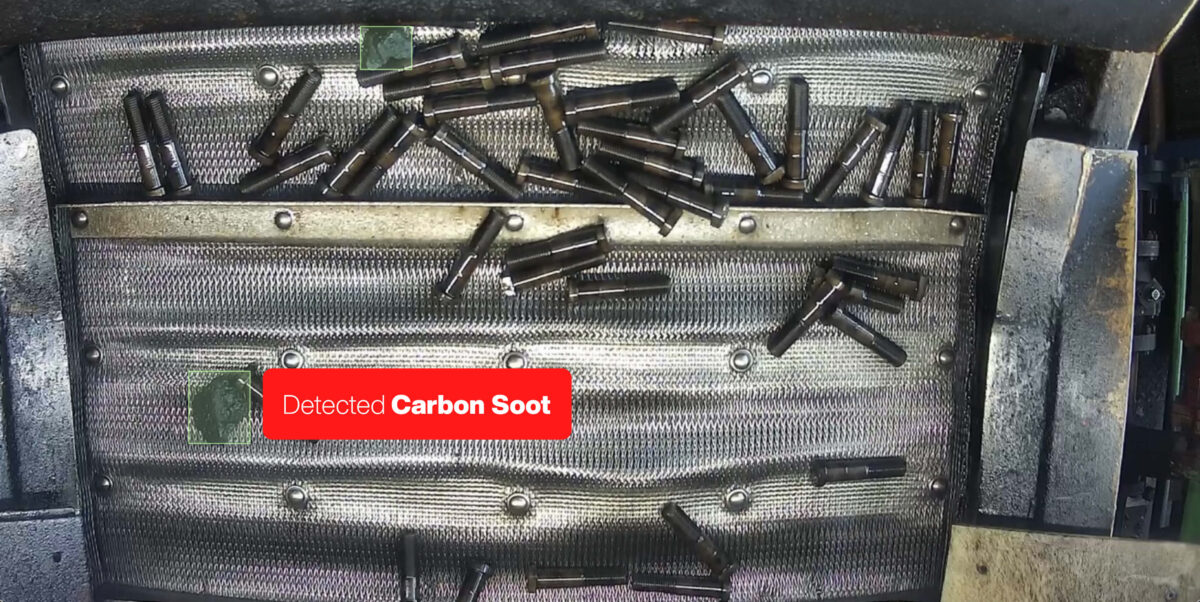
At Scanflow, we have successfully tackled a critical issue affecting the quality of manufactured parts for one of our industrial clients: the detection of carbon soot particles on conveyor lines. In high-speed manufacturing environments, every detail matters, and foreign particles can lead to considerable quality issues. This technical article will walk through our intelligent solution for detecting and managing carbon soot—a byproduct of industrial heating and cooling processes—leveraging state-of-the-art vision intelligence.

Our client, a high-volume manufacturer of metal items like nuts, bolts, washers, and studs, operates with multiple conveyor lines to streamline the heating, cooling, and processing of these components. However, during these intensive processes, chemicals and materials evaporate and condense, forming solid particles known as carbon soot. As the conveyor transports metal items for further treatment, carbon soot particles often latch onto them, obstructing the heating process required for rigidity. This interference weakens the metal components, compromising their durability and quality, which directly affects the reliability of the finished product.

The project’s primary objective was to develop an intelligent, automated system capable of detecting and alerting operators about the presence of carbon soot on conveyor lines. By achieving a high detection accuracy, we aimed to enhance product quality and reduce rework costs, aligning with our client’s quality control standards. Our solution integrates advanced vision intelligence with high-speed alert and response mechanisms to deliver an effective end-to-end solution, achieving a remarkable 99% detection success rate.

The developed solution is a sophisticated vision intelligence system, combining powerful hardware and advanced AI algorithms. Below are the essential components:

  • 1. Hardware Units
  • High-Definition Cameras: Strategically placed to capture detailed visuals of conveyor belts, the cameras are capable of continuous, high-speed monitoring.
  • GPU-Accelerated Processing Unit: A dedicated GPU server allows the system to process high-resolution images in real-time, facilitating rapid soot detection.
  • Fiber Optic Communication Unit: For seamless data transmission, fiber optic technology ensures minimal latency in communication between system components.
  • 2. Software
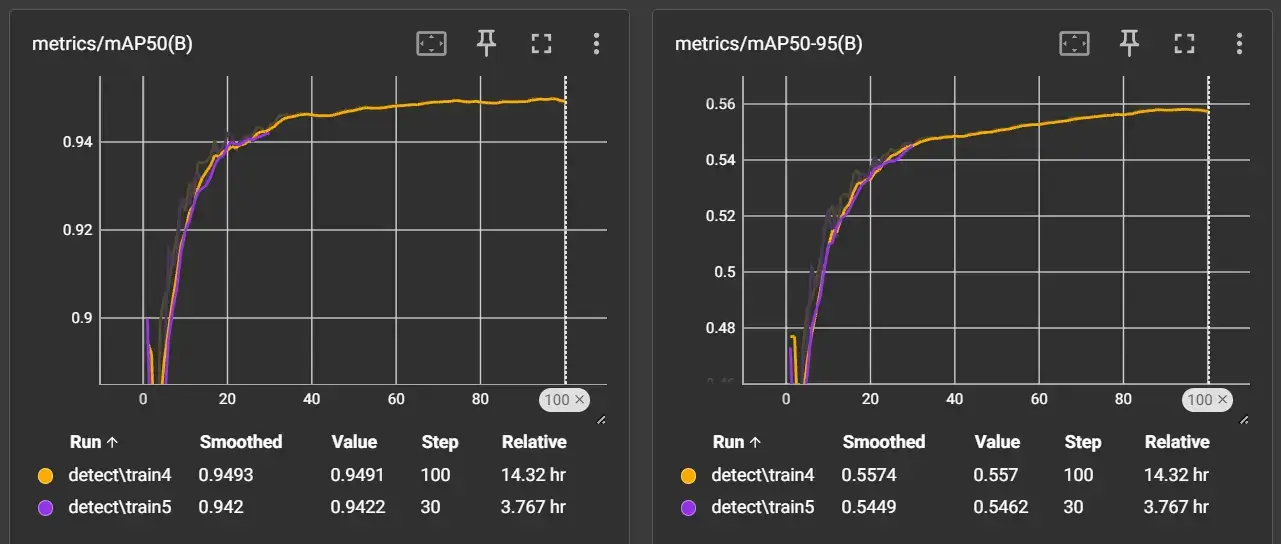
  • AI Model for Soot Detection: Our proprietary AI model was trained on client-specific data, using supervised learning techniques to achieve robust performance metrics. With an accuracy rate of 98%, the model leverages state-of-the-art object detection and classification algorithms, performing localization and segmentation for precise carbon soot identification.
  • User Interface (UI): The system includes an intuitive UI for real-time monitoring and configuration, allowing operators to customize key settings such as detection thresholds, storage paths, and alert configurations.

Our AI research engineers designed and trained the model using client-specific data collected from the production line. Here’s a summary of the steps involved:

  • Data Collection and Annotation:

Visual data was collected from the client’s conveyor systems, followed by extensive annotation to mark carbon soot instances for supervised learning.

  • Model Training and Optimization:

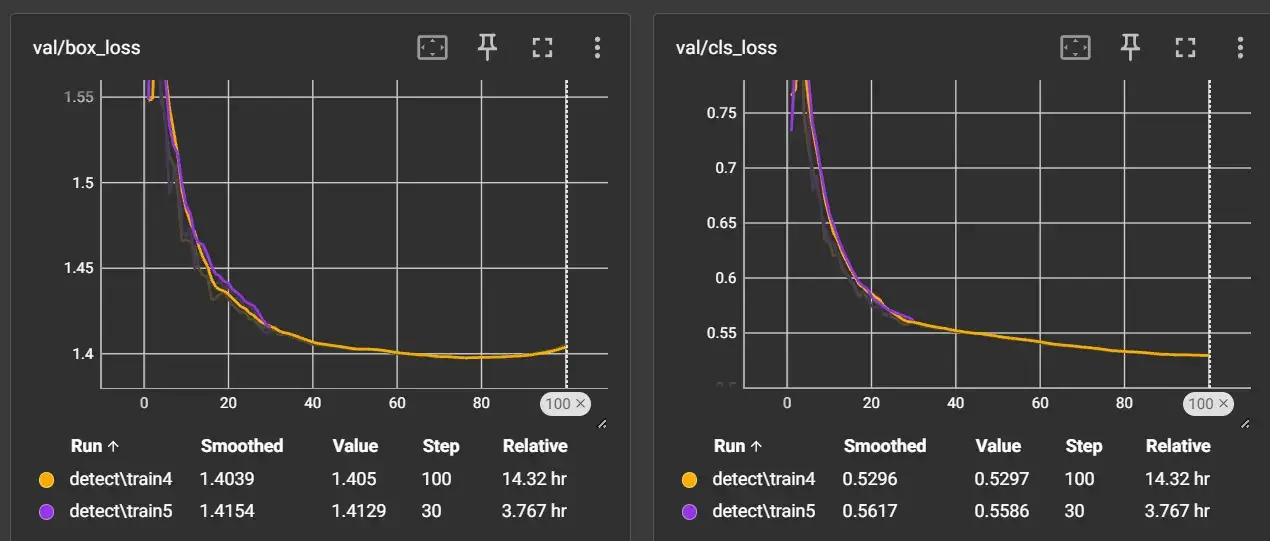
Using advanced hyperparameter tuning techniques, the model was trained for 1.5 days in our research lab, leveraging GPUs for accelerated learning.

  • Model Security and Deployment:

The AI model was encrypted with AES-256 security standards, ensuring data privacy and system integrity in the client’s production environment.

  • Rigorous Evaluation:

The model underwent extensive evaluation using metrics specific to object detection, classification, and segmentation. Final deployment followed successful on-site testing, verifying the model’s high accuracy and consistency.

Key Features and Customizability of the Solution

Our system offers a range of configurable options designed to meet the client’s operational needs and improve usability:

  • Threshold Customization: Operators can adjust detection sensitivity to suit specific production conditions.
  • Storage Management: The system provides options to change image storage paths based on operational requirements.
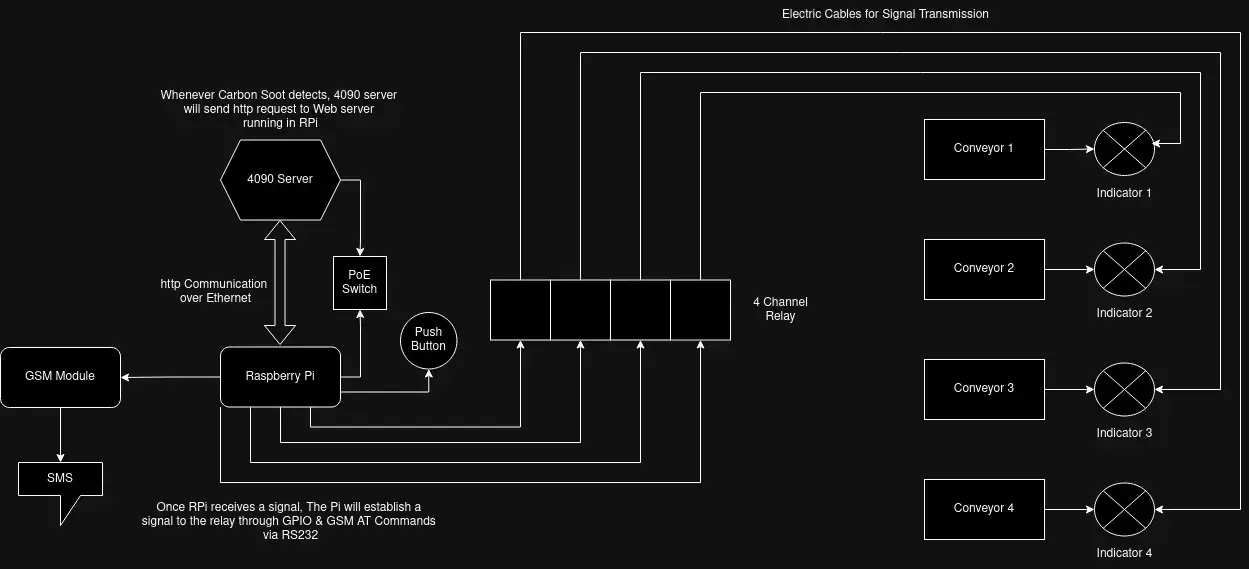
  • Alert System and Automation: Configurable SMS alerts and real-time notifications enable immediate action when carbon soot is detected, ensuring quick response times and reducing potential quality issues.

To enhance response time, we developed a real-time alert system using a custom electronic circuit paired with a Raspberry Pi. The circuit triggers an alarm and alert light, guiding operators to the affected conveyor section for immediate action. This setup, combined with a relay connected to the Raspberry Pi, ensures seamless, high-speed communication between the AI system and the alert mechanism via fiber optic connections.

Furthermore, we integrated the client’s existing SMS alert system with our AI solution, enabling alerts to be sent directly to plant supervisors and managers. By leveraging their local server infrastructure, we streamlined the alerting process, ensuring that relevant personnel are promptly informed of any carbon soot incidents, minimizing production downtime.

Our solution monitors four conveyor lines simultaneously, running 24/7 to meet the high-speed demands of the manufacturing environment. The client-server architecture implemented within the system ensures reliable communication, while the use of fiber optics enhances data transfer speeds and minimizes latency, further improving the overall efficiency of the detection system.

Our vision intelligence system has proven highly effective in achieving quality standards for the client, with real-time detection and automated alerts offering a proactive approach to managing carbon soot contamination. By preventing undetected particles from compromising the quality of metal components, our solution has enhanced the durability and reliability of the client’s products.
This project exemplifies the power of combining hardware innovation with AI-driven insights. As a result, our client can now maintain high-quality standards, avoid costly rework, and ensure customer satisfaction, all while benefiting from an automated and customizable solution that operates around the clock.

Our carbon soot detection system showcases Scanflow’s commitment to solving complex industrial challenges through vision intelligence. This solution, developed and deployed to handle the demanding conditions of an industrial environment, has successfully mitigated a critical production issue for our client. By leveraging AI, custom hardware, and seamless alert mechanisms, we have built a solution that is both technically robust and operationally efficient, providing our client with an advanced tool to maintain the highest quality standards in their manufacturing process.

Setting New Standards in Automotive Quality: Advanced Dent Detection System Unveiled

In the competitive world of automotive manufacturing, maintaining impeccable quality standards is non-negotiable. Detecting dents on automobile surfaces is a critical aspect of quality control, ensuring that each vehicle meets the rigorous standards expected by consumers. Our project was focused on developing a cutting-edge dent detection system using advanced machine learning and computer vision techniques. This article walks you through the technical aspects of our project, covering data collection, preprocessing, model training, deployment, and real-time inference, with a distinct focus on the unique challenges and solutions in dent detection.

The goal of our project was to create an inspection system capable of detecting dents on automobile surfaces. Unlike scratches, dents present unique challenges due to their subtle and often varied appearances. Our system aimed to identify these defects with high precision and accurately segment the affected regions. To achieve this, we utilized state-of-the-art object detection and segmentation technologies, built on a robust framework designed for excellence in these tasks.

A robust dataset is the cornerstone of any successful machine learning project. We gathered an extensive dataset of images showing automobile surfaces, each annotated with dent locations. The data collection process involved:

  • Image Acquisition: High-resolution images were captured using an IP bullet camera setup in a controlled environment, with specific lighting conditions to enhance dent visibility.
  • Annotation: Each image was meticulously annotated using advanced tools to mark the bounding boxes and segment the areas affected by dents.

To improve the robustness of our model, we applied several data augmentation techniques, tailored to the nuances of dent detection:

  • Random Cropping and Scaling: To simulate different viewpoints and sizes of dents.
  • Rotation and Flipping: To make the model invariant to orientation changes.
  • Gaussian Blur and Noise Addition: To simulate real-world imperfections and varying dent appearances.
  • Contrast Adjustment: To handle varying lighting conditions and enhance subtle dent features.

The preprocessing stage prepared the images for model training through steps such as normalization, resizing to fit the input size required by the model, and label encoding to convert annotations into a format compatible with the training framework.

We selected a high-performance object detection and segmentation model known for its efficiency in both tasks. This model was trained using a powerful deep learning framework, which provides a user-friendly interface and advanced tools for model development. Our training setup included:

  • Hardware: NVIDIA RTX 4090 GPU for accelerated training, supported by an Intel i7 processor.
  • Framework: A deep learning framework optimized for object detection and segmentation, leveraging GPU acceleration for efficient training.
  • Hyperparameters: Carefully tuned parameters like learning rate, batch size, and epochs to optimize model performance.

To ensure the model’s robustness and accuracy, we implemented various advanced computer vision and deep learning techniques, such as transfer learning, multi-scale training, advanced augmentation pipelines, and loss function optimization. These techniques enhanced the model’s capability to accurately detect and segment dents, even in challenging conditions.

Evaluating the model involved several metrics to ensure high accuracy and robustness:

  • Precision and Recall: Measuring the model’s ability to correctly identify dents without false positives.
  • IoU (Intersection over Union): Assessing the overlap between the predicted bounding boxes and the ground truth.
  • Segmentation Accuracy: Evaluating the accuracy of the segmented regions within the bounding boxes, with a focus on subtle dent contours.

Our model achieved outstanding performance, with high precision, recall, and IoU scores, demonstrating its reliability in detecting and segmenting dents.

The trained model was deployed on an on-premises server, connected to an IP bullet camera. This setup allows for real-time inspection of automobiles, with the system capable of:

  • Real-Time Detection: Continuously monitoring the production line and identifying defects as they appear.
  • High Precision Segmentation: Providing reliable detection and segmentation results, ensuring quality control.
  • Adaptive Performance: Operating effectively under various lighting and environmental conditions, using adaptive thresholding techniques.

Our dent detection system exemplifies the potential of integrating advanced deep learning models with comprehensive data collection and preprocessing strategies. By leveraging cutting-edge object detection and segmentation technologies, we developed a high-performing, real-time inspection system that fulfills the stringent requirements of the automotive industry. This deployment empowers manufacturers to maintain higher quality standards and minimize the risk of defective products reaching consumers. The focus on the unique challenges of dent detection has enabled us to create a system that excels in accuracy and reliability, setting a new standard in automotive quality control.

Elevating Automotive Standards with Cutting-Edge Scratch Detection

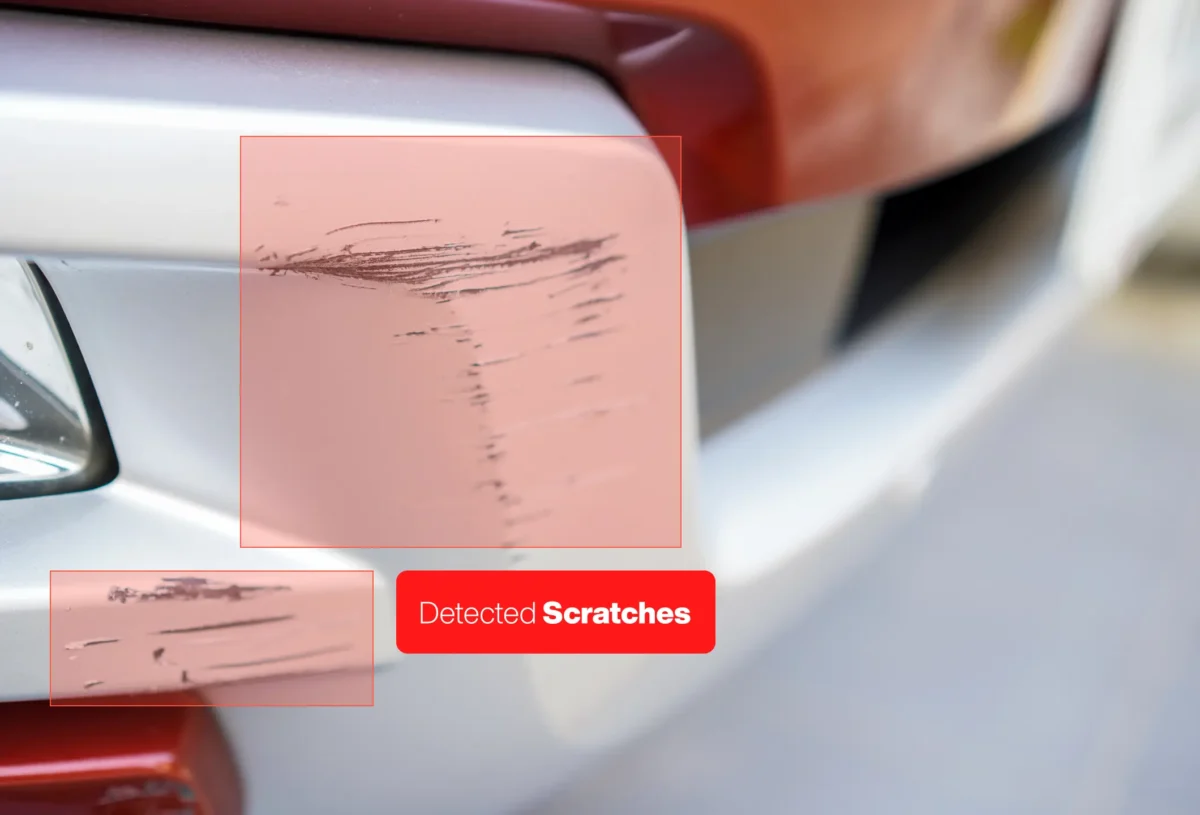
In today’s fast-paced manufacturing landscape, maintaining impeccable quality control is essential. This is especially true in the automotive industry, where the smallest defects can have significant consequences. At the forefront of innovation, we embarked on a groundbreaking project to develop an advanced inspection system for scratch detection. By harnessing cutting-edge machine learning models and sophisticated computer vision techniques, we created a solution that not only identifies but also precisely segments scratches on automobile surfaces. This success story delves into the technical journey of our project, from data collection to real-time deployment, illustrating the impact on quality assurance.

Our goal was clear: to develop a robust inspection system capable of detecting and accurately segmenting scratches on automobile surfaces. This required a system that could operate in real-time, offering both precision and reliability. Leveraging state-of-the-art machine learning and computer vision technology, we built a system that meets the rigorous standards of the automotive industry.

The cornerstone of our success was a meticulously curated dataset. We gathered a comprehensive collection of high-resolution images of automobile surfaces, each carefully annotated to highlight scratch locations. The data collection process involved:

  • Image Acquisition: Utilizing an IP bullet camera setup in a controlled environment to capture high-quality images.
  • Annotation: Meticulous manual annotation to mark the bounding boxes and segment the areas affected by scratches.

To enhance the model’s robustness and adaptability, we applied several data augmentation techniques, including:

  • Random Cropping: Simulating different viewpoints and scales to improve generalization.
  • Rotation and Flipping: Ensuring the model could accurately detect scratches, regardless of orientation.
  • Color Jittering: Accounting for varying lighting conditions.
  • Noise Addition: Simulating different types of camera noise to make the model more resilient.

Preparing the images for model training involved several critical steps:

  • Normalization: Scaling pixel values to ensure compatibility with the model.
  • Resizing: Adjusting image dimensions to match the input size required by the machine learning framework.
  • Label Encoding: Converting annotations into a format suitable for training.

For the core of our system, we selected a top-tier model known for its superior performance in both object detection and segmentation tasks. Training this model required a powerful setup, including:

  • Hardware: An NVIDIA RTX 4090 GPU paired with an Intel i7 processor to accelerate the training process.
  • Framework: A user-friendly and powerful machine learning framework that facilitated model development with CUDA-based GPU acceleration.
  • Hyperparameters: Careful tuning of parameters such as learning rate, batch size, and epochs to optimize model performance.

To ensure the model’s robustness and accuracy, we implemented advanced computer vision and deep learning techniques:

  • Transfer Learning: Starting with a pre-trained model and fine-tuning it on our dataset.
  • Multi-Scale Training: Exposing the model to images of varying scales to improve its detection capabilities across different object sizes.
  • Loss Function Optimization: Using sophisticated loss functions to enhance segmentation accuracy.

The model’s performance was rigorously evaluated using several key metrics:

  • Precision and Recall: Ensuring the model accurately identified defects with minimal false positives.
  • IoU (Intersection over Union): Measuring the overlap between predicted and actual scratch locations.
  • Segmentation Accuracy: Evaluating the precision of the segmented regions within the detected areas.

The model exceeded expectations, achieving high scores in all metrics, thus demonstrating its reliability in real-world scenarios.

The final model was deployed on an on-premises server connected to the IP bullet camera, enabling real-time inspection capabilities. The system’s key features include:

  • Real-Time Detection: Continuous monitoring of the production line with instant identification of defects.
  • High Accuracy: Reliable detection and segmentation, ensuring stringent quality control.
  • Robust Performance: Consistent operation under diverse lighting and environmental conditions.

AI Visual Inspection Solutions

This advanced scratch detection system exemplifies the power of integrating state-of-the-art machine learning models with rigorous data collection and preprocessing. Our innovative approach has resulted in a high-performing, real-time inspection solution that meets the automotive industry’s demanding quality standards. With its successful deployment, manufacturers can now ensure higher quality and significantly reduce the risk of defective products reaching the market. This achievement not only elevates the quality of automotive products but also underscores the transformative potential of advanced technology in manufacturing.

QR Floating