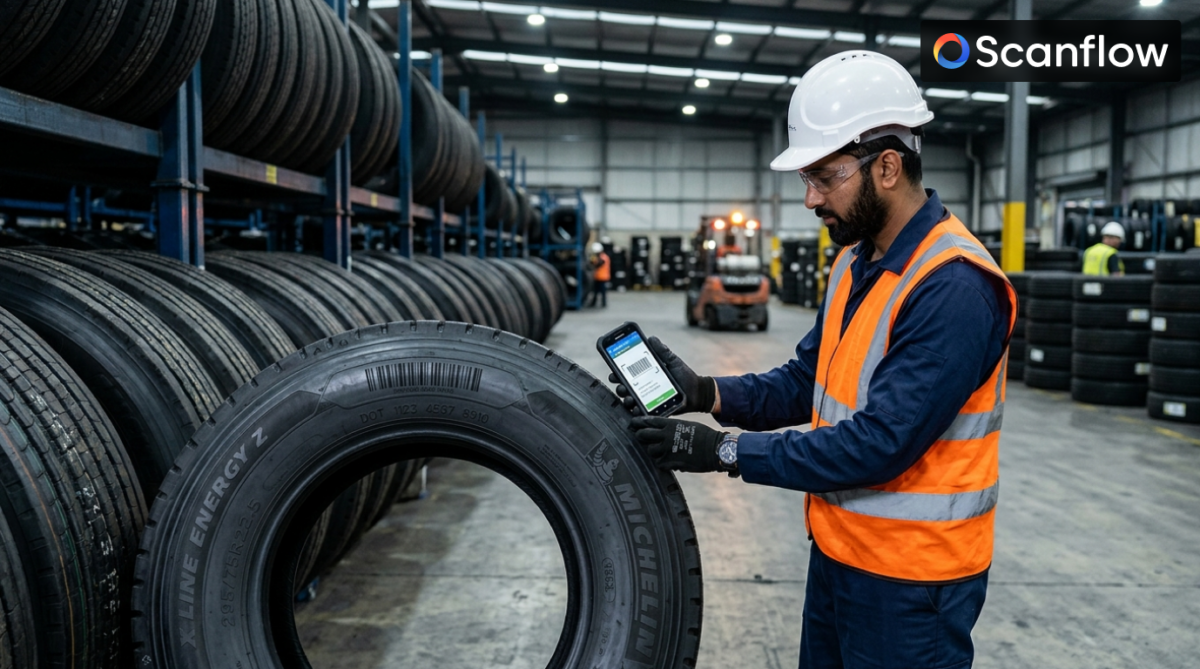
Scan Tire DOT Numbers with Your Smartphone: Fast & Accurate Tire Identification
If you’ve ever had to manually record or verify the DOT number on a tire, you know how tedious and...
 3 Mins read
Posted on Jul 4, 2026
February 12, 2026
3 Mins read


Scanning DOT codes is a critical part of the tire industry because accurate data collection ensures traceability, supports recalls, and maintains compliance, directly affecting operational efficiency and regulatory confidence.
Despite being one of the most common areas for error in the tire manufacturing process (as well as in warehousing, distribution, and tire scrapping), scanning DOT codes continues to exhibit high levels of inaccuracy. Emphasizing accuracy can make the audience feel reassured about AI’s potential to improve reliability.
DOT codes are not attached with a sticker or printed on a label. Instead, they are embossed directly onto the tire sidewall. The position of the code varies significantly from one tire to the next; some tires may not show the full code on either side, and how the DOT code is positioned affects its visibility, depending on the tire’s construction. Factories, supply yards, and warehouses typically do not properly position tires to improve scanning accuracy.
As time goes by, the problem worsens due to environmental factors like dust, rubber, insufficient light, and surface weathering, making it difficult to read the code clearly with a regular scanner or basic OCR software. Recognizing these challenges can help the audience feel understood and open to innovative solutions like AI.
There’s risk in manually entering DOT codes, as a single typographical error could impede traceability, jeopardize recall reliability, and create issues during compliance audits. As organizations grow and scale, these types of errors will remain hidden until a recall, a warranty claim, or another regulatory inspection reveals data inconsistencies.

In traditional scanners, users applied fixed rules for scanning DOT codes under ideal conditions. This process typically involves having clearly legible characters directly facing the scanner camera and consistent lighting conditions. However, these ideal conditions are rarely present in most tire operations during DOT code scanning. Non-compliance with these conditions can make scanning tedious or cause it to fail altogether.
In high-speed environments such as tire manufacturing lines and truck stop dispatch lanes, there is significant pressure to maintain production speed. While scanning in these environments, there is little or no consistency in code scanning, which is either missed altogether or scanned at random intervals, thus creating inconsistent data across multiple systems.
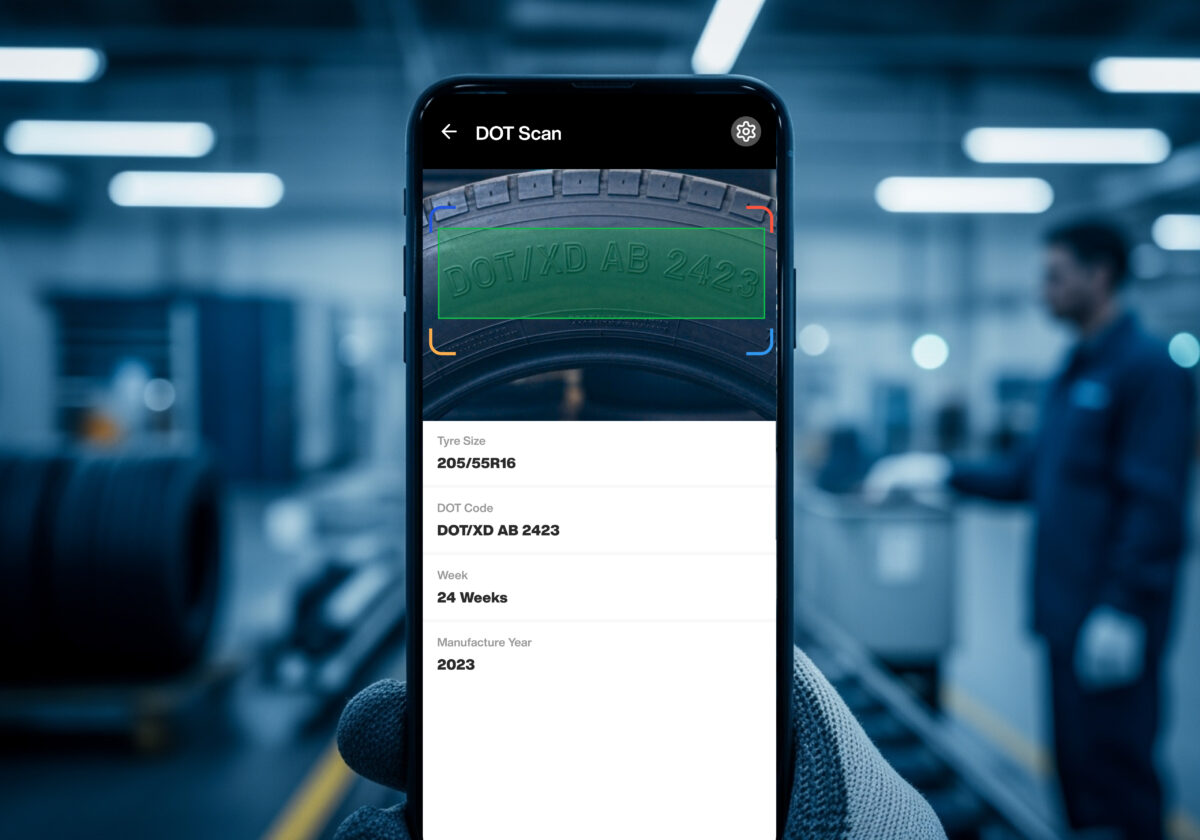
AI-based scanning uses computer vision to recognize DOT codes on tire sidewalls, even when partially visible or obscured, significantly improving accuracy in challenging conditions.
For example, platforms such as Scanflow first determine the location of the DOT code region, then extract and validate the code characters in real time.
In both scrap and EPR workflows, capturing accurate DOT data is essential to prevent illegal sales of scrapped/non-compliant tires. AI-based visual capture capabilities enable scrapped tires to be properly identified, documented, and tracked through disposal/recycling processes, thereby supporting compliance with EPR regulations and improving audit transparency.
Automated and reliable scanning of DOT codes adds value well beyond compliance. Clean, consistent data from DOT codes improves inventory rotation, enhances the precision of recall execution, and increases coordination among production, logistics, and aftermarket teams. Highlighting operational benefits can make the audience feel optimistic about AI’s impact.
AI turns DOT scanning from a manual job or compliance checkbox into an ongoing source of operational intelligence. Scanflow provides a way to incorporate DOT scanning into the existing process without specialized equipment, enabling organizations to expand their ability to capture DOT codes across multiple locations.
Physical constraints and outdated technology have historically limited the use of tire DOT code scanning. However, with stricter regulations and increasingly complex supply chains, these limitations now pose a significantly higher risk.
AI technology enhances DOT code scanning by improving accuracy, reducing manual labor, and increasing traceability throughout the tire lifecycle. For tire manufacturers, distributors, and aftermarket participants, adopting AI is not just about innovation; it is essential to building resilient, compliant businesses in the future.

Scan Tire DOT Numbers with Your Smartphone: Fast & Accurate Tire Identification
3 Mins read
Posted on Jul 4, 2026
Why AI Tire Scanning Has Become the Compliance Backbone of Modern Fleets in 2026
9 Mins read
Posted on May 19, 2026
Best Tire Identification Number (TIN) Scanning Methods for Manufacturers
8 Mins read
Posted on Apr 22, 2026