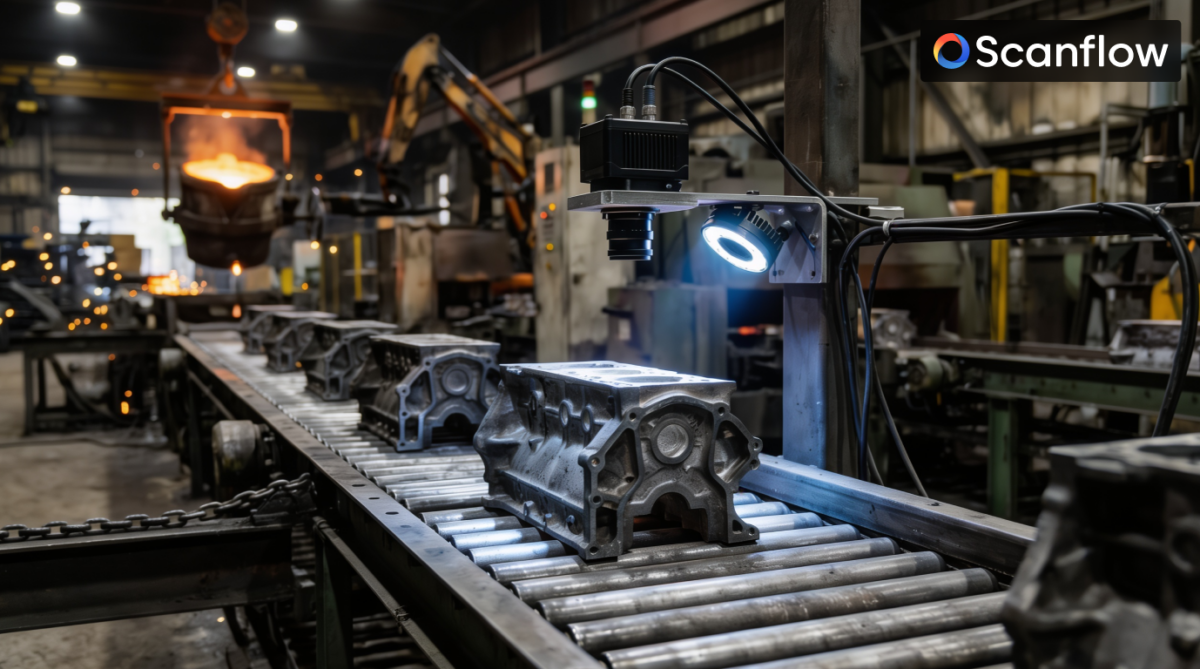
From Casting to Machining: Why Finding Defects Earlier Matters for Tamil Nadu Manufacturers
A cracked or porous casting doesn’t stay cheap for long. The moment it leaves the foundry floor an...
 5 Mins read
Posted on Sep 2, 2026
April 29, 2026
12 Mins read


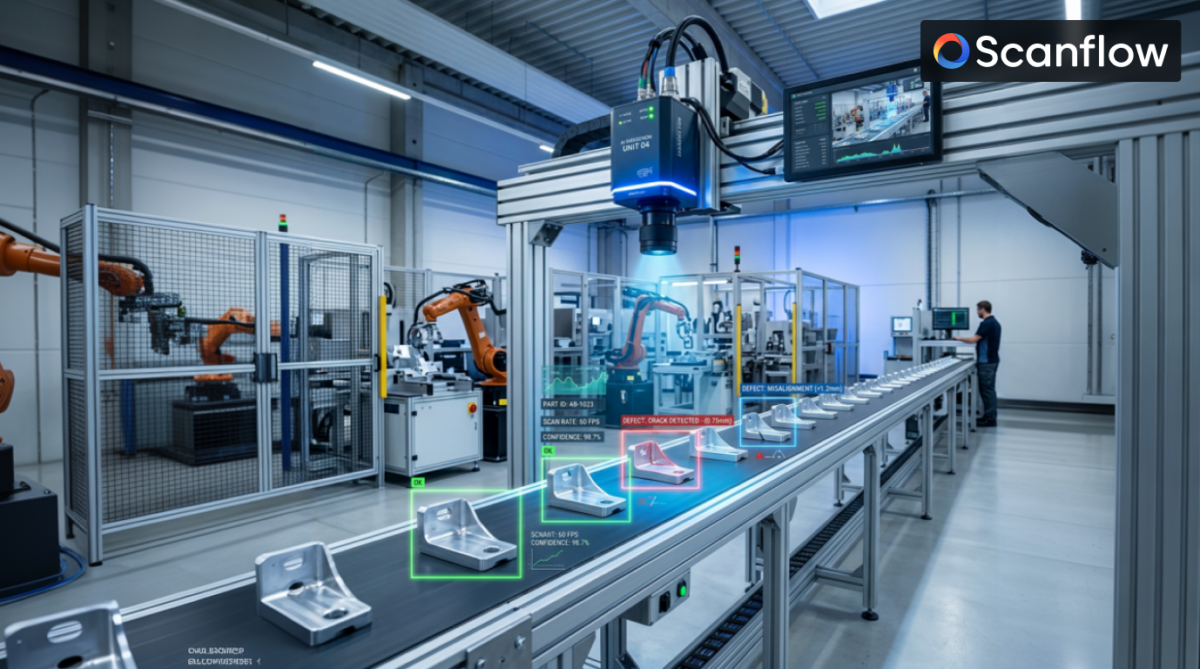
On average, every manufacturing company loses roughly 20% of its total revenue to the cost of poor quality. For a plant generating $10 million annually, that figure represents nearly $2 million in scrap, rework, warranty claims, and inspection overhead that still fails to catch everything. The uncomfortable truth behind that number: human visual inspection, even when performed by well-trained, attentive inspectors, misses 20–30% of defects under real production conditions, and accuracy degrades by 15–25% after just two hours of continuous observation.
The manufacturing sector has known this for decades. What has changed is the availability of a credible solution. AI-based visual inspection systems, which can integrate seamlessly with existing manufacturing systems like MES and ERP, now achieve 95–99% defect detection accuracy, inspect more than 10,000 parts per hour at sub-100-millisecond inference speed, and maintain consistent quality standards across every shift, every day, without fatigue or variability. The technology has moved from pilot programs to production-floor deployments at scale, delivering documented results that are reshaping the economics of quality control.
This blog examines how AI-based visual inspection works, where it delivers the most transformative impact in manufacturing, the ROI it generates-often within [6-12 months]-and how to evaluate whether it is the right next step for your operation, considering your specific production volume and defect costs.
The AI visual inspection market tells a compelling story of rapid growth driven by technological innovation. In 2024, the global market reached approximately $24 billion. It may grow at a compound annual growth rate of 25.4% making it one of the fastest-expanding segments in manufacturing technology. By 2033, the market will approach $90 billion, reflecting how industry leaders are embracing cutting-edge solutions to stay competitive and meet evolving quality demands.
| $ | MARKET SIZE
AI visual inspection market: $24.1 billion in 2024, growing at 25.4% CAGR Forecast to reach $89.7 billion by 2033, with manufacturing holding the largest vertical share at 42% (Market.us / Research and Markets, 2025) |
Three forces are driving this growth simultaneously. First, production speeds are accelerating: modern assembly lines operate at velocities where a human inspector has milliseconds to assess each unit passing through a checkpoint. Second, component miniaturization in electronics, automotive, and medical devices has pushed defect dimensions beyond the resolving capacity of the unaided human eye. Third, Industry 4.0 is creating a new expectation baseline: a factory that cannot generate real-time quality data from every inspection point is operationally blind, with consequences that now carry competitive, regulatory, and data security considerations, prompting manufacturers to adopt AI solutions that ensure compliance and protect sensitive information.
AI fundamentally reshapes how manufacturers define quality. It no longer relies on a labor-intensive gatekeeping function at the end of the line. Instead, AI visual inspection creates a continuous, data-generating intelligence layer embedded throughout production.
Human inspectors are not unreliable because they are careless or undertrained. They are unreliable because they are human. The visual system evolved for a fundamentally different task than detecting 50-micron scratches on a metallic surface moving at 120 parts per minute under industrial lighting. Under real production conditions, three specific limitations create compounding quality failures:
| ⚠ | THE HUMAN INSPECTION GAP
Human inspectors miss 20–30% of defects under real production conditions Inter-inspector agreement on defect severity: only 55–70%. Accuracy degrades 15–25% after 2 hours of continuous observation a biological ceiling AI does not share (iFactory, 2026) |
Many manufacturers have supplemented manual inspection with Statistical Process Control (SPC) and Statistical Quality Control (SQC). These tools provide valuable trend monitoring and process analysis, but they do not solve the in-line inspection problem. SPC tells you that a process is drifting it cannot tell you, in real time, whether the specific component in front of the camera right now is defective. The granularity and immediacy required by modern production environments are beyond what statistical sampling can deliver.
“Every part your inspectors miss is a part your customer finds. The question is not whether human inspection has limits it is what it costs you when those limits are reached.” – iFactory AI Vision Inspection Guide, 2026
An AI visual inspection system combines four interdependent technology layers that together transform a camera image into a quality decision in real time:
The detection capabilities of AI visual inspection extend far beyond what human inspectors can reliably achieve, particularly in the following defect categories:
| ⚡ | ACCURACY BENCHMARK
AI inspection achieves 95–99% detection accuracy vs 70–80% for human inspectors. AI systems detect 37% more critical defects than expert human inspectors under optimal conditions, maintaining identical performance 24/7 (iFactory / Consumer Technology Association, 2025) |
Automotive has been among the earliest and most aggressive adopters of AI visual inspection, driven by the combination of high defect cost (warranty claims, recalls, safety liability) and zero-defect production aspirations. BMW’s paint shop at its Dingolfing facility implemented AI and automated optical inspection systems as part of a zero-defect strategy, with cameras detecting surface defects as small as 40–50 microns. The automotive AI inspection market, valued at $465 million in 2024, is projected to grow at a 19.6% CAGR to reach $2.64 billion by 2034.
Documented results from automotive implementations include 37% reductions in defect escape rates, 22% increases in Overall Equipment Effectiveness (OEE), and up to 60% reductions in warranty claims at manufacturers that have deployed AI inspection across production lines. A leading European automotive manufacturer that implemented AI visual inspection early in 2024 reported a 47% reduction in warranty claims related to assembly defects by year’s end.
In electronics manufacturing, component miniaturization has rendered human inspection fundamentally inadequate. Modern PCB assemblies contain hundreds of solder joints per square centimeter, use surface-mount components smaller than a grain of rice, and rely on layered structures that require magnification for proper inspection. AI inspection systems operate at production speeds on these assemblies, achieving 99.97% accuracy in detecting solder joint defects.
For semiconductor manufacturers, the yield economics are even more acute. A 0.1% yield improvement for a major semiconductor manufacturer represents approximately $75 million in additional annual revenue. AI wafer inspection systems have demonstrated defect escape rate reductions from 2.3% to 0.1% and annual warranty savings of $1.8 million per line. Intel has reported $2 million in annual savings from AI wafer inspection alone.
| 🔬 | SEMICONDUCTOR PRECISION
A 0.1% yield improvement = $75 million additional annual revenue for major chip manufacturers AI wafer inspection: defect escape rate reduced from 2.3% to 0.1%. Intel saves $2M annually from AI inspection of wafers alone (Averroes AI / iFactory, 2025) |
In regulated industries where defect escape has patient-safety consequences, AI inspection delivers both quality and compliance value. AI-driven pharmaceutical vial inspection systems detect cracks, fill-level errors, and missing caps in real time, achieving defect detection accuracy above 97%. One medical equipment manufacturer reduced false rejections from 12,000 per week to 246 units per week using an AI segmentation model. This 98% reduction simultaneously improved yield and reduced the rework overhead of managing false positives.
In steel production, surface inspection at line speeds of 1,200+ meters per minute impossible for human inspectors is now commercially viable with AI. Typical defect downgrade rates of 2–5% of production can be dramatically reduced, with AI surface inspection saving $3–12 million annually in steel mills by catching defects before they generate scrap at downstream processes. In consumer goods and packaging, Coca-Cola’s adoption of AI-driven inspection to detect labeling defects and bottling inconsistencies at scale demonstrated how AI can simultaneously protect brand consistency and reduce production stoppages.
The financial case for AI visual inspection is now well-documented across multiple industries. Forrester Research found a 374% average three-year ROI from AI visual inspection deployments, with an average payback period of 7–8 months. Most organizations see ROI within 6–18 months of implementation. The primary savings come from four distinct sources:
| Savings Source | Typical Annual Impact |
| Labor cost reduction (per line) | $691,200 in direct inspection labor savings |
| Scrap and rework elimination | $500,000+ from 37–85% fewer defective units |
| Warranty claim reduction | $1–2 million from 60–85% fewer customer complaints |
| Throughput improvement | 35% increase from removing inspection bottlenecks |
| False positive reduction | 98%+ reduction in unnecessary rework cycles |
| Overall quality cost reduction | 20–40% reduction in total quality-related costs |
For manufacturers implementing AI inspection at a single critical station, Deloitte’s 2025 financial analysis found that organizations achieve an average 31% reduction in total quality control costs within two years, while simultaneously improving detection rates. Foxconn achieved an 80% improvement in defect detection rates alongside a 30% reduction in inspection time. Siemens reported a 30% increase in inspection accuracy. GE reduced manufacturing costs by 30% in divisions deploying AI inspection.
“AI vision inspection is one of the few Industry 4.0 investments that delivers measurable ROI within months, not years. The financial case is straightforward: quantify your current cost of poor quality, model the impact of improved detection, and subtract deployment cost.” – iFactory AI Vision Inspection Guide, 2026
Among the AI-powered visual inspection platforms designed specifically for industrial environments, Scanflow has built a comprehensive quality control suite that addresses the full spectrum of manufacturing inspection challenges from in-line conveyor inspection to static component verification to end-of-line completeness checks.
Scanflow designed its AI visual inspection platform around three deployment modes that mirror the natural structure of a manufacturing quality program.
Scanflow’s visual inspection capabilities span multiple manufacturing verticals where defect detection demands are most acute:
One of the most significant barriers to AI inspection adoption is the concern that deployment requires a wholesale overhaul of existing production infrastructure. Scanflow addresses this directly: its platform integrates with existing conveyor setups and works with standard cameras, smart devices, or edge-mounted infrastructure without requiring a production line redesign. The system integrates with MES, WMS, and SAP backends to provide centralized visibility and audit-ready quality records. Start with a single high-impact inspection point and scale progressively as you demonstrate ROI.
“Missed defects create bottlenecks, safety concerns, and cost overhead that manual systems struggle to contain. Scanflow’s AI quality control platform enables production teams to run real-time inspections without changing their existing infrastructure.” – Scanflow.ai, Manufacturing Quality Control
Contrary to the impression that AI inspection requires months of IT project management before delivering value, modern platforms allow manufacturers to deploy at a single inspection station and see results within weeks. The deployment sequence typically follows this pattern:
The typical timeline from initial deployment to live production is 6–8 weeks. 68% of new deployments in 2024–2025 operate primarily on localized edge hardware rather than requiring constant cloud connectivity, addressing both latency and data security concerns that commonly delay AI projects in manufacturing.
The single most common implementation challenge is the availability of sufficient high-quality training data, particularly labeled examples of defective parts. In some manufacturing environments particularly those that have historically achieved low defect rates defective examples are rare by design, making model training difficult. Solutions to this challenge include active learning approaches (which cut labeling effort by 70% while maintaining accuracy), synthetic training data generation, and generative AI augmentation of existing datasets.
AI inspection delivers its full value when defect data flows automatically into the quality management and production control systems that manufacturers already operate. Integrations with SAP, Oracle, Maximo, and common MES platforms via OPC-UA, MQTT, and REST APIs are now standard in enterprise-grade inspection platforms. This practice eliminates the paper-based documentation bottleneck that has historically undermined quality traceability in manual inspection environments.
The shift to edge computing running AI inference models directly on smart cameras or local GPU units rather than in the cloud is making real-time inspection at production speed viable for facilities of all sizes. Edge AI delivers sub-100-millisecond decision times without network latency, enables on-premise data retention for sensitive manufacturing environments, and scales across dispersed production sites without centralized cloud infrastructure. Quality control automation now achieves ±0.03mm precision deviation with real-time edge analytics.
The convergence of AI visual inspection with digital twin modeling is creating a new capability: predictive quality. Rather than detecting defects after they occur, AI systems that monitor process parameters temperature, vibration, tool wear, material feed rates can predict when a process is about to generate defects and trigger corrective action before production losses accumulate. This process moves quality control from reactive to proactive, fundamentally changing the cost profile of manufacturing quality management.
AI visual inspection infrastructure cameras, edge compute, trained detection models is increasingly used for a second purpose beyond product quality: worker safety monitoring. The same vision systems detecting misaligned components can simultaneously monitor PPE compliance, identify unsafe machinery proximity, track forklift movement in pedestrian zones, and flag hazardous conditions in real time. This dual-purpose use case improves the ROI justification for AI vision infrastructure. It is driving adoption in facilities where safety incident costs have historically been the dominant quality-adjacent expense.
AI-based visual inspection is not simply a more efficient version of what manufacturers have always done. It is a categorical shift: from sampling-based, fatigue-prone, subjective quality control to continuous, objective, data-generating quality intelligence that operates at the speed of production without ever tiring, losing focus, or applying inconsistent standards.
The documented results, 37% reductions in defect escape rates, 60–85% fewer customer complaints, 374% three-year ROI, $2 million annual savings at single-facility deployments, 99.97% solder joint detection accuracy in electronics, are no longer the outputs of pilot programs. They are the operational baseline that early adopters have established and that competitors must match.
For manufacturers evaluating AI visual inspection, the practical starting point is clear: identify your highest-cost quality failure mode, quantify the annual cost of scrap, rework, warranty claims, and customer impact, and model the delta from 95–99% detection accuracy relative to your current baseline. For most operations, the payback period calculation will point to the same conclusion: the cost of not deploying AI inspection is now higher than the cost of deploying it.
Key takeaways

From Casting to Machining: Why Finding Defects Earlier Matters for Tamil Nadu Manufacturers
5 Mins read
Posted on Sep 2, 2026
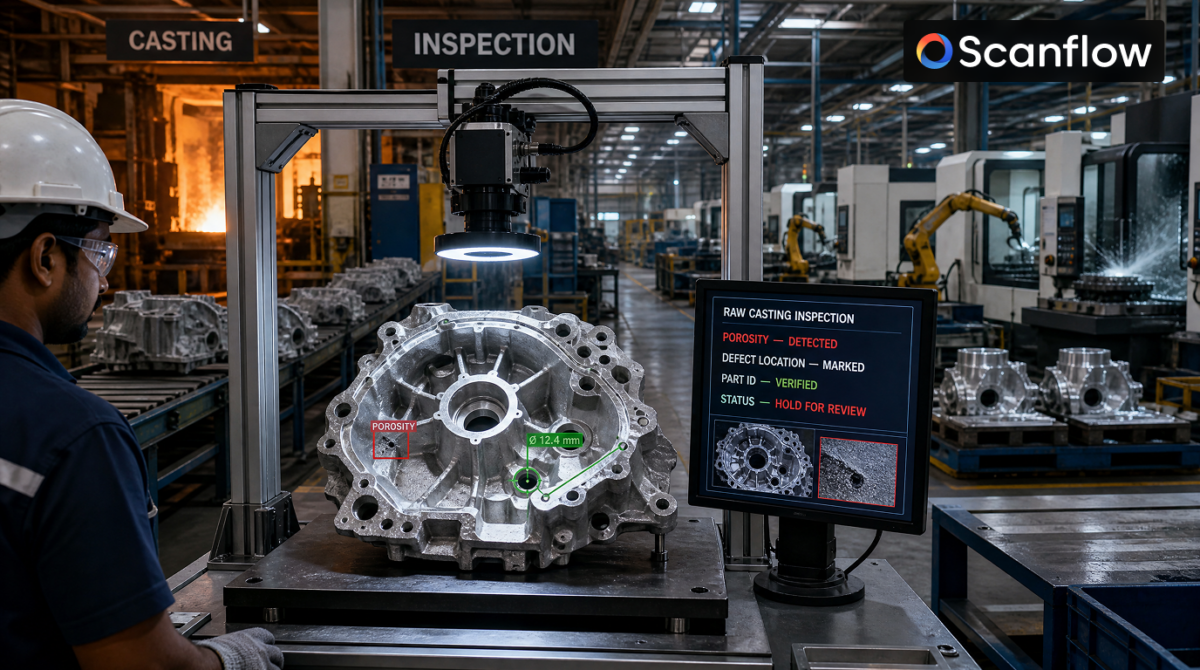
Why Sampling Is Becoming a Risk for Automotive Component Manufacturers
4 Mins read
Posted on Sep 2, 2026
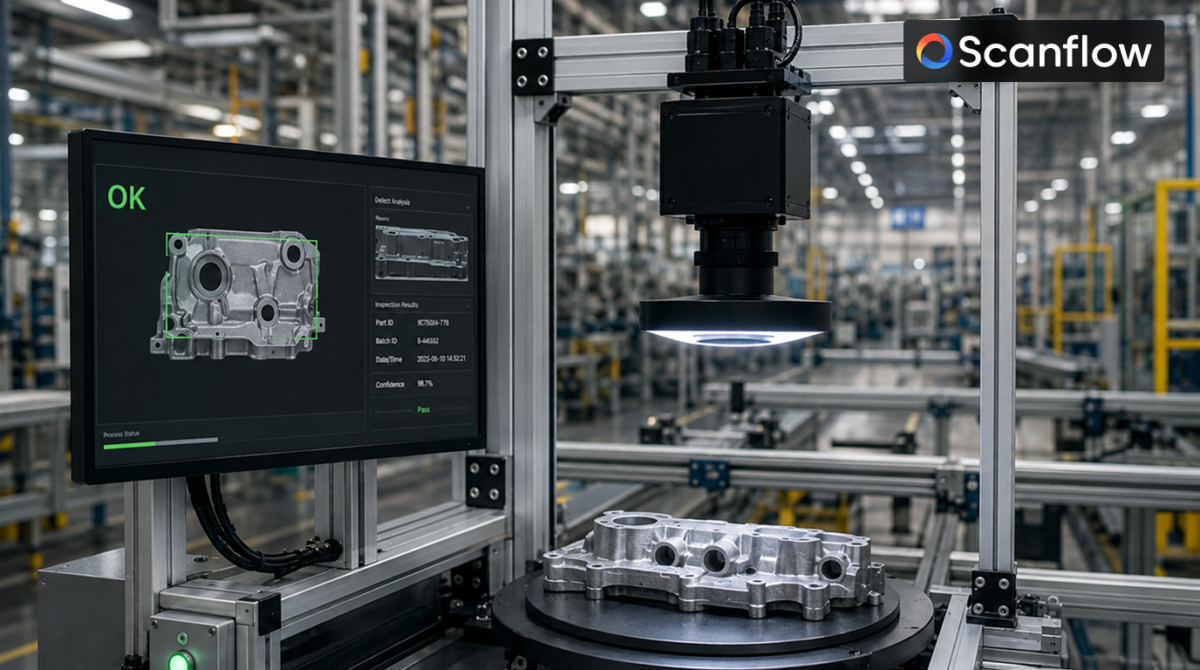
Why Manual Visual Inspection Fails In High-Temperature Casting Environment
7 Mins read
Posted on Jun 9, 2026