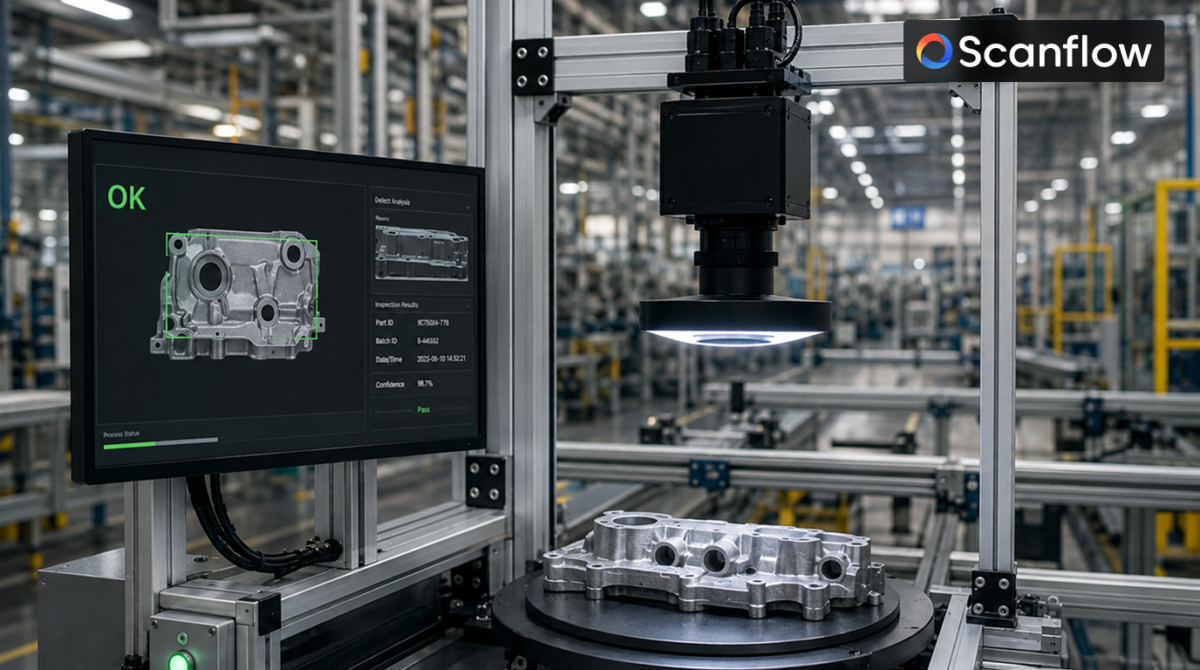
From Casting to Machining: Why Finding Defects Earlier Matters for Tamil Nadu Manufacturers
A cracked or porous casting doesn’t stay cheap for long. The moment it leaves the foundry floor an...
 5 Mins read
Posted on Sep 2, 2026
June 9, 2026
7 Mins read


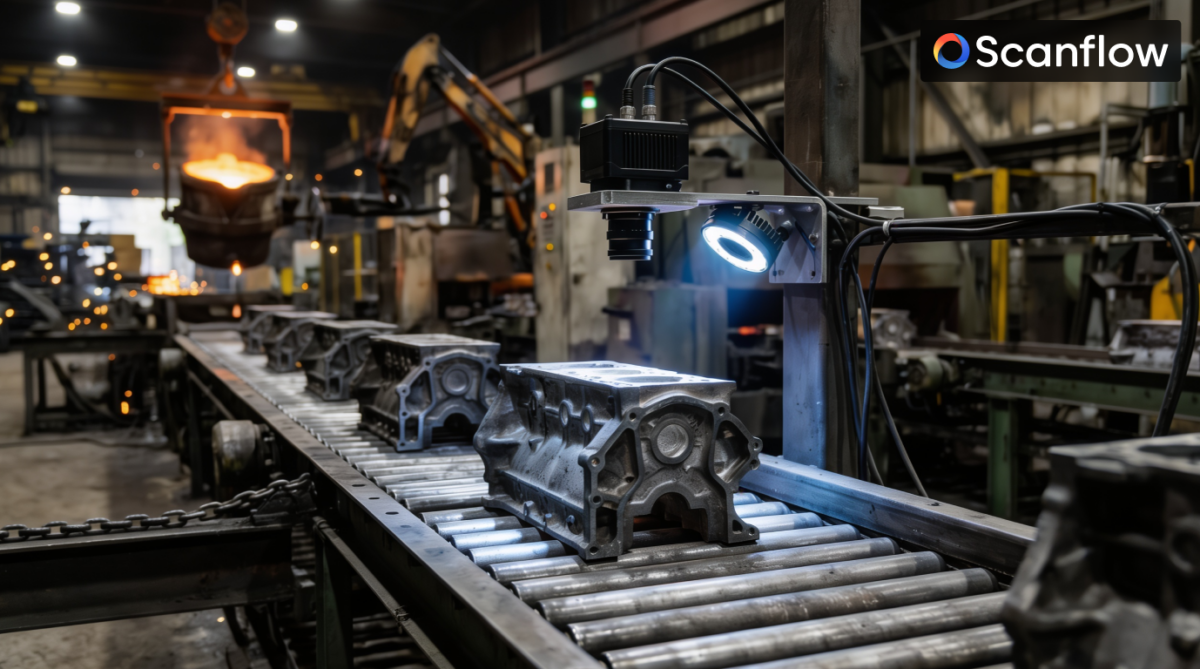
The Silent Quality Drain on India’s Foundry Floors
In a high-temperature casting environment, human inspection does not just underperform it is fundamentally limited by physics, preventing meeting modern zero-defect standards. This is not a skills issue but a physical constraint.
India is the world’s second-largest producer of castings, generating 12 million metric tonnes annually. The foundry and casting market reached USD 22 billion in 2025. It may reach USD 57.9 billion by 2034 at a CAGR of 10.78%, driven by automotive demand, infrastructure expansion, EV localization, and the Make in India initiative.
Behind this headline growth sits a structural quality challenge that most MSME foundries have inherited rather than solved: manual visual inspection in environments where furnaces roar at 700–1,600°C, ambient floor temperatures push past 45°C, and freshly cast components radiate enough heat to trigger physiological performance collapse in human inspectors within minutes.
This report examines why manual inspection fails in high-temperature casting environments using verified research, India-specific data, and operational case studies and outlines clear, practical steps for Indian foundries to achieve zero-defect quality in 2025 and beyond.
India’s foundry industry is not a homogeneous sector. It spans aerospace-grade investment castings at PTC Industries and Dynamatic Technologies, automotive grey-iron castings at the Kolhapur and Rajkot clusters, aluminum high-pressure die castings for EV battery enclosures, and heavy infrastructure castings in steel plants across Jharkhand and Odisha. Each segment carries zero-defect expectations from global OEMs and each operates foundry floors where inspection conditions are physiologically hostile to human accuracy.
The automotive sector alone accounts for over 40% of India’s casting volume, with engine blocks, transmission housings, and brake components requiring IATF 16949 quality standards. Aerospace investment castings the fastest-growing segment with a 12.05% CAGR require AS9100/NADCAP certification, with digital inspection traceability mandatory. For MSME foundries supplying these markets, quality escapes are not recoverable.
Figure 1: India Foundry & Casting Market USD 22B (2025) to USD 57.9B (2034) | CAGR 10.78%. Source: IMARC Group 2025, Mordor Intelligence 2026.
Academic research and the Indian Foundry Congress have documented rejection rates that reveal the scale of the quality problem in conventionally operated foundries. According to a technical paper from the 59th Indian Foundry Congress, rejection rates in jobbing foundries average 8–15%, peaking at 18% in individual months. Production foundries show 3–6% overall defective casting rates. A case study of a Ghaziabad die-casting facility found a baseline rejection rate of 15.5% before intervention.
These numbers carry a direct financial cost. Casting defects increase unit cost, erode OEM confidence, and create rework loops that consume energy and labor that Indian foundries cannot afford to waste. The primary causes are well-documented: porosity, cold shuts, shrinkage, mould shifting, and surface inclusions. But the inspection failure that allows these defects to escape undetected that is what this report addresses.
Figure 2: Casting Rejection Rates Manual vs AI-Assisted Inspection. Jobbing foundry and die casting benchmarks vs AI-vision outcomes. Sources: Indian Foundry Congress, DMAIC case studies, iFactory 2026.
The foundry environment creates conditions where heat stress is a performance disqualifier, not just an inconvenience, because physiological limits prevent effective inspection. OSHA lists foundries among the highest-risk environments for heat stress, with WBGT values exceeding safe thresholds.
A 2024/25 peer-reviewed study on occupational heat stress in Northern Indian small-scale foundries published in a leading occupational health journal quantified the productivity impact with precision:
Figure 3: Heat Stress Productivity Loss by Work Section Indian Foundry Study (2024/25). Metal-pouring sections showed an estimated 53% productivity loss. Source: Sharma et al., SAGE Journals 2025.
Metal pouring sections where inspectors must assess fresh castings at their hottest and most visually challenging state showed an estimated 53% productivity loss under heat-stress conditions. Furnace-adjacent workers lost 43.24%. These figures represent the conditions under which Indian foundries currently ask human inspectors to make critical quality judgments.
Academic literature on visual inspection accuracy in manufacturing establishes a consistent baseline: human error rates in complex visual inspection tasks run 20–30% under standard conditions (Drury & Fox, cited across multiple peer-reviewed studies). Studies on AI inspection contexts confirm that, overall, manual inspection accuracy in manufacturing averages around 80% meaning 1 in 5 defects is missed even in optimal conditions.
In high-temperature foundry environments, this baseline degrades dramatically and rapidly. The compounding factors are specific and measurable:
| Failure Mechanism | Physiological Root | Inspection Impact |
|---|---|---|
| Thermal Fatigue | Core body temperature exceeds 38.5°C; cognitive processing speed and decision accuracy both decline measurably. | Defect miss rate rises by 15–25% within 2 hours; up to a 60% loss in accuracy after 4 hours of continuous heat exposure. |
| Radiant Glare | Freshly cast metal emits visible and infrared radiation; eye strain reduces contrast sensitivity and surface-feature discrimination. | Micro-cracks, porosity, and cold shut features fall below the detectable threshold as visual fatigue sets in |
| PPE Constraint | Face shields, gloves, and protective clothing reduce peripheral vision by ~30% and eliminate tactile feedback. | Inspectors compensate by reducing thoroughness the miss rate on non-prominent features increases. |
| Cognitive Overload | Heat, noise, and production pressure simultaneously tax the attention system, leading the brain to deprioritize low-salience defect signals. | Inter-inspector agreement falls to 55–70% the same part, assessed by two people, generates different quality verdicts. |
| Shift Duration | Accuracy peaks in the first 30 minutes and degrades non-linearly. End-of-shift cognitive load compounds all other factors | End-of-shift defect escape rates are 2–3× higher than start-of-shift rates in foundry environments |
Research finding (published 2024): Studies show that human accuracy drops by up to 20% after just two hours of repetitive inspection tasks under standard conditions.
In high-temperature casting environments, this timeline compresses to under 90 minutes and the accuracy floor is significantly lower because radiant heat, PPE limitations, and cognitive stress compound
and is not human failure. It is a structural incompatibility between biological performance limits and industrial inspection requirements.
Indian foundries producing high volumes of castings require inspectors to assess hundreds of components per shift. Research by Drury and Fox (referenced across multiple peer-reviewed publications) documents error rates of 20–30% in complex visual inspection tasks even under controlled conditions. At production volumes typical of Rajkot or Kolhapur clusters combined with heat exposure the miss rate for subtle defects such as early-stage porosity or hairline cracks ican definitely exceed acceptable OEM thresholds.
Standard industrial lighting is designed for machine shops and assembly areas not for foundries where freshly poured castings emit their own radiation. The inspection challenge is not too little light; it is the wrong kind of light. Radiant emission from hot castings creates glare that obscures surface features which should appear as contrast differences against the background. No amount of task lighting compensates for an inspector assessing a 600°C casting without specialist optical tools.
Manual inspection depends on individual calibration a subjective quality threshold that drifts under production pressure. Inter-inspector agreement rates of 55–70% documented in manufacturing studies mean that up to 30% of quality verdicts are effectively random relative to the stated specification. In practice, this means Indian foundries’ quality standards are variable by shift, not by engineering drawing.
Where foundries correctly enforce heat-exposure limits mandatory rest breaks, 30-minute rotation cycles, reduced shift length the direct consequence is reduced inspection throughness per production hour. A foundry that takes worker safety seriously cannot simultaneously offer 100% manual inspection coverage. The two requirements are physically incompatible in high-temperature environments.
Manual inspection produces a binary verdict: pass or fail. It does not record defect type, location, frequency, batch correlation, or tool-wear signature. Without that data, quality managers are managing reactively responding to rejection spikes after they occur, not intercepting process drift before it generates defective output. This method is the system’s failure beneath the individual inspection failure.
| Actor | Quality Role | Manual Inspection Risk | AI Inspection Gain |
|---|---|---|---|
| MSME Foundry | Defect detection at source | 8–15% rejection rate; OEM penalty risk; export disqualification | Sub-2% escape rate; OEM audit compliance; export premium |
| Automotive OEM | IATF 16949 zero-defect supply requirement | Warranty cost, recall liability, supplier removal | Traceable inspection records support supplier approval |
| Aerospace / Defence | AS9100 / NADCAP certification | Certification failure; HAL/DRDO contract loss | Digital records enable mandatory audit documentation |
| Export Buyer (EU/US) | Global quality standard application | Batch rejection, chargebacks, supply chain exit | Inspection data supports global OEM qualification |
| Foundry Worker | Safety-critical role in hazardous environments. | Heat illness; productivity loss; occupational injury | Redeployed to safer, higher-value process roles |
AI-based casting inspection in India has a concentrated and immediately actionable addressable market:
A competitive analysis of quality inspection content in India’s foundry sector reveals a consistent pattern: available content is either highly technical, academic research or generic vendor marketing. Neither serves the plant manager, quality head, or MSME owner who needs to understand the business case for inspection modernization in INR terms, with India-specific rejection benchmarks and government support pathways.
Content that bridges this gap connecting the physiological reality of heat-driven inspection failure to financial and competitive consequences captures high-intent B2B search traffic that generic ‘AI inspection’ content misses entirely.
AI vision inspection systems designed for casting environments are not cameras with software. They are purpose-built industrial systems that address each physiological failure mode of human inspection directly:
Figure 5: Manual vs AI Vision Inspection Performance Scorecard Across 6 Key Dimensions. AI delivers near-complete advantage on every metric except relative cost (which inverts within 6–12 months through ROI payback).
The business case for AI inspection in Indian foundries is not speculative. Manufacturers deploying AI inspection systems globally achieve ROI within 6–12 months through labor reallocation, scrap reduction, faster throughput, and fewer customer returns. For Indian MSMEs, the components are tangible:
| Cost Eliminated | Cost Eliminated | India Context |
|---|---|---|
| Defect escape → customer rejection | 37–60% reduction in field defects | OEM penalty charges eliminated; export premiums accessible |
| Rework & scrap on late-detected defects | Value-added cost of defective parts recovered | Energy costs 15–20% of production — don't waste on scrap |
| Inspector labor & safety incidents | Inspection staff redeployed; heat-illness claims reduced | Labor shortage in foundries is acute — redeploy, don't replace |
| Certification & audit compliance | Digital records enable IATF/AS9100 audit passage | OEM qualification unlocks higher-margin contracts |
The physics of heat-induced human performance degradation applies to every foundry in every city in India. It is not a management problem. One can’t solve it with training, incentives, or rotation schedules alone.
India’s foundry industry is growing into one of the world’s most significant manufacturing sectors. The $57.9 billion projected by 2034 represents real components in real vehicles, real infrastructure, and real energy systems. Every one of those components passes through a quality gate. And at that quality gate on the foundry floor, under radiant heat, behind a face shield, at the end of a 4-hour shift expecting a human inspector to perform a task they are physiologically unable to perform reliably.
AI vision inspection does not replace the judgment of skilled foundry workers. It replaces a structurally unsuitable application of human biology with a system that operates without the limitations imposed by biology. The result is not just better quality. It is safer working conditions, lower scrap costs, traceable compliance documentation, and the OEM qualification that unlocks higher-margin export contracts.
For Indian foundry leaders, the question is no longer whether to modernize quality inspection, but how. It is whether to do it before or after the next significant OEM rejection, audit failure, or lost contract.

From Casting to Machining: Why Finding Defects Earlier Matters for Tamil Nadu Manufacturers
5 Mins read
Posted on Sep 2, 2026
Why Sampling Is Becoming a Risk for Automotive Component Manufacturers
4 Mins read
Posted on Sep 2, 2026